


World of Warcraft: Forever keeps Professions pretty much the way they appeared in Classic, but this time tweaked with some enhancements to keep it fresh for both WoW newcomers and vets who want a vanilla refresh.
You still have to choose which Professions to focus on, and you have a couple you can train altogether. And if you’re still confused about how they “work” with your Class or gameplay, this guide can give you a quick run-through.
Table of contents
What’s a Profession?
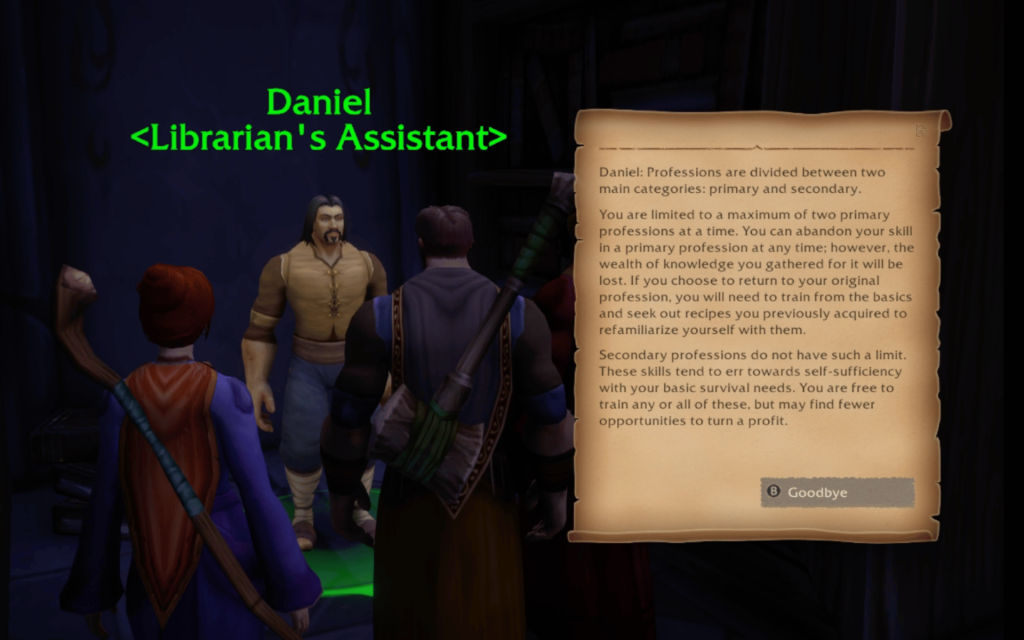
Simply put, a Profession is a tradeskill your character knows in the game world. It’s not necessarily tied to whatever it is you’re doing as a Class, but more of an inherent skill you already know as an adventurer. Lore-wise, this adds a lot of flavor to your character. Is your Paladin a blacksmith by trade before discovering the Light? Maybe your Rogue has a knack for technology, so you dish out the occasional dynamite in your fights.
Progression-wise, Professions are a great way to enhance your gameplay. Whatever your Professions help you produce, you can trade for a quick buck or use as materials to craft your own gear. In Forever, Professions also provide something in the Camp that can benefit everyone.
Just remember, you have a choice of two Primary Professions, and you can train all Secondary Professions.
Gathering Professions
Part of the core Professions experience is figuring out what kind of items you want to produce – and more importantly, what items you’re comfortable grinding over and over (and over) again. Before you can create spectacular gear for your character or to sell at the Auction House, you need a Gathering Profession to get you the materials you need.
Herbalism
| Pair with | Alchemy uses the herbs you gather for many of its consumables Some of the rarer materials you gather are also usable with Enchanting, Engineering, and Tailoring |
| Use as this Class | Characters who regularly consume potions for buffs have the most use for Herbalism, mostly because the potions and elixirs they need are supplied by Alchemy |
Among the Gathering Professions, Herbalism feels the most “out there” as it’s the most straightforward of the bunch. You just learn Find Herbs, you go to that node, and start picking plants. It’s also closely tied to some of the most in-demand Professions that it’s a worthwhile Gathering Profession to main in. Take note that certain plant nodes are locked to a Herbalism skill threshold, so it’s important to get yourself to a high-enough skill and rank to enjoy the process.
Mining
| Pair with | Blacksmithing and Engineering, as both use Mining materials to turn them into various gear – weapons and armor for Blacksmithing, and gadgets and explosives for Engineering |
| Use as this Class | Warriors and Paladins can definitely use the weapons and armors that Blacksmithing produces with Mining Hunters and Rogues, as well as PvP characters, can use ammo and explosives that Engineering produces with Mining |
Mining is the only source of ore, stone, and gems that are needed by its two associated Professions: Blacksmithing and Engineering. You can start Mining as soon as you get a Mining Pick and tap a vein until it’s empty. Afterward, you can smelt the ore you find into bars. All of these actions help you skill up. Take note that some veins require a specific Mining skill threshold, so skill up and rank up as often as possible.
Skinning
| Pair with | Leatherworking, since the hides and scales you collect are immediately usable with this Profession |
| Use as this Class | Leather users can benefit the most, but more so Hunters and Shamans who upgrade to mail, which Skinning and Leatherworking use |
If you notice you have a penchant for killing beasts, then Skinning can be a worthwhile Gathering Profession. Just grab a Skinning Knife, loot the corpse, and then skin it. Certain mobs yield better skins, and you need to skill up to a certain extent to enjoy that loot. The only real challenge here is that if you’re not hunting beasts actively, you won’t level the Profession as quickly as you want.
Crafting Professions
You can’t do much with the materials you gather without processing them into items that count. Unless you want to become a supplier, then that works, too. But on the off-chance you want to create things you can use, equip, or sell, then you need Crafting Professions. And there’s a little something for everyone here:
Enchanting
| Pair with | Tailoring, as it transforms cloth into Uncommon Gear you can disenchant (essential farm) for components Blacksmithing, as it can craft runed rods for enchants |
| Use as this Class | Mages, Priests, and Warlocks, as this Profession can provide craftables boost effects for spellcasters Druids, Paladins, and Shamans can now access Relics and enchants that may enhance combination stats (spell/melee/ranged) |
Enchantment remains a standout in Forever as it’s the only Profession that can add permanent upgrades to items. This is traditionally the Profession to choose if you want to farm gold, as everyone wants a taste of your permanent enchants. Likewise, some would advise that you have a farming alt to actually gather items while you focus on Tailoring as your second Primary. Forever expands permanent enchants to Necklaces and Off-Hands, as well as craftables ranging from Relics and Staves (as opposed to just Wands in Classic).
Engineering
| Pair with | Mining, since most materials processed can be used for Recipes Leatherworking, but more of a starter Profession before switching to Engineering at Level 60 since there’s not a lot of endgame gear to enjoy as you level up |
| Use as this Class | Hunters, as some of the best ammo are locked at 300 Engineering (Swiftfeather Arrow, Swiftstrike Shot) Rogues and Warriors, who can use explosives for crowd control and gadgets for other effects PVP items are often locked in Engineering, like silences (Arcane Bomb) and stuns (Gnomish Dark Bomb) |
You may have heard that Forever just added new SAF-T explosives under the Engineering banner that anyone can use. This is where Engineering shines – with accessories and other, well, gizmos is the best term, that can offer a variety of effects without being confined to the traditional “wearable” or “consumable.” Tanks and DPS often lean on Engineering for a more tactical advantage, such as the Target Dummy (85) that takes aggro away from you or explosives for crowd control at large. Likewise, the specialized effects of Engineering gadgets make them ideal for PVP.
Alchemy
| Pair with | Herbalism, as most Recipes in this Profession require herbs Enchanting, as enchants are almost always tied to consumables from this Profession as in-demands Tailoring is more of a gold support secondary, as you can sell your Uncommons to enchanters who want their own materials |
| Use as this Class | Anyone who needs consumables, as there’s always a Recipe that improves a stat that most players can appreciate PvP consumables are often tied to much-needed immunity to stuns and slows, a lot of which this Profession provides |
First Aid stole Healing Potions from Alchemy in Forever, but that’s just one small portion of a whole host of craftables. They’re still the go-to for stat-boosting Elixirs and Flasks, and other ingredients like Acids, Dyes, Reagents, and the new Legionite Transmute. Almost all Classes benefit from Alchemy, as potions and other consumables they create improve some stat that can make leveling, raiding, or even PvP easier.
Blacksmithing
| Pair with | Mining is the natural choice, as most Recipes need bars, and you won’t have to spend as much if you’re gathering your own materials Enchanting, as you can craft runed rods that most enchants need |
| Use as this Class | Warriors and Paladins gather their own materials as they level up, and they equip the very gear they create |
After you do a good round of Mining, it’s Blacksmithing that takes your bars and transforms them into gear your tank can wear. But Blacksmithing goes beyond the usual metal weapons, armors, and shields. You can also create stones that boost weapon stats (Sharpening Stones, Weighstones), adds a damaging component to blocks (Shield Spikes), and open locks without a Rogue (Skeleton Keys). In Forever, you can set up a free-for-all Sharpening Wheel that boosts everyone’s Strength for a duration.
Leatherworking
| Pair with | Skinning, as its recipes need a lot of hides, leathers, and scales |
| Use as this Class | Druids and Rogues wear leather for the entire game, so this is a natural Profession to get Same with Hunters, who transition from leather to mail while enjoying quivers and ammo pouches that boost ranged attack speed Then Shamans have some of their best gear in this Profession, especially when you switch from leather to mail after you get Dragonscale (225) |
When you get enough leather from Skinning, you may as well skill up Leatherworking on the side. Of the nine starter Classes, four of them can immediately—sometimes actively rely on—leather gear, so there’s an active demand for the Profession. If you’re any of these Classes, you can get straight to Leatherworking to make your own gear. Expect to be the popular new kid around the block, as a Camp Tent at any Camp can lead to Rested XP.
Tailoring
| Pair with | Enchanting, since cloth is a material gateway to a lot of Uncommons, which you can then disenchant for dust and essences |
| Use as this Class | Mages, Priests, Warlocks – anyone who needs cloth for armor and Reagent Bags |
Of the Crafting Professions, Tailoring is infamous across WoW for being the go-to for anyone who wants as many bags as possible. In Forever, Tailoring can now craft Reagent Bags. It’s one of the easiest Professions to skill up since cloth drops from a lot of mobs, so there’s no need for a Gathering Profession. Spellcasters enjoy early benefits to spell damage (Novice Arcanist’s Sash) and healing done (Novice Ardent’s Sash).
All Secondary Professions available for your convenience
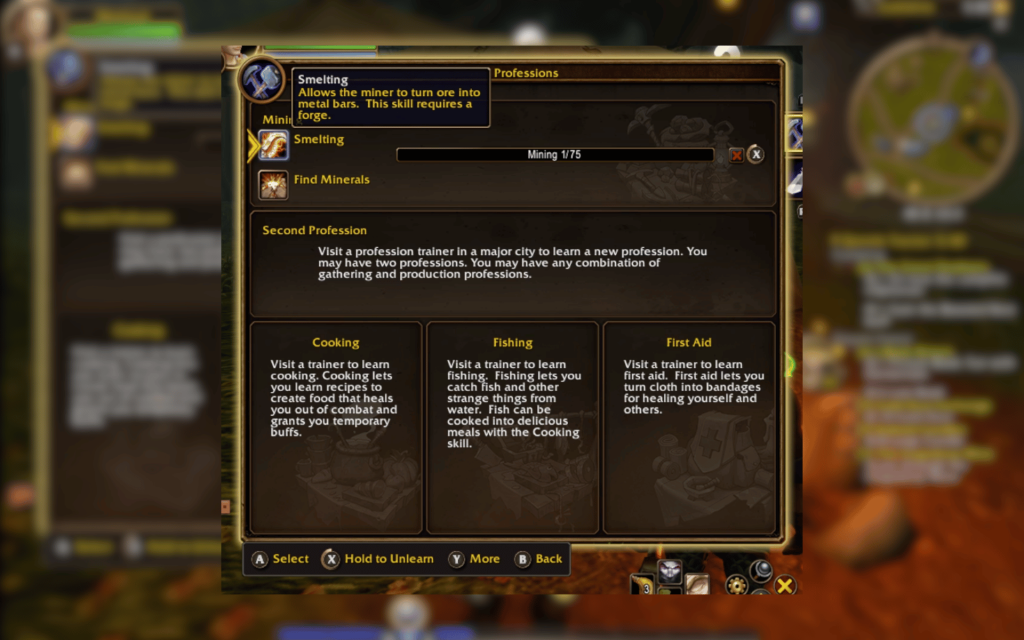
Similar to Classic, everyone can access all Secondary Professions as soon as they create their character. They’re not dependent on specific synergies, as they have their own outputs and benefits:
| Name | Description, main output |
| Cooking | The higher your Cooking is, the better Campfires you can create – and your Campfire type decides how many Camp buffs your team can potentially get |
| First-Aid | Tailoring supplies Bandages, and Herbalism helps create Healing Potions Useful for Classes who constantly need the health buff without stopping to eat (Warriors and Rogues) and healers that would rather give these items to allies instead of micromanaging the slightest of injuries (Priests) |
| Fishing | You can cook your catch into Food you can eat while you farm At Camp, the Fish Bowl matters for most groups, especially if they don’t have a Paladin who can give them Blessing of Kings |
No more than two Primary Professions
When you start learning about Professions, WoW: Forever will warn you upfront – you can only ever learn two Primary Professions. This is why a lot of players choose to skill up in a Profession while doing the core grind.
On the off-chance that you already have two Primaries and want to try another, you technically can. But only in exchange for an existing Primary Profession. You can just go to a Primary Profession you want to remove, type “Unlearn” in the field, and click the “Unlearn” button.
Why all the fuss to unlearn a Primary Profession? If you quit on a Primary, you lose all the progress tied to it – recipes and all. You have to learn it from scratch if you decide to pick it up again.
Double Gathering is the popular launch strategy
Professions are popular in WoW mostly for the Recipes, and it’s usually these products that cost the most at the Auction House. But that’s the thing – no one has gold at launch.
You don’t want to compete with the other crafters who want to sell the most expensive endgame gear, and even then it’s going to take a while to reach 300. And the fastest way to get to 300 is to create and create, and you need raw materials for that. Likewise, the fastest route to gold at launch is to sell as many materials as you can for the crafters who want to skill up ASAP.
Thankfully, Gathering isn’t so difficult to do if you do it strategically:
- Herbalism and Mining are a classic choice, as nodes show up on the minimap and they often follow the same route
- Mining with Skinning or Herbalism with Skinning work if you love farming in beast-heavy zones
At Level 60, drop one Gathering Profession and replace it with a Crafting one that you can power-level with the materials you already have. By then, it would be easier to raise another Crafting Profession with the help of some add-ons, or with an alt.
Read what’s behind the latest news in gaming (with a bit of snark) by subscribing to the Destructoid Checkpoint newsletter!
Leveling Professions in WoW: Forever
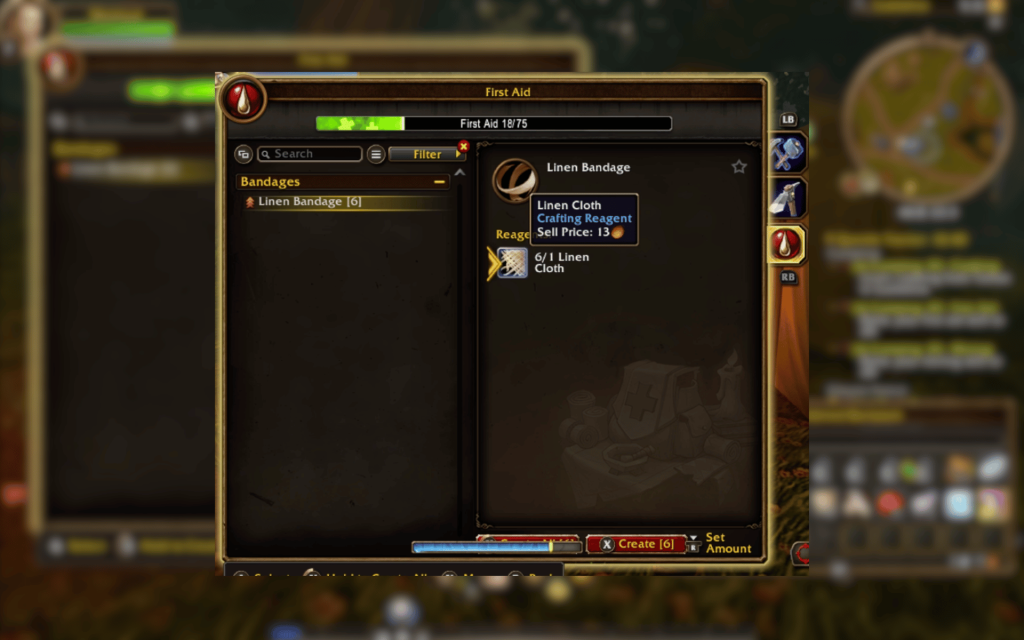
You also “level” up in your Professions similar to leveling your character, but it’s not called “leveling” in the strictest sense. When you use your Professions or do activities adjacent to them, you gain (or have a chance to gain) Skill Points for them. At certain thresholds, you’d have earned enough Skill Points that you have to Train in that Profession and gain a Proficiency Rank:
- Apprentice: 1-75
- Journeyman: 75-150 (available to Train at Skill 50, needs Character Level 10)
- Expert: 150-225 (available to Train at Skill 125, needs Character Level 20)
- Artisan: 225-300 (available to Train at Skill 200)
At higher Proficiency Ranks, Profession actions do not guarantee a Skill Point. This encourages you to practice your Profession more regularly.
Enter the Campsite
Think of Camping as your adventuring party gathering around the fire to talk about the day’s events. Even in a fantasy setting, you wouldn’t want your party to wander off into a dungeon in the middle of the night, right? You eat up, sharpen your gear, and replenish your supplies for the day ahead. And in the game, you do all of these with your Professions.
Each Profession can now offer something to the camp:
| Secondary Profession | Camp Contribution | Camp Buff |
| Cooking | Create a Campfire that supports 3 (Artisan), 5 (Journeyman), and 10 (Expert) Camp Facilities from other Professions Spawn an Iron Oven so you and your peers can cook advanced Recipes | Give food that boosts Stamina (Cookie’s Fest) |
| First-Aid | Create a place that provides Healing Potions and Antivenom (Toxin Study) and Poultices (Plague Doctor’s Laboratory) | Give a Stamina-boosting kit (First Aid Kit) that doesn’t work with Power Word: Fortitude |
| Fishing | Create a spot where people can catch uncommon fish (Fishing Rack) and rare fish (Fishing Hut) for an hour | Get increased stats (Fish Bowl) but doesn’t work with Blessing of Kings |
| Primary Profession | Camp Facility | Camp Buff |
| Alchemy | Summon a Fermenter that lets people create reagents, or an Alchemy Laboratory that lets you craft Recipes that need it | Get continuous Mana regeneration (Mana Well) |
| Blacksmithing | Spawn a usable Anvil or a Master Forge that lets you craft Recipes that need it | Enjoy increased Strength (Sharpening Wheel), but it doesn’t work with Strength of Earth Totem |
| Enchanting | Spawn an Arcane Salvager that facilitates better disenchanting, or an Arcane Forge that lets you craft Recipes that need it | Summon an Enchanted Lute that increases Armor, all Resistances, and all Stats but doesn’t work with Mark of the Wild |
| Engineering | Summon a Reagent Bot that sells reagents, which improves to a Repair Bot that repairs gear Create an Anarchist’s Workbench that lets you create Recipes that require it | – |
| Herbalism | Spawn a place that grows herbs over time (Greenhouse) or somewhere to multiply and combine seeds to create rarer ones (Seed Hybridizer) | Get an Intellect boost (Incense Candle) that doesn’t work with Arcane Intellect |
| Leatherworking | Gives you a place to create reagents (Tanning Rack) or a Sewing Machine to craft Recipes that need it | Build a Camp Tent to get Rested XP |
| Mining | Spawn a common mining node (Rock Garden) over a span of time, or a Molten Foundry where you can craft Recipes that need it | Gain increased Melee Attack Power (Lodestone), but it doesn’t work with Blessing of Might |
| Skinning | Get Track Beasts (Field Guide) or one trap (Trapper’s Workbench) | Enjoy additional Critical Strike (Camp Chair), but it doesn’t work with Moonkin Aura |
| Tailoring | Spawn a Spinning Wheel that lets you create certain reagents, or a Loom to craft Recipes that need it | Get increased Spirit (Faction Banner) that doesn’t work with Divine Spirit |
And this isn’t just for your Campfire. You can hop onto anyone’s Camp, whip out the good ol’ Fish Bowl, and have everyone who passes by enjoy its benefits. Even if you’re not in a party, you still bring a little something to the table.
Professions go into your Legacy as well
Your progress in your Professions also affects your Legacy track. In WoW: Forever, fulfilling certain challenges per character rewards the entire account with Legacy Points that can purchase permanent account-wide buffs.
For Professions specifically, you can gain up to 18 points per character for achieving 150, 225, and 300 Skill Levels in non-gathering Primary Professions (Alchemy, Blacksmithing, Engineering, Leatherworking, Tailoring). You can spend those points to get these Perks:
| Perk | Rank | What it does |
| Dedicated Study | 1 | +1 to your lowest Primary or Secondary Profession Once all your chosen skills are 300, you get 2-4 random Elemental Essences instead (25s casting time, 23hr cooldown) |
| Bountiful Harvest | 5 | +20% to Scarce materials gathered from Herbalism, Mining, and Skinning |
| Luremaster | 5 | +25% to catch an addiitonal fish when using af ishing lure |
| Master Chef | 5 | +10% for cooking recipes to make an additional item |
| Performance Bonus | 5 | +5% to receive 2x Merchant’s Favor when turning in a supply crate |
| Working Overtime | 5 | +4% chance to gain a Skill Point in your Professions |
World of Warcraft is available for PC and macOS.


