


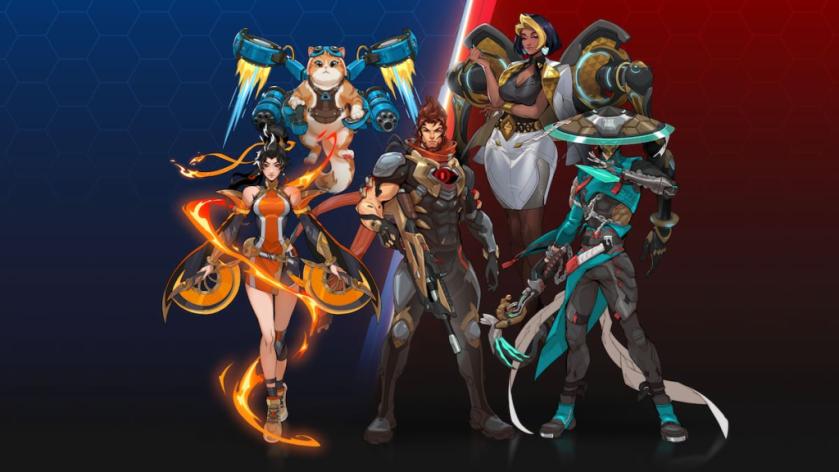
Earlier this year, Overwatch dropped the 2 from its title, re-focused on an overarching narrative, and launched five new heroes all at once (10 total in 2026), signifying a big swing for the decade-old competitive FPS.
This followed 2025’s large-scale update that added things like Perks and Stadium mode, and is quickly becoming a pattern of things to come: a big update at the beginning of every year to keep things fresh and reinvigorate the community. And according to OW devs I spoke to in a recent group interview, it’s worked and will continue.
“I think our launch this year was huge for Overwatch,” game director Aaron Keller said. “If you look at the trajectory that we’ve had over the past few years, you can really see players getting excited for the game. And even sentiment for Overwatch as a game and as a franchise really turned around, not just for our players, but I think for a lot of the gaming community in general.”
Looking back on 2025’s launch, Keller said Blizzard “wanted to have this big moment where people could sit up and take notice of what Overwatch was doing,” and Perks were a big part of that. Keller said that “perks is probably one of the most successful gameplay systems that we’ve introduced in the game,” but lamented that “our lesson from [2025] was that we hadn’t gone big enough.”
“We were doing everything we could to really focus on the core game for our players, but we thought that we could do more,” he said. “We thought that we could make the start of the year more impactful, more exciting. And that’s what really drove us to do everything that we did this year, and I think that it was successful.”
When I asked if the changes had made an impact on the game’s revenue or the business, Keller said that it’s not something they talk about publicly. But “in every instance of player excitement, player sentiment, seeing the results with the broader gaming community, I think it was a really successful strategy and a really successful launch.”
The biggest shift this year, other than quality-of-life updates and the largest hero release cadence the company has ever had on the game, has been a renewed focus on the game’s storyline and narrative.
“Part of those two years wasn’t just the plans on the team and making sure different pistons on the team are getting activated and firing as best we can,” associate game director Alec Dawson said. “It was also regaining trust with the community broadly. I think for a while there, we knew we needed to over-communicate, making sure we were taking the right direction with basically every single element of Overwatch. And a lot of that was being humble, listening.”
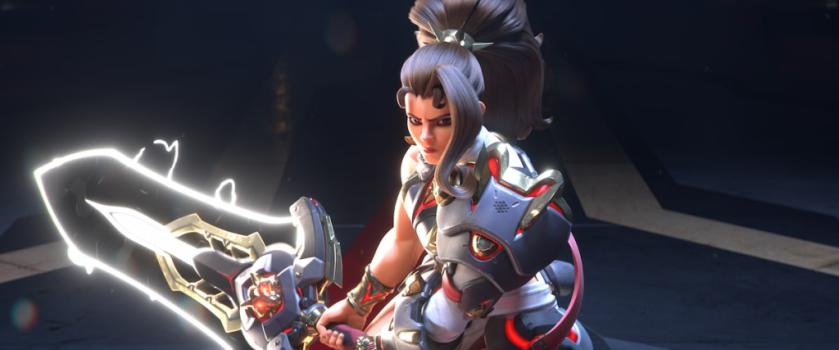
“When you look back at some of the things that we’ve delivered in the past few years, it’s really what a lot of things players were asking for,” Dawson continued. “I think every single survey we’ve had the players, they’re like, we want more narrative, we want more narrative. And we wanted to bring it back in a really good way and tell a compelling story throughout the year, and what you’ve seen with Vendetta and Doomfist Arc this year.”
This year’s Reign of Talon story arc closed out with Doomfist returning to defeat Vendetta, and setting up one final season to close out 2026, including one final hero whose trailer will serve as a “prologue” to 2027’s narrative, followed by what Keller thinks “is the best cinematic we’ve ever made” coming early next year.
“We’ve been so excited to return to narrative this year, and it’s the first time that Overwatch has told, like, a linear, comprehensive story over the course of a year, you know?” Keller said. “And we have seen a lot of, like, really great reaction from our players as we’ve done this. And we do have the intention to continue doing it. I’m so excited for the 2027 story that’s going to be coming out.”
Keller said that the team has learned lessons on how to better deliver narrative and hopes to improve upon it, including its bombastic cinematics, hero trailers, “micro stories,” but there’s still room for improvement.
“I think that it can be easy to miss some of this stuff when we release it,” Keller said. “Like, just yesterday, we released a cinematic that was the wrap-up to the 2026 story. It was our finale. It’s this really amazing piece of this fight between Vendetta and Doomfist with Overwatch present. And sometimes I feel like unless you’re really following along, it might be easy to miss some of those pieces. So I think one of the things that we’re talking about, just, how do we get the story out in front of players to where it’s not only, a can’t-miss moment, but it’s also something that they can’t miss because they also know about it, you know?”
Read what’s behind the latest news in gaming (with a bit of snark) by subscribing to the Destructoid Checkpoint newsletter!
Dawson mentioned that they want to improve at storytelling in other ways, like for example, “maybe the story before the previous one affects the world state in some way that leaves room for other stories to have their time in the sun.”
“So I think there’s, making sure the connective tissue, not just within the year itself, but from arc to arc, feels like something that is cohesive to the world of Overwatch,” Dawson said. “And it’s like going through, the whole thing changes in a way that makes this next thing possible. So, you know, some of those stakes I think we’re looking at and how your relationship can change with Overwatch, but also with the heroes themselves.”


