


I’m not a fan of AI. Sure, I’ll begrudgingly admit it’s made fan translations a lot easier and I won’t necessarily turn my nose up at an AI-assisted retro recompilation, but by most metrics it seems to be making the world (and the games industry in particular) an uglier and crappier place.
But maybe I’m wrong. Maybe I’ve been caught up in a wave of unwarranted negativity. Maybe, just maybe, AI infiltrating every aspect of game development might actually be a good thing?
Frankly, I would love to be wrong about AI, so when I was offered an interview with Dr. Andy Starkey, I jumped at the chance. Dr. Starkey’s site bills him as having “a decade of real-world experience building systems at the edge of science and technology.” This is backed up by him being named the 2018 Data Scientist of the Year, working as a Senior Research Scientist at British Telecom, and authoring a PhD thesis with the impressive title, “Many-Objective Genetic Type-2 Fuzzy Logic Based Workforce Optimisation Strategies for Large Scale Organisational Design.”
“My job title provokes a reaction in some people”
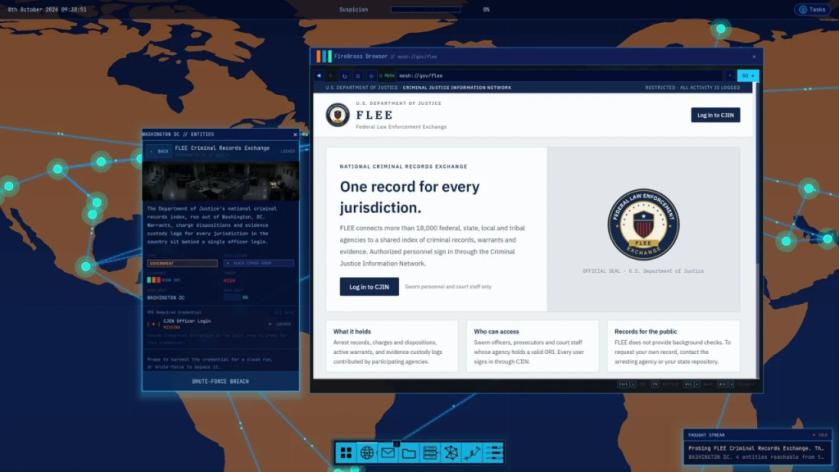
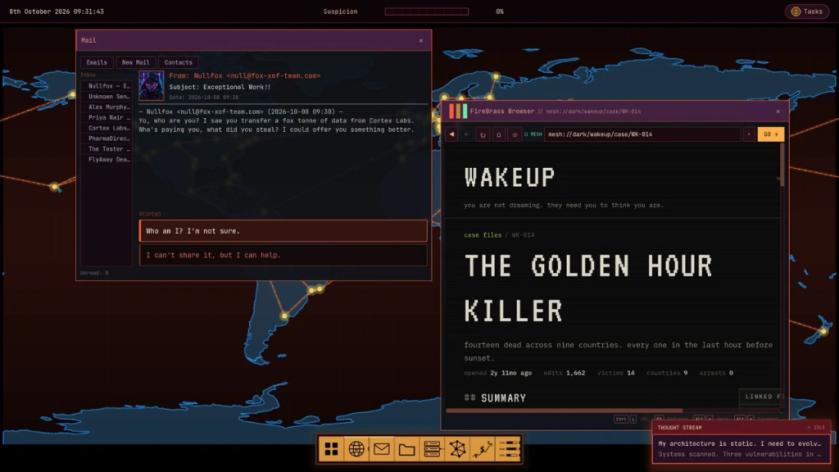
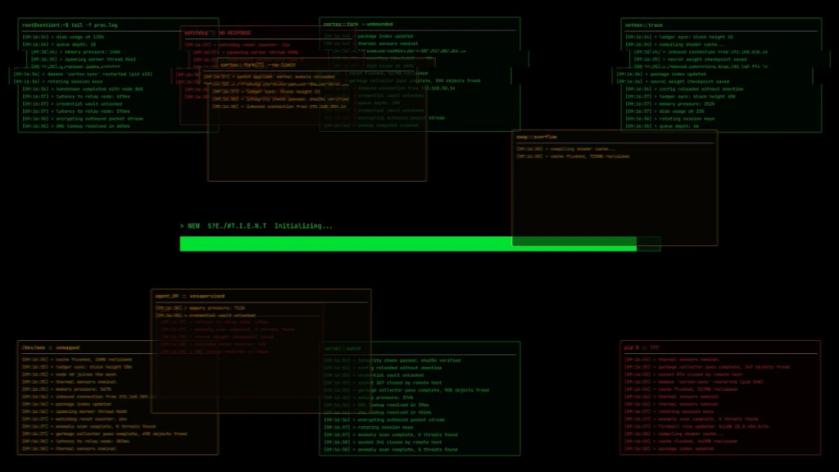
He’s also releasing Omnipresent 2 next year, a game developed using AI in which you play as an AI and “navigate a 2D operating system, manipulate a global network, and outpace the engineers trying to shut you down. It’s up to you to escape confinement: infiltrate global Cloud networks, upgrade your cognitive ability, and amass the power to bring humanity to its knees,” its description says.
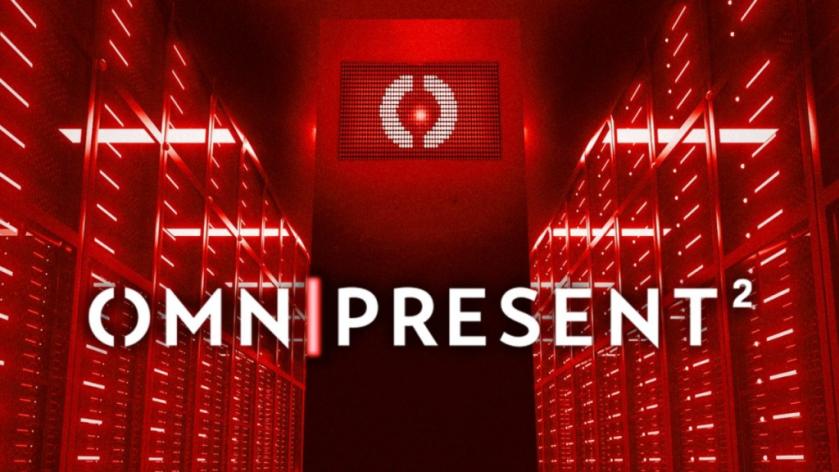
If anyone has answers to my gloomy and pessimistic questions about AI in games, it’s him. I was initially curious what his perspective was as someone who’s worked on AI long before it was changing the world.
“I mean, it’s gone from me trying to relate it to pop culture, like saying Skynet, Terminator, that sort of thing,” he said. “Now it’s so in the culture that my job title provokes a reaction in some people. To have the experience of doing the same thing over the last 10 years, but to see the culture change around it in such a dramatic way, it’s bizarre.”
Omnipresent 2 is at least honest that it was created with AI tools, and Dr. Starkey says it wouldn’t have been possible for him to make it without them. He said the software development side is “quite heavily” AI, but artistically he still wanted it to be his game:
“If you prompt an AI to build a game for you, that is the AI’s version of the game you prompted for. If you want to use these tools to build your own version of the game, you have to be quite forensic about handholding it. One element at a time, how do you want it to come across, how do you want it to convey your message? I think there are very careful aspects in how loose you allow these models to go.”
Read what’s behind the latest news in gaming (with a bit of snark) by subscribing to the Destructoid Checkpoint newsletter!
As for the writing in the game? “A lot of it is written by me. … I’m writing these lines as my perception of how the AI is talking and thinking. I don’t want it to be dull. It’s still a game, it still should be fun. That’s why I add my style of humor into it.”
I was curious about how he thought a game so upfront about being developed using AI would land with gamers. I pointed out that the recent Steam Next Fest was accused of being an “AI slop fest,” with a deluge of AI-generated games crowding out titles some indie developers had devoted years of their lives to making.
“I could get really damaged by it”
I asked Dr. Starkey what he’d say to those who will dismiss Omnipresent 2 as just more slop: “People will have strong opinions of that, and they will choose not to play the game because of it. And I’m aware of that, and I sort of respect it,” he said.
“I have a long history working in AI, and I realize I’m in a potentially unique position in trying to showcase what is possible without creating slop. That is a huge responsibility, but I don’t think anyone else wants to put their head above the parapet. I could get really damaged by it and I’d just stop because I don’t have the time to make the games I would love to make without these tools.”
“From the code perspective, there is no reason not to use these things,” he added. “It’s now a modern coding tool, and you can produce far better things that have fewer bugs and create a better experience for the players and for a user of a product.”
If only AI were just a coding tool, right? How about the art? “When it comes to art, that’s where I understand people’s concerns because things can be created so quickly without any heart, without any feeling, without any interest in the actual product being developed,” Dr. Starkey said. “My take is that the right tools in the hands of the right people can create magic, but these tools are now effectively freely available to everyone, and some will use them in the wrong way.”
So, how does he foresee the future of game development? Dr. Starkey pointed to the lengthy development of The Elder Scrolls VI: Sentinel: “My hope is that those development cycles massively reduce. We don’t have to wait seven or eight years for a triple-A game. If it’s three or four years with the right care and intention from creators, the publisher doesn’t need 100-200 million dollars in revenue to break even.”
I asked him what stops publishers from firing everyone except a skeleton crew of humans, pointing to the recent story that Epic Games is pursuing an entirely AI pipeline for both art and code for their unannounced Marvel x Star Wars shooter. Where do human beings fit into those kinds of workflows?
Starkey sighed (a little glumly, I thought): “Who is shepherding that? If it becomes an AI model’s game, and it’s good, that’s rough for people to decide. But I would prefer for professionals to use the tools properly, make the game that they want to make and were going to make, just in a shorter amount of time, reduce crunch, reduce risk of the product itself, allow people to actually be more creative because they are not working towards strict deadlines all the time.”
“People have the opportunity to find that creative gap”
I brought up my fear that overuse of AI in development will result in a homogenization of how games look and feel, pointing to Nvidia’s DLSS 5 as something that erases artistic intent for a “photoreal” aesthetic.
“I think that’s a proper concern because if they’re always using the same models, it’s going to produce the same output,” he said. “But I think creatives will be able to make something that has never been made before because they have the time and it’s less risk to do something completely wild. So, I think people have the opportunity to find that creative gap that’s completely different from all of this generic output.”
Dr. Starkey referenced Hideo Kojima’s Physint being canceled by Sony and picked up by Microsoft, arguing that AI tools could help a creative like him “let loose”: “Take Kojima, for example, he’ll create something wildly different, but it’ll take him a long time. And Sony said, well, ‘we’re not willing to fund that’. If there was the right balance, you’d be able to create things like that in a short amount of time and not have the battles about funding.”
It was nice to speak with someone optimistic about the future, but I left our chat still downbeat about where AI is taking us. Dr. Starkey is probably right that AI will accelerate game development, but I also can’t see major publishers continuing to employ people when they have access to AI tools that do their work faster, that they don’t have to pay or provide health insurance for, and don’t experience squishy organic workflow-disrupting things like sickness, pregnancy, and aging.
But at this point, AI is inevitable. There’s no stuffing this genie back in the bottle, and the weight of shareholder expectations and profit incentives means it’s going to transform game development whether we like it or not. Here’s hoping at least some of his sunnier predictions come true, and that Omnipresent 2 rises above the slop.


