


When I was growing up, the late evening news would always start with an ominous question: “It’s 10pm, do you know where your children are?”
Nowadays, for a lot of parents, they know their kids are at home in the room playing video games. But beyond that? There’s a genuine level of concern, according to a new study, and I totally get it.
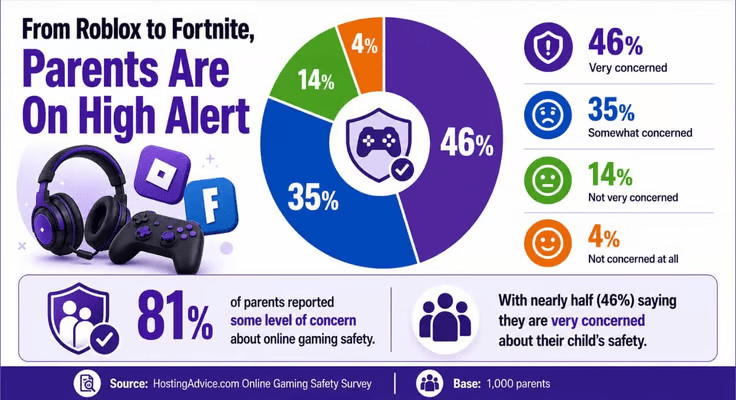
Of 1,000 parents surveyed by HostingAdvice.com, 81 percent reported “some level of concern about online gaming safety.” With online multiplayer being a huge part of many kids’ daily lives (Roblox and Fortnite top the list of popular games with younger children), it’s more important than ever for parents to monitor what their kids are playing and who they are playing with.
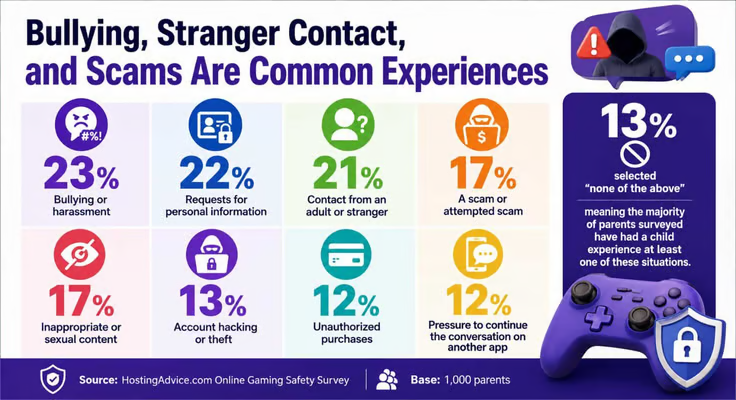
But where is the concern coming from? Well, everywhere, basically. There were several reasons given for the need to be worried, including bullying or harassment, a scam or attempted scam, requests for personal information, and most scarily, contact from an adult or stranger.
Roblox, for example, has been the subject of multiple lawsuits regarding child safety from potential predators, and has even come under fire from bipartisan members of the US Senate.
Frankly, parents are right to be concerned about what their kids are doing online. Everything they do should be monitored, and all parental controls should be exhausted. The kids may not like it if they can’t easily chat with friends online, but the dangers of the world must be explained.
97 percent of those surveyed said they have at least one safety measure in place to protect their kids. Parental controls, restricting chat, messaging, or friend requests, and enabling two-factor authentication are just some of the methods used.
“While having conversations is important, families who combine communication and proactive safety measures, such as parental controls, may be better positioned to protect their children when gaming online,” the study concluded.
My conclusion, though? Obviously this is just a smaller sample size, but only 81 percent of parents being “concerned” is way too damn low. It should be triple digits. I don’t have a kid of my own yet, but if I ever do, they will be heavily monitored whether they like it or not.


