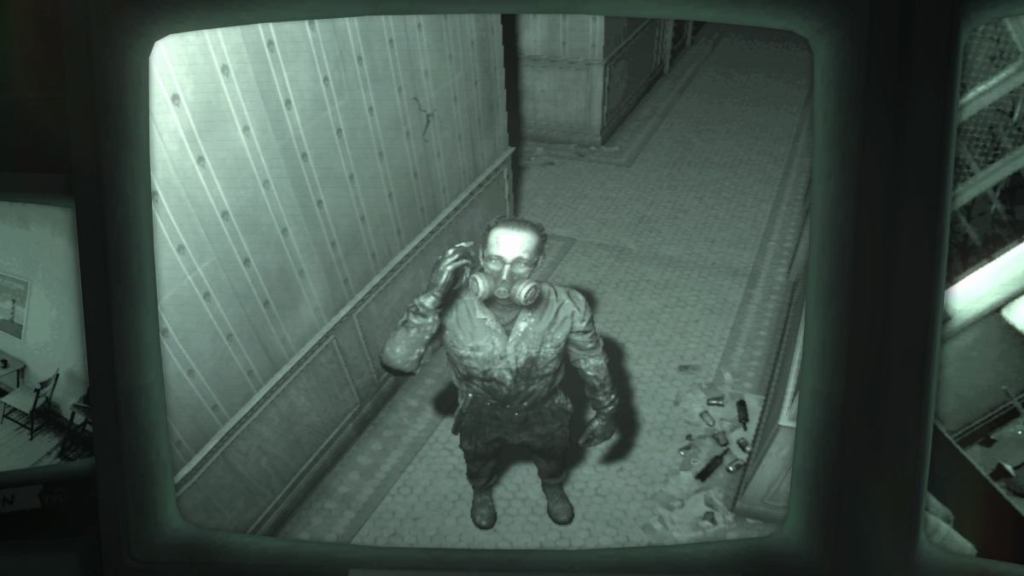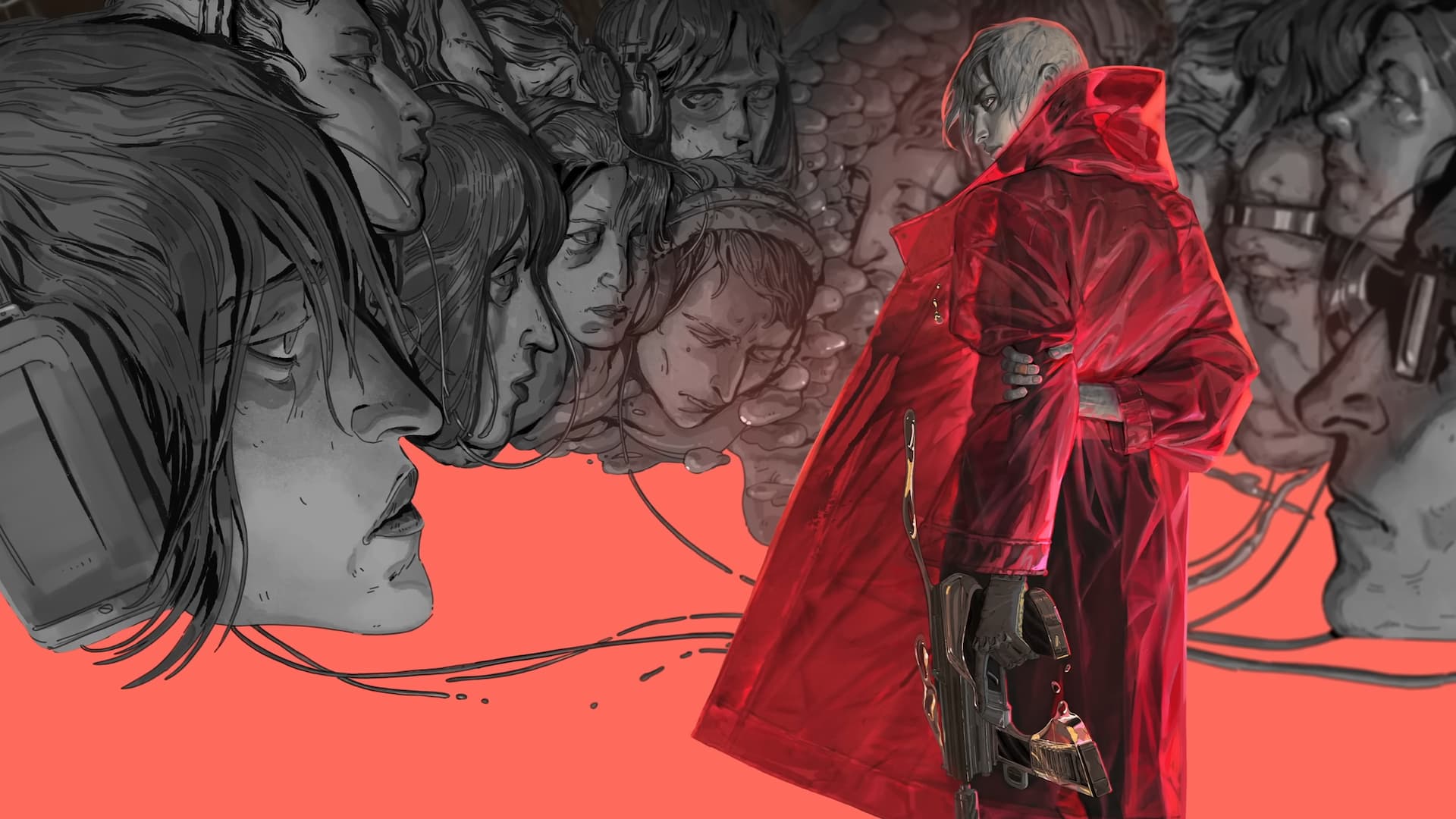


Spies have always been an interesting protagonist for any tale. Since James Fenimore Cooper’s The Spy, they’ve run the gamut from the machismo-focused kineticism of James Bond to the bogged-in-treacle machinations of a John le Carré novel. What nearly all spies have in common, however, is the idea that they die twice.
Being a spy means wearing a facade, living a lie, eschewing comfort until you can no longer maintain the pretense, tending false human connections that flower into simulacra of the real thing, and then being pulled from the field and watching it all fade behind you. Perhaps you mess up, and people die, or you nearly die yourself. Maybe you get something wrong, you’re too slow to move, or figure something out. The step you would normally take is, jarringly, abnormally missed. You can no longer be relied on. This is your first death, the death of the spy construct that was built on top of your humanity.
Credentials are pulled as you’re no longer fit for the field, and you’re sent somewhere that’s worse than death, locked away into a normality that you long ago lost the ability to exist in. You are now outside the machine that ticks away beneath the face of society, forced to slowly become human all over again, burdened with the weight of what is real until the second, truer death comes for you. We’re told former spies breathe their last in only two ways: alone and abandoned by the family and society they turned themselves into a chimera for, or in the presence of another spy, someone who still takes the right steps and makes the right decisions. They’re here on behalf of the people, allies or enemies, who need you to go away permanently.
But what happens if you get called back? What happens if the needs of the future outweigh the cost of the past, and you’re pulled back into the spy game, no longer the tightly wound machine you were, nor the fully realized human you were on your way to becoming? What then? This is the furrow the Zero Parades: For Dead Spies seeks to plow.
The game that came in from the cold
It’s practically impossible to talk about Zero Parades without acknowledging the existence of Disco Elysium. ZA/UM’s 2019 offering hit most Game of the Year lists like a bomb. Disco was lightning in a bottle, the kind of game that comes around rarely and almost demands a follow-up, just to see if the team is capable of taking the same swings again.
That, sadly, wouldn’t happen as major players and important elements from the ZA/UM team would “involuntarily” leave the company, plunging the studio into the kind of drama that sits at the center of the story about whatever comes after. And here we are, firmly in the after.
While Zero Parades shares much with Disco, it’s also its own game. There will be a constant temptation for contrast with that original effort, for good reason. If you enjoyed Disco, you will likely enjoy Zero Parades, as it has a lot to offer. It’s not the same game, despite its shared DNA, nor should it be, but it is, in its own right, an excellent way to spend your time.
The most important thing to note is that Disco was, ultimately, an exploration of absurdism, and Zero Parades is not. The twisted undercurrents of humor and the black edge of comedy that were so pervasive in the former are not as present in the latter. Zero Parades is a bit more serious, and it offers its own brand of challenge in a way that Disco did not. Part of this is likely due to the absence of writer Robert Kurvitz, an essential element of Disco, who’s no longer with ZA/UM.
To wear the Mask of Dimitrios
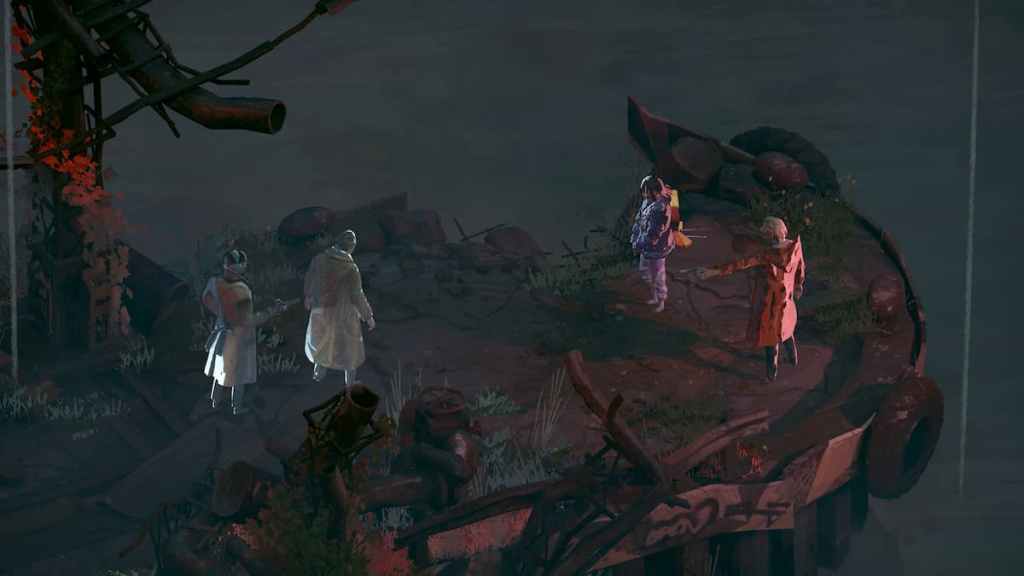
In Zero Parades, you play as a spy, Hershel Wilk. Wilk has already experienced the first death, a grand failure leading to a catastrophic end to her career. Now, for reasons unknown, she has been called back after five years on the outside. There’s a mystery to discover, refine, and finally resolve, and someone seems to think that Wilk is the one to do it.
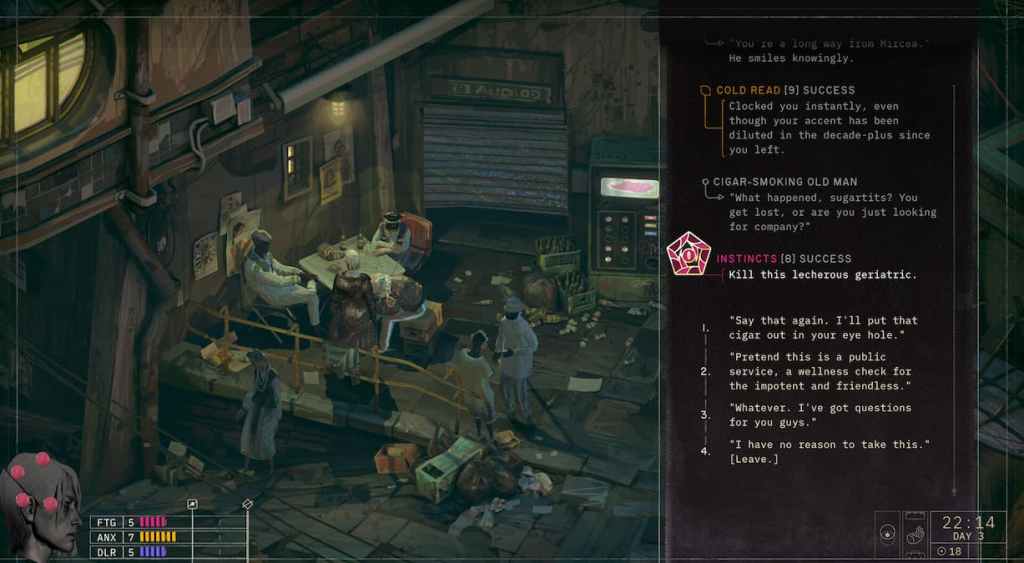
You interact and explore the world as an inquisitive mind, peeling back layers of mystery. There are seemingly endless conversations to have, often with people who seem completely unrelated to the central conceit of the game. There’s so much dialogue to experience here that it would feel intimidating if you saw it all laid out before you. But sifting through it line by line, asking questions and absorbing responses, feels as wonderful and engaging as it ever did in Disco.
Wilk arrives in the game, as do we, from a moment of harsh delirium. Her main contact, PseudoPod, sits drooling in a chair, and the operation is dead in the water before it even begins. The very first person you need to talk to will say practically nothing at all, and the rest of the game becomes about asking the questions that they could so easily have answered. Wilk is ordered home, but doesn’t want to go. Home might as well be the final death, but here, the city of Portofiro, where this next chapter of Wilk’s life will play out, is comfortable and accepting and punishing and terrifying, and leaving now is just not something she can do.
You can’t take it with you
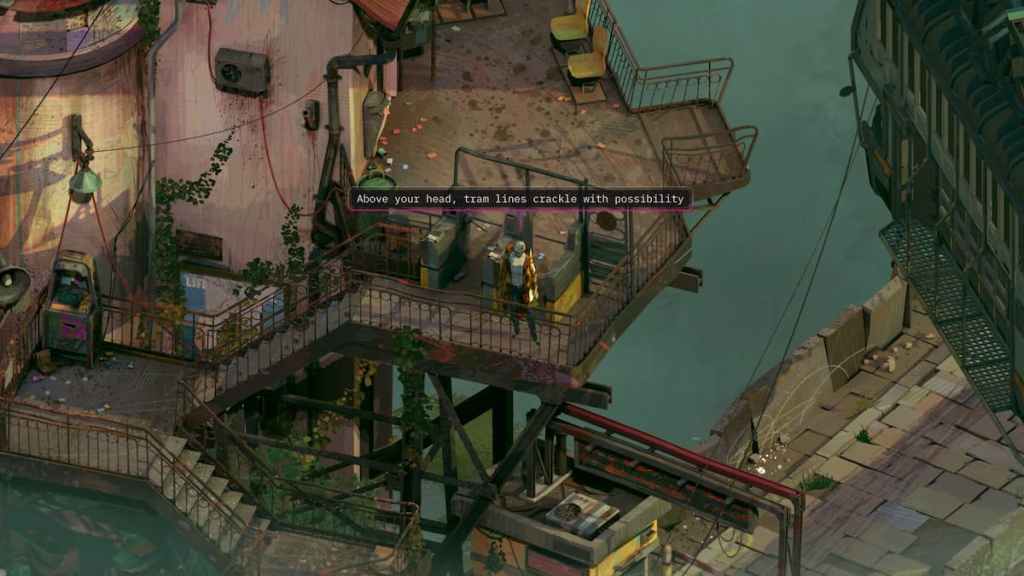
Wilk is both a bundle of brilliance and utterly flawed. As you explore the world, engage in seemingly endless twisting conversations with yourself and others, and try to find all the pieces of the puzzle, you will build up three major stats: Fatigue, Anxiety, and Delirium.
These stats lie at the heart of your skill tree and determine your ability to understand the world. As you encounter new knowledge and mysteries, you can employ stat rolls tied to all three to try to figure out things people might not want you to know. If any of them climb too high, you will not be able to use the connected skills until you reduce them, the punishing nature of the triumvirate of terrible emotions rendering you, if not useless, then definitely suboptimal for the task at hand.
The foundation of Wilk is that she’s unwell and likely shouldn’t even be in the situation that she’s in. The cost of being back is brutal and erosive, and if you max out either Fatigue, Anxiety, or Delirium, you will then need to reduce one of your skills within that category by a point, causing the meter to reset and starting the process all over again.
This slow degradation over time makes the game harder, and you rapidly realize that Zero Parades becomes about trying to find out when you should push Wilk’s limits, and when you should back off. There are important bits of information and revelation hidden behind the need to smash our way through any of the stats, but there can also be nothing beyond these barriers other than a hit to a skill point and more damage for Wilk to endure.
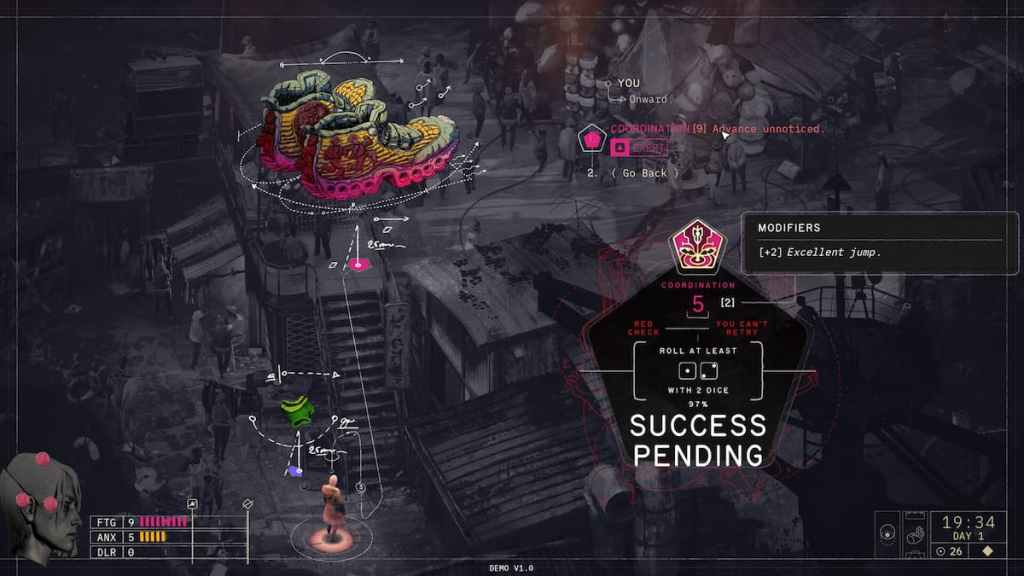
Sometimes the choice is yours, as you can willingly risk more Fatigue, Anxiety, or Delirium to increase the odds of success on a dice roll mid-conversation through a process called Exertion. Even if you succeed, you take some additional points in the appropriate bar, but the information earned can be vital.
These moments of Exertion happen with the mechanics laid bare. You are given some dice, a target number, and you roll them. Success on a low percentage chance feels amazing, while missing an easy win feels incredibly punishing, like there is some little gremlin living in the heart of the game that exists only to make you feel regret. It’s a great mechanic, turning fear into elation and victory into tragedy with ease.
Sunny Portofiro
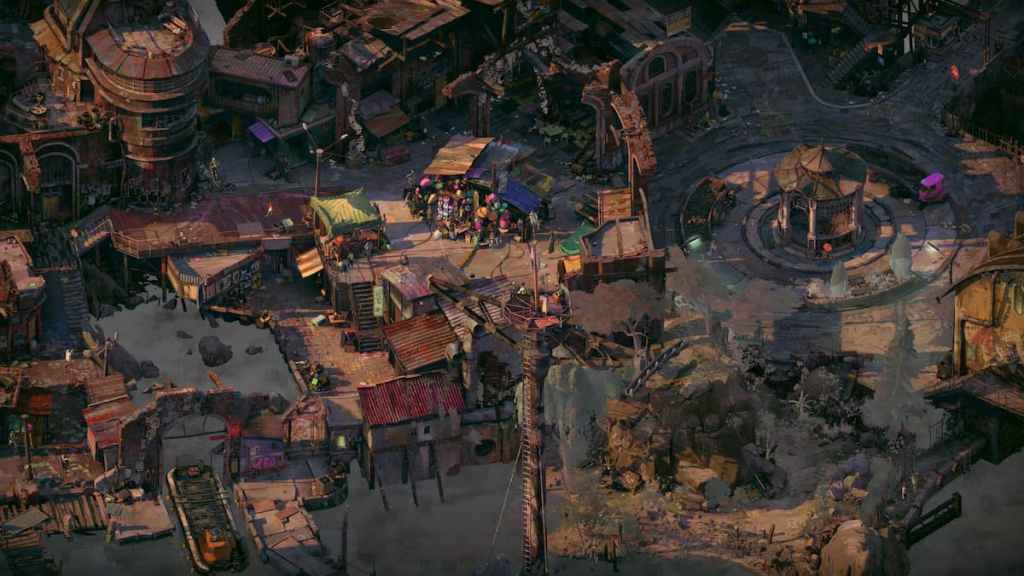
Portifiro is the stage against which the mystery unravels, and like all good games, proves to be as much of a character as the characters themselves. In Portofiro, media is a menace, and the failing Communist overreach struggles to keep out all manner of thoughts, ideas, music, and more. The old empire wants back in, and it seems the way they plan to do it is by flooding Portifiro with a thing that’s hard to kill: ideas.
Portofiro is a city of bootlegs, of copies of copies, strange facsimiles of original art begged, borrowed, and sold to those who wish for an unexplainable “more.” The concept of intellectual rebellion is carefully disseminated for minds of all sizes, from the ease of posters on the wall to the complexity of music that purists would never even listen to, merely imagine, and through it all, Wilk wanders.
It’s here that the game blossoms into dangerous self-awareness, as Zero Parades itself is a copy, as is Wilk, as are you and I, and the team that made it. If something is only heavy-handed in hindsight, doesn’t that just mean you had a lot to learn?
Portofiro is worth exploring, and doing so carefully, with oddly contrasting watercolor graphics turning almost every location into a potential China Miéville book cover. It’s a beautiful backdrop, and deftly constructed, people out of people and places that are on their last legs, but just starting again, desperate to understand and be understood. There’s a brutal philosophical undertone to everything that often comes from desperation and need, as people consider the nature of unfairness, cruelty, love, and recklessness.
The writing in Zero Parades is good enough that heavy-handedness is somewhat rare and almost always introspective, and the developers are clearly trusting the audience to be able to make their own interpretations of the work and themes. It becomes difficult to play Wilk as a character, and the overwhelming urge to make decisions as yourself must be fought, or surrendered to. Zero Parades invites self-reflection, especially for those who grew up in a world of bootlegs disseminated through a social net, rather than the careful web of corporate advertising.
But this is when Zero Parades really turns the screws, and as you surrender yourself to the language of melancholy, the pressure gets turned up even more.
Copies of copies of copies
I wasn’t sure what I would feel when I first started playing, and there’s still a core part of me that’s conflicted and confused just because I need another run through the story to experience every possible conversation. The game itself is fantastic and deserving of all the praise in the world. I want to talk about it effusively and also say nothing at all, because so much feels like a pointless spoiler when I can just say “It’s good, I like it,” and you can take that, or leave it.
There are only a small number of areas where Zero Parades falls down, but never anything huge. There will, naturally, be some clash with some parts of the writing, akin to a particular level of any game just feeling a little weaker than others. The voice acting, while normally great, can occasionally miss, and I get the feeling some people might struggle with the main voice you hear through the game.
I very much enjoyed my time in Portofiro, and plan to return to take a different version of Wilk through her fugue and confusion all over again. Ultimately, I think a desire to play again is the ultimate endorsement you can give to any game.