


As soon as I saw Rebel Wolves’ first teaser for The Blood of Dawnwalker, I was immediately hooked. It’s been a long couple of years since then, and we’ve seen so many great games come and go in that time.
But what Konrad Tomaszkiewicz, the former game director for The Witcher 3: Wild Hunt, and his team at Rebel Wolves came up with is nothing short of amazing, and I have a feeling that this could very well be 2026’s game of the year.
Whether it’s the combat, the story, the characters, or the setting, every part of The Blood of Dawnwalker screams high quality, and I genuinely believe nothing this year comes even close to it.
Here is our full review.
Darkness comes to the valley of blood
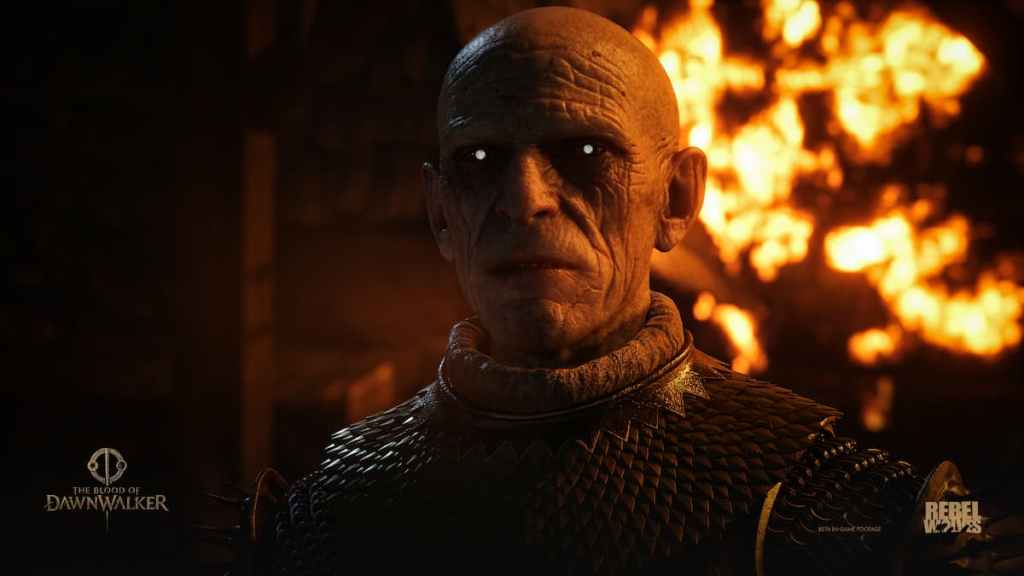
In The Blood of Dawnwalker, you play as Coen, a Slav peasant living in a fictional valley somewhere in the Carpathian Mountains. He is of humble origin, living with his father, his siblings, and his feeble-minded mother, whom the family is desperately trying to cure. The game’s story starts right after that clip in the trailer, where Coen and his sister are rescued by a mysterious bunch of vampires led by the now-crowned Knyaz Brencis.
Once a month, the people of Sangora have to pledge a pint of their blood to the vampires, and in exchange they are allowed to drink the vampires’ own blood, which cures all illnesses, most importantly the currently ravaging Black Death. This yoke comes at a cost, as Brencis has a tendency to cull the weak, meaning Coen’s own mother could soon become food for this host of darkness.
One thing thus follows another, and the peasants of Laslea, Coen’s village, rebel. They try to dig up silver to use against the vampires, but their plot is unravelled after someone tips off the vampires, or vrakhiri, as the game calls them. Coen is then transformed into a vampire by Brencis to punish his father’s insolence and Coen’s participation, but something goes wrong, and Coen instead becomes a Dawnwalker — a vampire who can survive during the day.
This then forms both the narrative and the gameplay core of The Blood of Dawnwalker. During the day, Coen is purely human, using swords and other weapons to fight, whereas during the night he transforms back into a vrakhir, gaining all sorts of powerful abilities like walking on walls, using his deadly quick claws to fight, and, of course, becoming reliant on drinking blood to sustain himself.
Brencis, being angered by the peasants’ revolt, wants to become a King rather than stay a Knyaz and therefore sets the next month to be his coronation. Instead of merely pitching a pint of their blood, Brencis starts collecting people from across the valley for “draining,” including Coen’s family. This gives Coen 30 days to prepare for the fight with Brencis, as well as to disrupt his and his vassals’ plans.
Time is of the essence
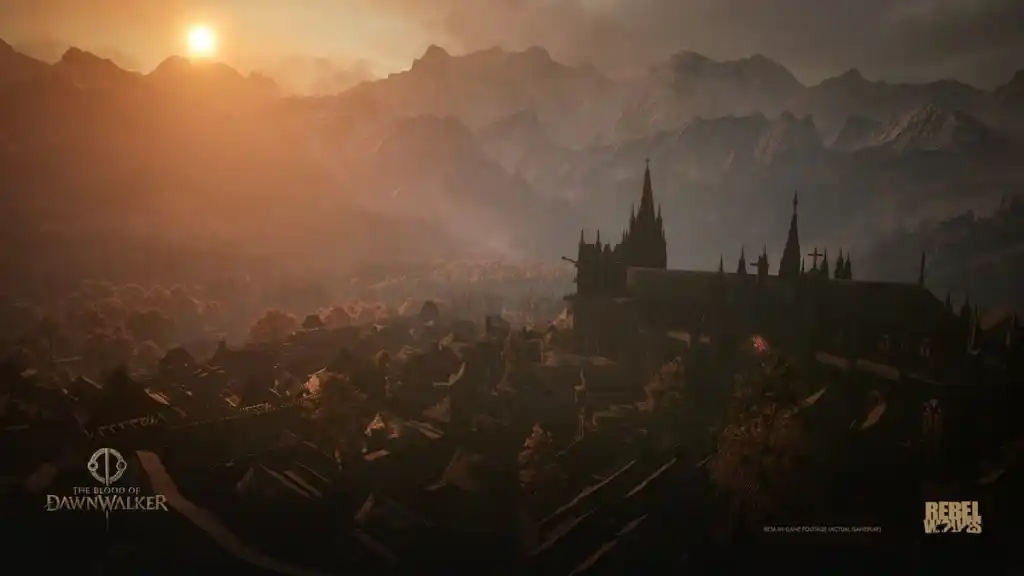
The 30-day in-game timer must be respected, and if you wish to achieve a proper ending to the game, you must complete it within this temporal framework. Time does not flow in, well, real time, but is instead divided into slots — eight for the day and eight for the night, or 16 total for each in-game day.
Every core action in the game spends a slot or more, including doing quests, leveling up crucial abilities, waiting, and doing main story missions. Side content can also end up taking time, and time thus becomes a sort of currency that you spend in exchange for loot or levels or XP.
This opens the game up to tremendous replayability: you won’t be able to complete all quests in time, nor will you have the chance to unlock every ability and passive in time, nor can you clear all side content and have enough time to spare. Quests also unfold differently if you spend too many slots while having them in your journal, meaning some things must be completed as soon as possible to avoid possibly dire consequences.
You’re under constant pressure to pick and choose your fights and builds, and since you’re constantly prioritizing, that means you’ll inevitably have a strikingly different experience from someone else with different priorities. I absolutely loved this mechanic through and through and am genuinely excited to go back to play the game more and spend my time differently, focusing on other abilities or quests.
Furthermore, some things can only be done at night and some during the day, meaning the game state is drastically altered depending on the time of day. I loved how this mechanic constantly kept shifting my gameplay around, from methodical and slow to chaotic and brutal. It was constantly fresh, and since I balanced out how long I spent in each, I was always excited to become a human or a vrakhir again.
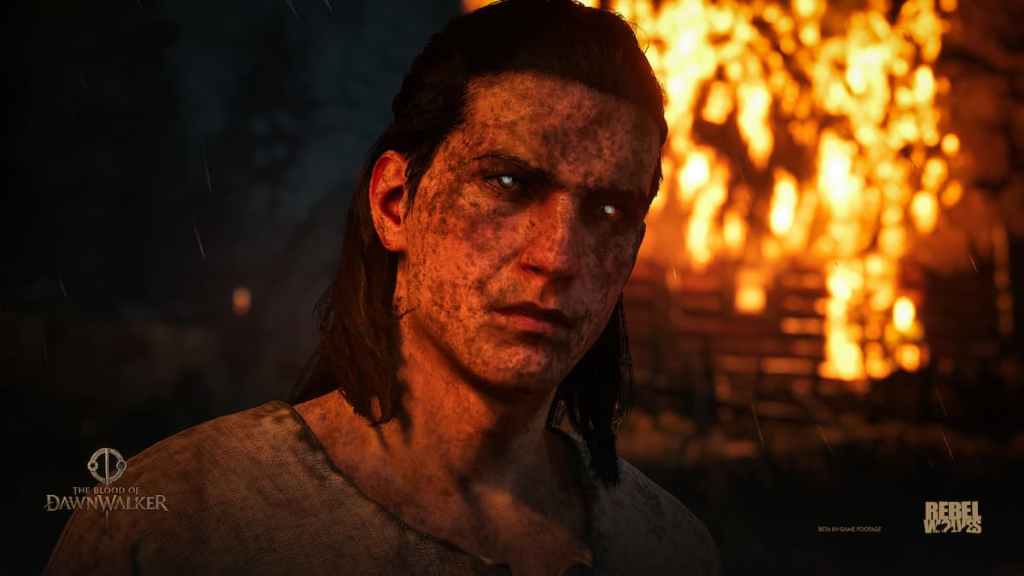
Time isn’t the only thing impacting your overall experience, though. Infamy, as a system, is there to make you, the player, become more of a threat to Brencis’ rule. Every now and again you will increase your Infamy level, forcing Brencis to issue a new edict that can disrupt your flow.
For example, if you’ve been too naughty, Brencis decides to put more hostile patrols in cities and towns or reinstitutes old taxes and tithes to make merchant goods way more expensive.
Infamy is increased by disrupting his plans, either by doing side missions that cause damage to one of Brencis’ boyars or by killing the boyars altogether and taking them out of the picture. All sorts of things can increase your Infamy level, including one of the best side quests I’ve ever played in an RPG.
Go to the top of the tower while hunting for a particular book. Trust me.
Infamy constantly kept shifting the goalposts for me, which I found genuinely exciting. The world reacted constantly to my activity, and consequences weren’t only tied to what I did in conversations, like in The Witcher 3. While I would’ve loved to see a lot more reactivity tied to how I behaved as a vampire, there is still a lot of impact that the player can make through sheer gameplay.
I hope down the line the devs will address us, giving in to our inner beast and eating everyone we can (you can, actually, dry the blood of every single person you come into contact with as a vampire – yes, even crucial NPCs, which is just the best thing ever in my opinion).
Simple combat core, but the possibilities are endless
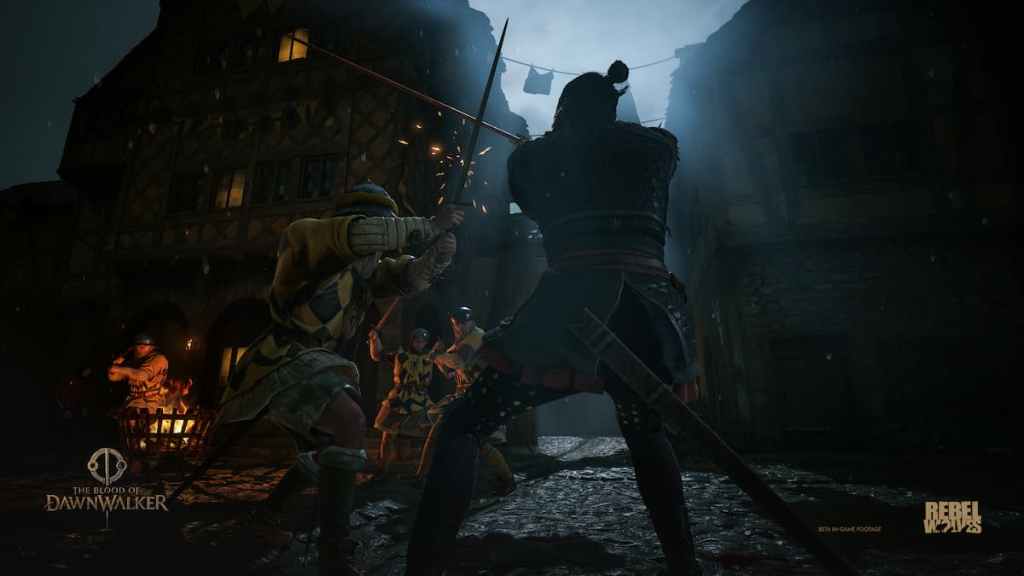
The combat is directional and very similar to what we have in games like For Honor. If an enemy attacks from the left, you block from the left, simple as. However, there is a perfect parry system in place, allowing you to time your directional blocks to throw the enemy off their feet and get a couple of strong hits in.
A lot of perks you can unlock are heavily dependent on this perfect block system, and the game encourages you to engage with it as much as you can. And so do I. It’s one of the most satisfying combat systems I’ve encountered this year and stands shoulder to shoulder with Pragmata in my eyes.
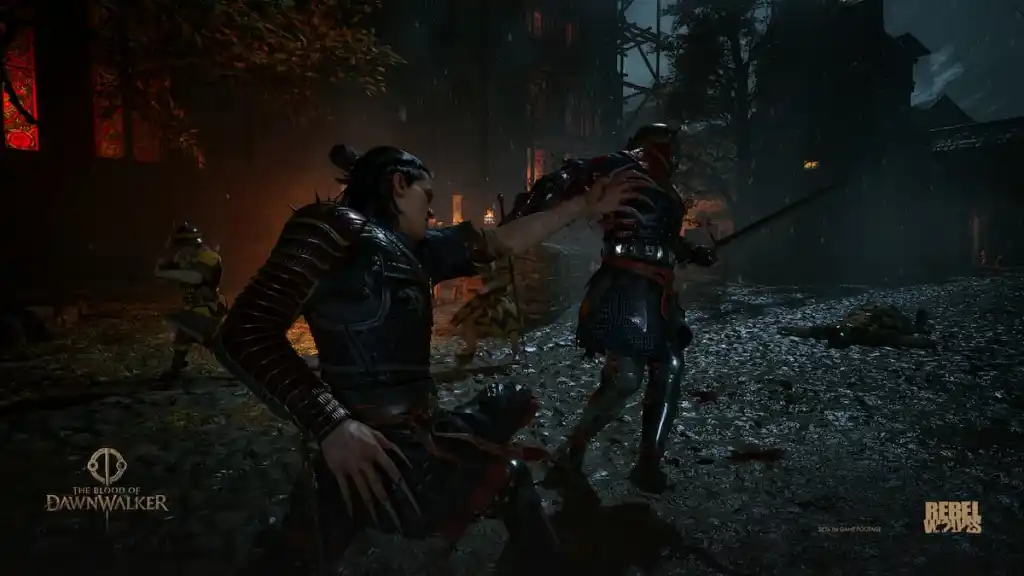
Every block feels so good, and once you start using your abilities, things only get better.
During the day, you’re basically a swordsman (though there are axes, hammers, and other weapons). Every fight unfolds like a Hollywood duel, with you blocking and deflecting enemy attacks. You return the favor either by attacking (also directionally) or by using various swordsmanship abilities, such as charging a single enemy or using a broad swing to do AOE damage to everyone around you.
It’s very methodical during the day, but chaos nonetheless emerges together with the moon.
In vampire mode, combat is still directional and the same at its core. However, Coen is significantly faster and more brutal in his attacks and can, if you opt for it, use exceptionally powerful vampire abilities. From drinking blood to blinking behind an enemy’s back to eviscerating them with his claws in gruesome slow motion, Coen can truly tap into his inner vrakhir and unleash total carnage on his enemies.
At night, vampires and monsters you fight will also be much more powerful and significantly faster, meaning these duels, unlike the daylight ones, play out as a true battle of the beasts.
I would’ve liked to see more abilities in vampire mode if I’m being honest. Coen at times felt a bit too slow for a vrakhir, and the spells at his disposal, while amazing to play with, did not allow him to truly unlock his potential as a vampire. More abilities can be added post-launch as the devs assess player feedback, but I honestly think there should’ve been a little more oomph to the combat kit, not that it ever felt like it lacked anything overall.
The parts during the day, though? Those were as good as they come.
Endless lore and a gut-wrenching story
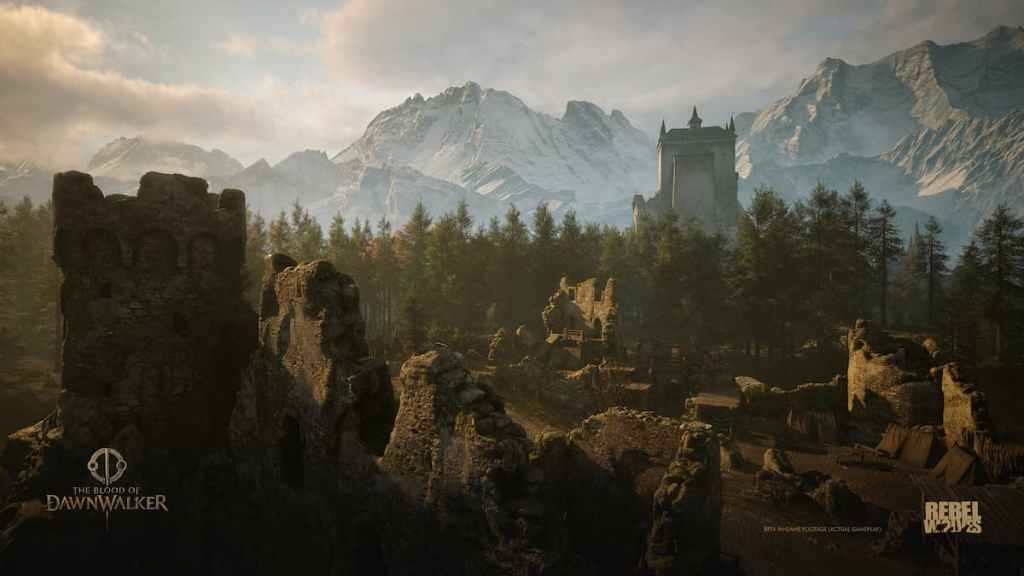
Of course, being a story-driven game, The Blood of Dawnwalker banks a lot on its narrative, and the developers absolutely outdid themselves both with the setting and worldbuilding and the main story itself.
Coen’s journey to save his family is absolutely gut-wrenching. He constantly blames himself for what happened and is having a tremendously hard time reconciling his new state as a vrakhir, which he, as a Christian, considers to be a form of eternal damnation.
The folks he meets on his path are just as complex, and his vrakhiri side tends to alienate a lot of people around him, even if they do seem “fine” with his situation in general. There are romances, too, and one of them stood out to me so much that it almost brought a tear to my eye when I first played it. It showed me how much emotional depth there is to this game and its cast, and I’m pretty certain you’ll love them just as much as I did.
Now, about the worldbuilding: the Sangora Valley is truly a one-of-a-kind place for a game like this. It has a bunch of ancient lore, which is tied to our own world and history, and somehow manages to transport the myths of the Ancient Greeks and stories of West Asia into this Carpathian duchy, crafting its own universe and historical account.
The vrakhiri and uriashi and all sorts of monsters are real in this world, and they coexist, hidden away in deep crypts and tombs or in mountains far from human eyes. It’s so believable and creatively genius that I found myself genuinely surprised at times. Everything falls into place like a jigsaw puzzle, and I think we’ll be hearing about Sangora from lore YouTubers for many, many years.
Almost the perfect game
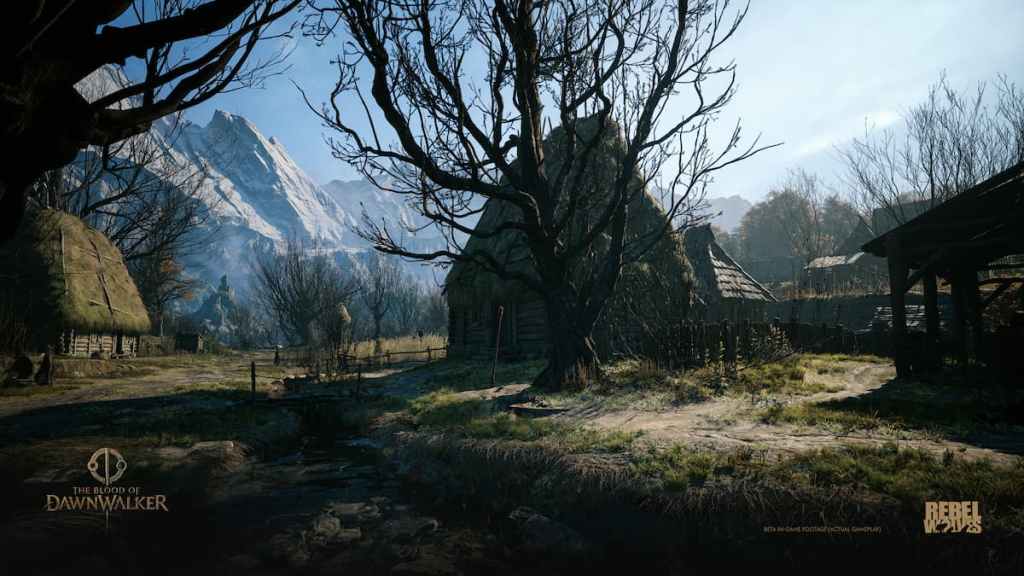
The Blood of Dawnwalker does almost everything right. It has amazing gameplay, stunning graphics, a great story, and wonderful worldbuilding, but it does fail at a crucial RPG element, and that is reactivity. I’ve mentioned it above, and the devs certainly can readdress that down the line, but there should have been more to the way people react to you embracing your vrakhiri side. There is some reaction and impact on the game, but I think it should’ve reached much farther.
And another thing: the performance. It’s not great. Outside of cities, it can be manageable, and I actually got up to 80 to 90 FPS with my 9070XT at 2K Native Ultra settings. However, this is only in places without many NPCs or not too much going on, and as soon as I entered Svartrau, the main city, the FPS would dip into the 30s. That’s not great, and I hope the devs can patch it up in time for release.
A 60 FPS patch for consoles is already on its way, so I believe PC should also get better with time.
Overall, though, The Blood of Dawnwalker is a phenomenal game in every imaginable way, and I cannot wait to hear what y’all think about it.


