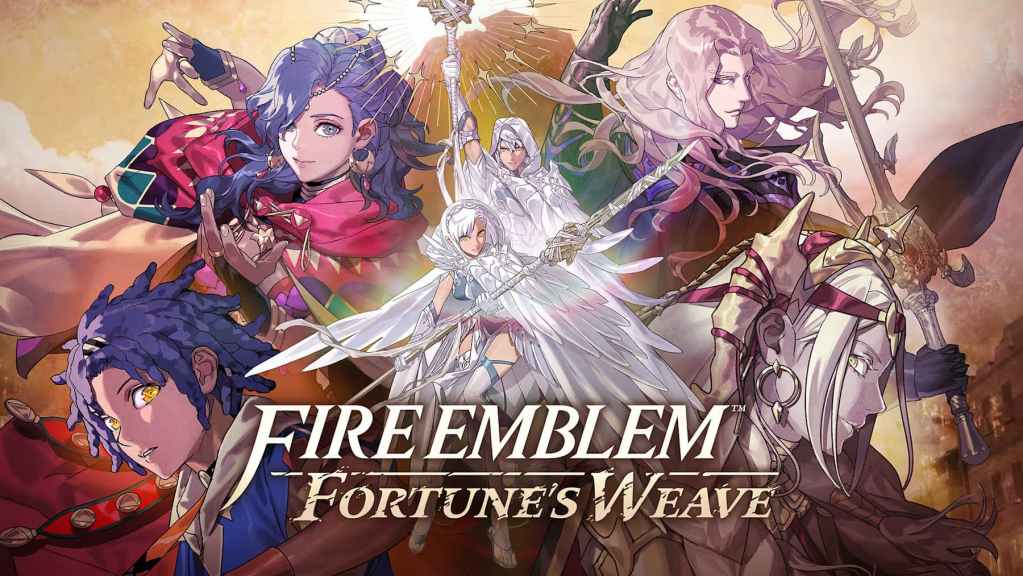


When reviewing games, I often gravitate towards titles I’m comfortable with and genres I’m versed in. In several ways, Fire Emblem: Fortune’s Weave is a first for me.
It’s the first game I’ve played in the franchise, and the first of its kind when it comes to a tactical, grid-based RPG. And while my opinion may differ from series vets (it may not be enough Fire Emblem for some, or too different for others), I’m confident in saying that it’s a very well-made, deep, customizable, and lengthy journey that should keep players busy for a while.
Some homework required
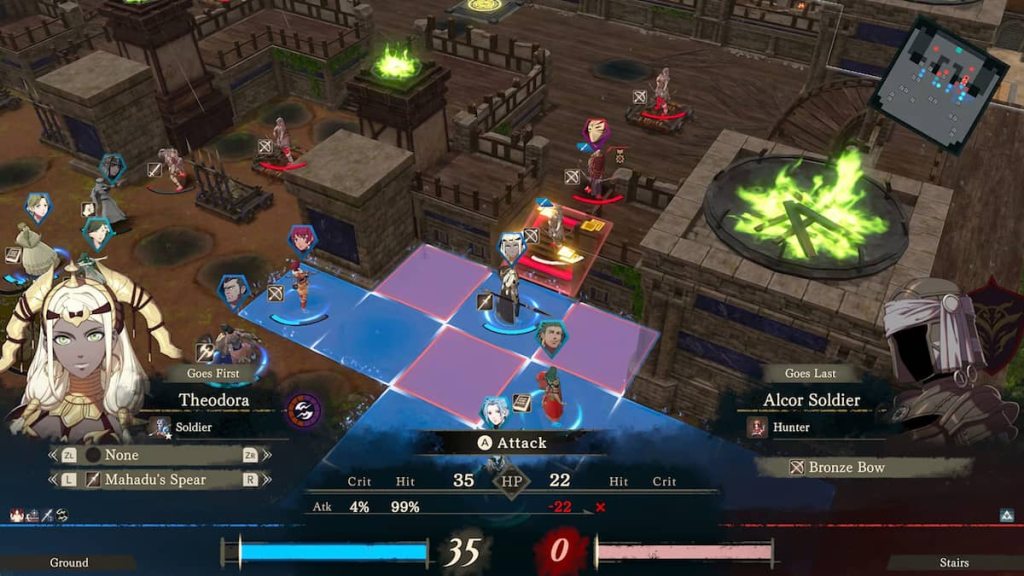
The biggest drawback to Fire Emblem for me was how much there is to learn and keep track of. As a bit of a noob to the tactical RPG genre, the main reason I steered clear was the battlefield full of tiles and its turn-based, strategy combat style. I always felt it would be boring, but I was clearly wrong. The learning curve is steep at first, but it’s very fun when you get the hang of it.
Taking the reins of five playable heroes across their own individual campaigns, you must level up, unlock new abilities, and recruit soldiers to join you in battle. I found out that latter part the hard way, as I was trucking along through one story and quickly found myself overwhelmed with numbers. Welcome to Fire Emblem, I guess.
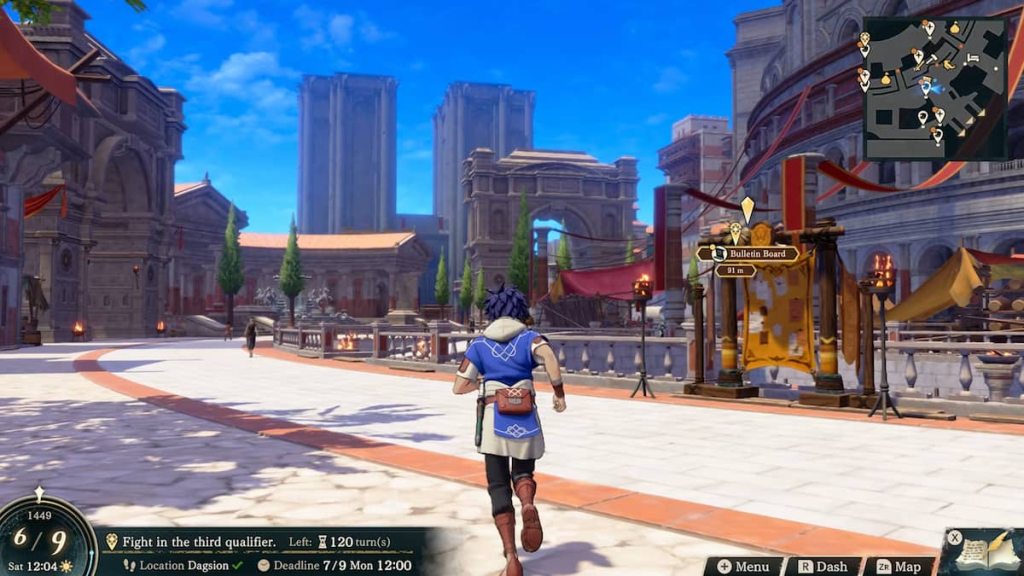
Your main characters all have ancillary companions who join them in battle and throughout the story, but the recruitment of soldiers in the main city of Dagsion is one of the main draws of the franchise. And it’s quite delightful. After leveling up your Renown level and then interacting with sellswords and mercenaries around the city, you can give them gifts to try and recruit them to your cause, and filling out your roster with them is a blast. From there, they can also be leveled up, have their class gear and expertise tweaked, and further fleshed out as a battle buddy.
Fortune’s Weave shakes the battlefield up with a new feature called Blaze Arts, each main hero’s special ability that each has a drawback. The heroes are all dealing with some sort of curse, and that curse gifts them with powerful attacks that also draw from their HP. You lose the battle if your main hero dies at any time, so it’s a give-and-take that you must master along with the basic strategy combat of positioning your team to survive enemy turns. It’s a lot to keep track of, but when paced properly and I learned to take my time with decision-making, it became extremely satisfying to conquer foes. It’s an interesting wrinkle to what’s otherwise straightforward menu navigation through just about every facet.
If you mess up (and I did that a lot), the goddess Fortuna gifts you the ability to roll back time and replay any turn, and this is massive for an inexperienced player like myself. Purists may feel like it’s “cheating” as it lessens the impact of consequences, but I felt ever-grateful for it after getting stuck on certain large-scale battles throughout each campaign. Several other gods offer various blessings to choose from as well, helping customize your battle style further.
Even still, there were times when I would get my ass kicked in battles and need to either take it on the chin and level up, or restart the chapter to try and find better equipment, allies, or strategies to find success. It’s all pretty entertaining, though.
When not taking part in battles or conversations, another large part of Fortune’s Weave is the world map where you explore turn by turn, gathering materials for the fight, recruiting more allies to your side, or exploring dungeons with a more traditional turn-based style à la Final Fantasy that was way more in my wheelhouse. If you’ve got the time and the want, there is just so much to do in this game, and most of it scratches the RPG itch really well.
Game of thrones and gods and demons
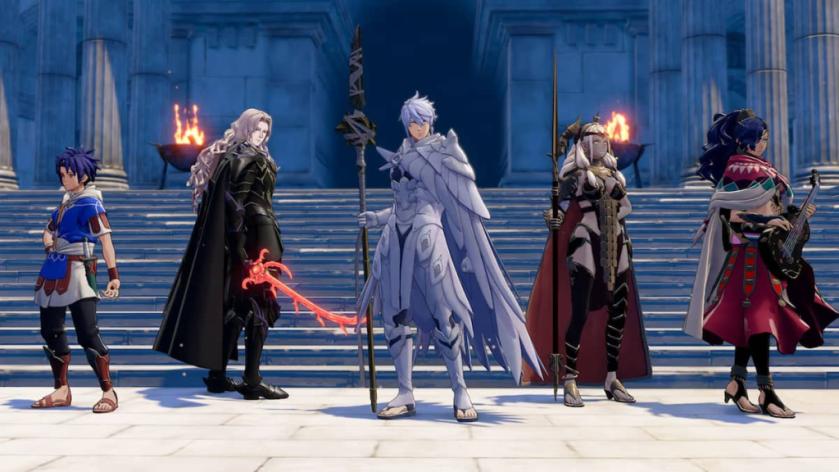
Plot-wise, again, there’s also quite a lot going on. The game’s individual playable heroes all have their own storylines, personalities, side characters, motivations, quests, and backstories to keep up with. It’s overwhelming at first, but once I settled in and got the hang of the presentation, I found it to be quite enjoyable because the variety in the heroes is one of the game’s biggest strengths. All of the campaigns feel unique from one another, even with crossover locations, characters, and events.
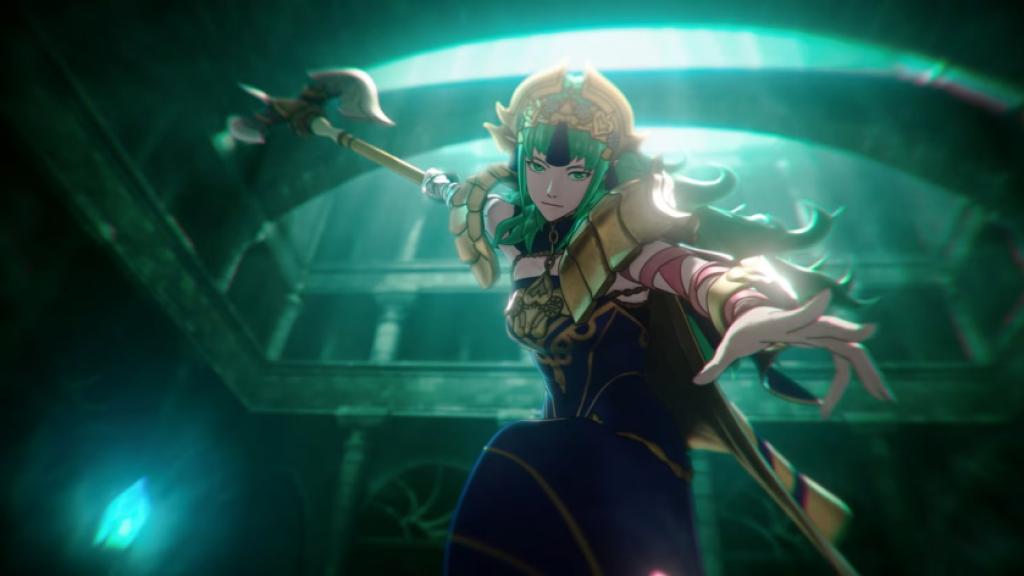
Fortune’s Weave centers around a massive kingdom and its myriad regions, and its playable heroes come from all across the world, but the plot focuses on several story threads, including the gladiator-like Heroic Games competition. That’s where its main characters, Theodora, Cai, Dietrich, and Leda, are based, and it’s how their paths come to intersect. Sometimes they team up, sometimes they end up having to battle against each other, but it all builds towards the second story thread, which is all-out war, and the events escalate further from there.
The story features everything from queens and emperors to elephant-riding warriors and dragons to demons and gods. It gets a bit convoluted at times, but the more invested you get into what’s going on, the easier it is to understand, and it becomes very gripping as the stakes gradually rise. The Heroic Games end up being “small potatoes” compared to what awaits after, and I invite you to find out all the details yourself within.
I found it quite nice that you also have the ability to swap between each hero’s campaign at any time, as the game’s fifth main character is a god-like being that is “manipulating” past events to get to the game’s present day. It makes for a unique, if not confusing, presentation, but it’s up to the player to decide to tackle one campaign at a time or jump back and forth between characters before their individual acts culminate.
The other reason I always veered away from Fire Emblem and games like it is the anime art style. I’ve never been a fan of it. After playing through most of the game, I don’t think my mind has changed much, but I fully understand the hype now, regardless. A lot of the game’s characters are cheesy or over-the-top caricatures of the time period and world it aims to portray, but if you’re a fan of games like this, I’d imagine it’s what you’re looking for.
I’m pleased that Nintendo gave me over a month of access to the game, which is a rarity I am grateful for in this profession. I often have to play and review games on a time crunch, but for this one, I had plenty of time to enjoy the ride. And for full disclosure, I still didn’t play everything Fortune’s Weave had to offer after dozens of hours. This game is genuinely huge.
Each individual character’s opening acts have the potential for 10-plus hours of game time apiece, and the game only balloons into its massive, large-scale, planet-saving war from there. Dagsion itself is packed with things to do, people to talk to, quests to complete, shops to visit, and more, and there never feels like there’s a shortage of content to dive into.
Fortune’s Weave is absolutely packed with things to do, but if you want to fast-forward through battles or sim through parts that occur between main chapters, you can do that too. I found this to be very handy during battles, especially when spending multiple turns moving closer to enemies or retreating to heal.
This game has been a learning experience as much as it was a work assignment, but it never really felt like a chore, and I’m glad to have played it to spite my own biases.


