


Last week at Gamescom, I had the amazing chance to play Paradox’s LEGO Skylines early. And, while I spoke of my experiences in a separate piece (which I will link to below), I also got the opportunity to talk with its developers for a little bit.
Of course, the first thing I wanted to know was just how this collaboration came to be. LEGO has scored adaptations of so many IPs by now across a wide variety of genres.
This year alone got us LEGO Batman: Legacy of the Dark Knight, a game I rated 8.5/10. It was super fun, but it was remarkably similar to many other LEGO games we’ve seen before. Swapping characters, solving puzzles, breaking things to collect coins—it had all of those hallmarks of a traditional LEGO game.
But LEGO Skylines is quite different.
“The people in our studio, like, there are a lot of LEGO fans,” the developers told me. Everyone in the team basically owns a bunch of LEGO sets and has dabbled in them since childhood. That, combined with their extensive experience with making management games and city builders, eventually brought the idea of “Why wouldn’t we do this?”
“It’s kind of a discussion that happens at some point, and we met with LEGO years ago, and it started organically from there.”
“We know how to do city builders and these sorts of games, and LEGO is kind of a perfect match with that, because both are known for system-driven sandbox environments, and [we looked at] how to combine those two together. I think this is a really good combination and a unique combination as well, like no one has done this before.”
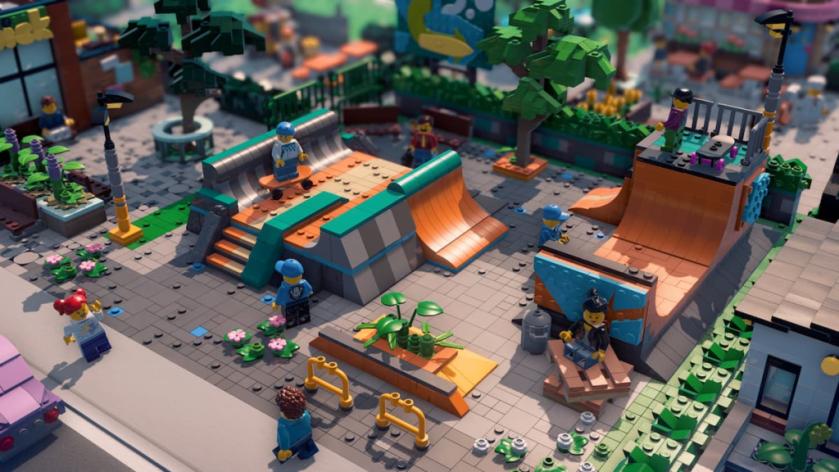
LEGO, as I wrote above in the case of Legacy of the Dark Knight, has a traditional side to it, not only in terms of gameplay but also the kinds of characters you tend to meet. I saw, in my preview, a lot of quirky little characters spawning here and there and leading the player into various activities and quests, and I wanted to know how much of a role this character-focused, narrowed-down design will play in the broader experience.
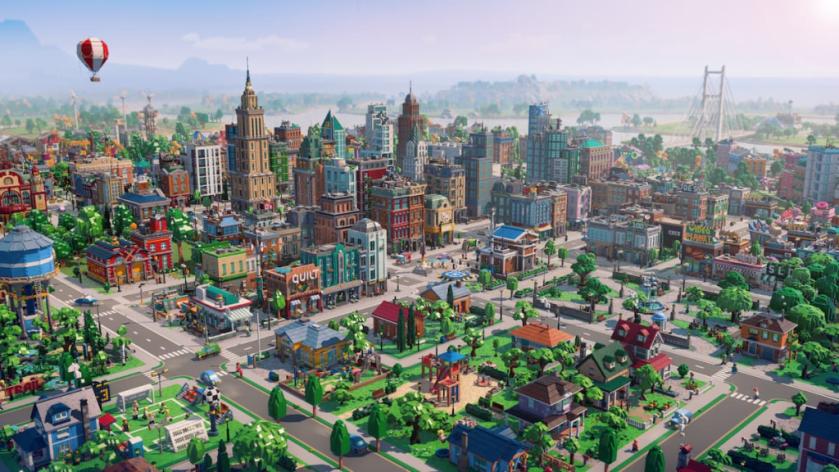
“That’s one of the major challenges with this project. How do we combine something that’s basically very little, very detailed, with something that’s huge, like building a metropolis? And that’s been one of our main tasks: to find that balance between making things in a way that it feels like you are building LEGO sets and building a LEGO city, and then on top of that, seeing that come alive,” the devs said.
“One of my main goals with this project as a game director has been how to make that happen in a way that you can zoom in and be very detailed about it, like you can have control over buildings, decorations, and those citizens living there, [and be] fulfilling their needs, but then scale that up when you zoom out, how to see that personality and customizability on a big scale as well.”
“And we have a lot more content in this game that we can show a little bit later. There are a lot more maps available in different environments. There’s a wild diversity of things you can do with that content and with all those things, and [when you zoom] out, you can see different districts, different types of cities, and environments, [and] it’s up to you how to progress, how to move forward, whether you want to focus on customization, personalization, or do it the Cities Skylines way, and do the systemic gameplay, where you just min-max out of everything.”
“And I think one of the big things that we’ve done here is also like, obviously you get to test that the early preview, and there is a story there already, and we do have something very similar in the actual game itself, so I think because when you think about regular LEGO games that have already been released, they are quite story-driven, and that was definitely one of the challenges as well.”
“Cities Skylines isn’t exactly a story-driven game; it is very much a sandbox game, whereas LEGO games are the other opposite of it, so I think we’ve done a pretty good job of trying to combine them in the way where the instructions are coming through the story itself. You could be just a player who loves playing story games and still pick up LEGO Skylines and feel like you’re told how to play the game, but it’s not that the game instructs you exactly how to do it, but just that it gives you the story.
“So I think that’s kind of where we’re trying to combine that like LEGO game DNA with the Cities Skylines DNA.”
The maps in LEGO Skylines are going to be many, the developers explained, and things always start out small: one building, one family, one little plot of land. As time goes by, they say, you start to expand and encompass an entire area, which in the demo was a huge archipelago of interconnected islands that turned into a sprawling metropolis with just a few thousand people.
The maps all have their own quirks, like resources and environments, which further allow you to pick and choose which kind of world you want your city to exist in.
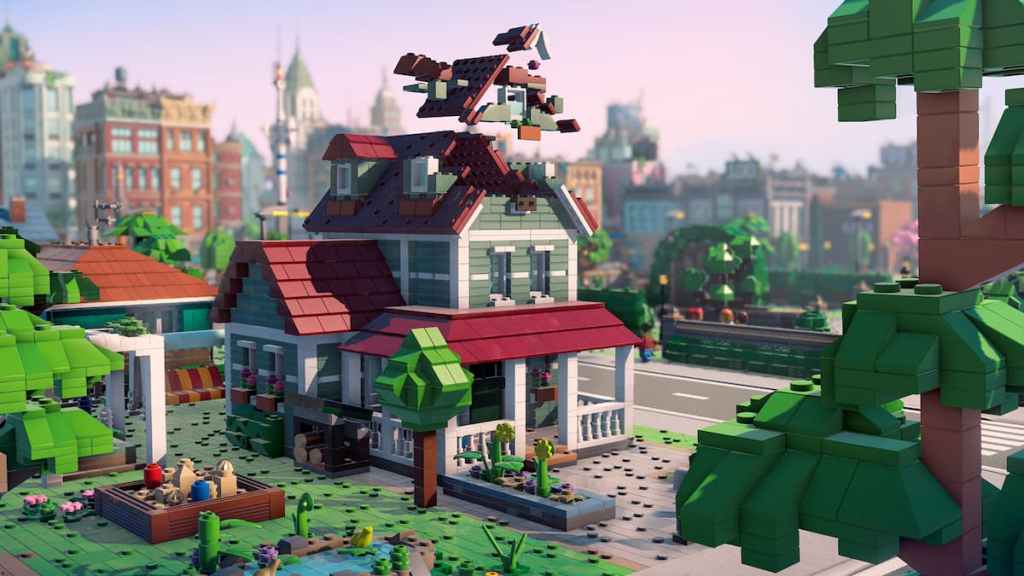
But the focus is always going to be on your population, even on the very minute things they think or want at any given moment.
“It’s always the citizens. You can always zoom in and talk to individual citizens. They speak out loud about what they think about stuff and how the city is working out. First they focus on their personal little things, but later in the game they start commenting on education and communication and garbage collection and whatever comes later like that.”
“It just changes the tone of the narrative, changes depending on which stage you are, but you can always go back, serve the one person living there, or go big and like look at bigger things.”
“I definitely think like when you play through the story of the game, you’ll kind of see it essentially. It’s the same kind of thing when you play the sandbox, and it’s like you start small, then you go big, and then that same kind of pattern is what we follow throughout the story itself as well.”
The developers of LEGO Skylines wanted their game to be “the most accessible city builder out there, but also the most personal.”
“So the number of citizens is not like a KPI in that sense. How much you can do, how it looks, how it feels, or how much you can affect what – that is the end result.”
“That is more important than grinding down a number in this specific game.”
Finally, I wanted to know how difficult or challenging it will be to reach the late game, or at any rate, achieve any level of a sprawling city in LEGO Skylines. The game focuses on the minutiae, and so you have to place down each individual building yourself and do basically all the work on your own, compared to Cities and its big zones that build themselves out.
“It wouldn’t be possible if we had, like, 500,000 citizens in the city. It needs to stay on a level where it’s still manageable. Even if we add more tools and information on the city as a whole, it still needs to stay manageable.”
“But as I said, there come other features in the late game, like, let’s say, the decorations you use as an example. First, in the beginning, you need to place individual ones if you want to play perfectly, so to speak, and later on you get bigger things like leisure buildings, parks, and other venues that provide the same purpose for the citizens, but they make it in a bigger area, a wider area.”
“You can, like, use a bigger brush in a way to satisfy all the needs if you want. But then you can always go small, be detailed, just customize one city and one neighborhood, and make that your own place that you know has all those little details.
“It’s up to you. It’s not mandatory. It’s how you want to play the game.”


