


Have you noticed how live service games don’t really finish? Ever? Oh, they most definitely shut down. Heck, sometimes they even crash and burn spectacularly, as was the case with EA’s Anthem. Neatly finished with a bow on top, though? Hardly ever. But why?
Now, I’m not interested in mulling over live service game failures here. That tired old topic’s been tackled time and again to remarkable effect, and I’ve got precious little to add to the discussion. Instead, today’s topic is kind of the opposite: the live service titles that succeeded and continue to succeed, but which we’ve got no real hope of actually finishing in the sense of thoroughly completing them.

Can you actually finish a live service game, as a player?
Unless you’re actively trying to avoid anything that even whiffs in the general direction of a live service trapping, you’ve most certainly played something relying on the model. Between Warframe, Genshin Impact, Destiny 2, and — more recently — Helldivers 2, there’s certainly much to enjoy playing these games. Doubly so when you’re looking for something that’ll keep you busy for thousands of hours on end.
Of course, live service coverage doesn’t have to be that comprehensive. For a smaller-scale and somewhat more manageable look at how an experience like this might work, look no further than the modern Forza games. Oh, you’re a car enthusiast and a completionist? Good luck staying on top of these without missing out on a single new vehicle.
Forzas, though, are eminently finishable. Pushing through and keeping up with, say, Forza Horizon 5 for years on end just to gather all of its unicorn cars is no mean feat, for sure, but this is still nothing compared to one of the aforementioned live service giants.

One could certainly argue that a game that keeps going infinitely can ostensibly be wrapped up: when you’re done with it and you’ve played your fill, it’s done and dusted. Move on, play something else.
These games don’t generally want you to do that, though. It’s in Destiny 2 and Warframe‘s absolute best interest (for example) that their fans spend as much time with them as possible. Ideally, all your gaming time should be dedicated to your favorite live service title. Or, at the very least, for them to replace any and all potential competitors you might be interested in.
I am, of course, being cheeky here, albeit just slightly. There’s only so much time a working gamer has to spend on playing video games, and it’s generally in a live service’s best interest that they spend this time playing it. That’s where all the continuous log-in rewards, daily and weekly quests, content updates, and expansion packs come into the picture: play our game, and keep playing it for as long as possible!

To be perfectly honest, I don’t see an issue in having access to effectively infinite content on a long enough timeline. If a game is good enough to keep you entertained for so long, then why wouldn’t you want to knock yourself out on it, after all? No, the problem I have with modern live service games, instead, lies in my not being able to end them in a sensible and meaningful way.
Whereas a regular, non-live game lets me follow its narrative to some type of meaningful conclusion, which I can then ingest, think about, and (eventually) reminisce upon as time goes on, I cannot say the same about my time with Warframe or Destiny 2, for example. In some cases, it’s even impossible to return to older content releases due to their removal from the rotation or permanent updates. That’s sunsetting for you.
These games’ stories simply continue trucking onwards regardless of whether I keep up with them or not, and then it’s my choice whether I want to jump back in for the next major content update or pay the price of the next annual expansion pack, respectively.

Note that I don’t necessarily think that this is fixable, as such. A live game needs a constant influx of content, certainly. There are always players itching at the bits to grind away at Warframe and Destiny 2‘s exciting new gameplay systems. Often, I’m one of those players. I’m simply bemoaning the fact that I won’t be able to go back to re-experience them in the same way I can do with non-live content.
Case in point? Destiny 2‘s Red War campaign. Objectively, I’m well aware of the fact that the game’s very first campaign wasn’t all that good. It was fine, certainly. Phenomenal compared to what came before in the Destinyverse, yet positively mediocre compared to Halo proper. Still, though I’ve played better FPS campaigns before and after Destiny 2’s Red War, I’d like to go back for nostalgia’s sake and re-experience it. I cannot, of course, as Bungie cut Red War out of Destiny 2 so that the game could support newer and better campaigns that, more often than not, ended up being anything but.
Further, even back in 2017, when the Red War was all we had as far as Destiny 2 was concerned, it was obvious that Bungie was going to use it as a jumping point for future content. So, one might argue whether it was a standalone piece of content in the first place or just the first piece of something that was very clearly a multi-year endeavor.
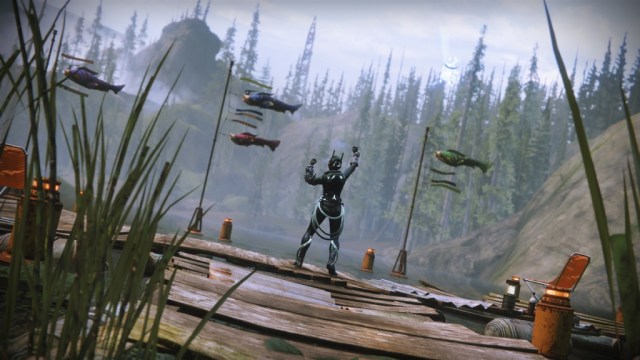
To continue using Destiny 2 as my go-to example of a live service that mercilessly keeps pushing onwards, the game’s next major DLC – The Final Shape – is ostensibly the end. This is the grand conclusion of the Light vs. Dark saga that we’ve been waiting for since waking up in the Cosmodrome car park a decade ago. The main narrative beat ends here.
But… Destiny 2 itself does not. Already, Bungie has made it clear that players should not stop playing the game after finishing The Final Shape‘s campaign, Raid, and immediate post-launch content. They’ve got Episodes coming in throughout 2024 and 2025! Almost certainly beyond 2025, too. So… even when the game wraps up the story that’s been its driving force from day one, it doesn’t truly end, and you most definitely shouldn’t drop it and let it rest.
It’s not that I can’t take a break: I do and I have, often, but all the truly successful, unique, and engaging live service games are unwilling to gracefully wrap things up when the time is right. It’s a function of the video game industry, certainly, and it’s built into the niche because of course the companies in charge want and need to keep making money. It’s just that the side-effect of this being the case is that it’s virtually impossible to think of a live service game in the same sense as you can of a regular, non-live title.
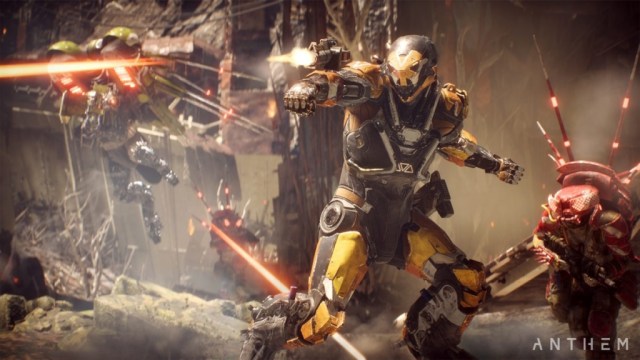
The only way a live service game ends is that it stops being actively supported by the developer, and this only ever happens if it’s financially unsuccessful. To circle back to Anthem, specifically, though you can still play the game, it’s left in a limbo of unrealized potential that’s only barely worse than what happened with Marvel’s Avengers, as far as mainstream games go. This is what happens with unsuccessful live service games, and we see something similar taking place with Suicide Squad: Kill the Justice League.
Graceful wrap-ups are not something that live service games receive. Instead, it’s either a bombastic shutdown, or the content continues coming in until it’s so watered down and uninteresting that the players don’t want to engage with it. Which of the two is preferable to you?
In the end, this is a relatively minor fault of the live service system compared to these games’ sheer transience, considering just how fragile they are in the grand scheme of things. The obvious, if painful, conclusion is that finishing a live service game isn’t something you can do because these games aren’t made to be finished in the first place.


