


At Gamescom 2026, I got to sit down and talk with Patrice Desilets, the creator of the Assassin’s Creed franchise and the lead developer on his new game, 1666: Amsterdam. We talked about a wide variety of topics regarding the game: its approach to gameplay through a roguelike system of randomness, historicity, and what players can expect in terms of optimization.
And he opened up the conversation by saying that “randomness is one of the core elements” of 1666: Amsterdam. “It surprises you, and no two runs are the same,” he told me, adding that the mechanic is grounded in the lore since Cleo, the modern-day protagonist, is deciphering a book about Noah and what’s happening in the game but still does not understand it.
And so, the randomness comes out of Cleo’s “guesses” of the translation and the book’s contents, which then translates into the gameplay.
“It’s just to let the player experience the game in different ways. But you can always pick the same [perk],” Desilets said. He further explained that players can tailor the experience to their own style, selecting perks and abilities that best fit their idea of how the game should unfold. Between Esbat, players will be given the chance to lock down one ability that they particularly liked, Desilets said, so not everything has to be randomized.
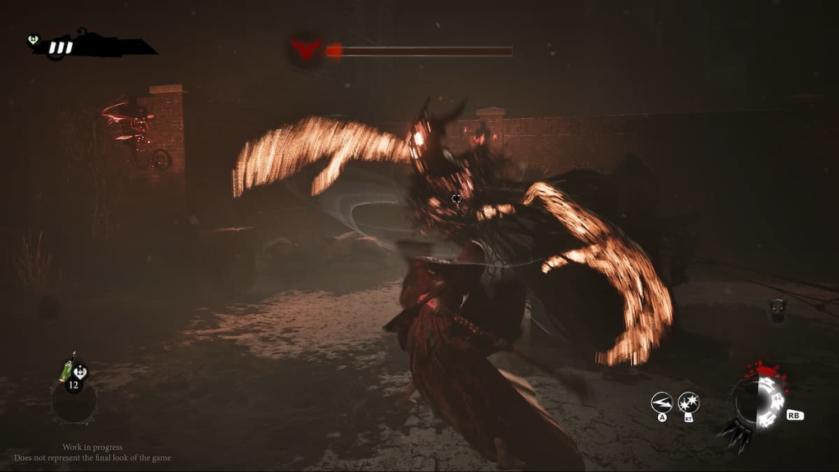
The game can also change when you lose your abilities and have to roll the dice again, forcing you to adapt to your current situation.
“It feels like it’s really, oh, because I had this in random, I have to change my mindset and play differently, instead of just going through ability trees that we’ve made for you.
Balancing everything out and reaching the desired level is difficult, said Desilets, and that is what makes early access the “perfect” way to approach developing a game like this.
“Is it a challenge? For sure. And this is why it’s perfect to be in early access, because it tells us how we can make this system better. And so, we’ll have feedback, we’ll have data, and we can maybe eventually say, okay, now we found a way,” he said. “And the community is helping us out, instead of just us being really like the [only] designer.”
The randomization system has already seen major developments since I last saw the game in Amsterdam last month. If you die, you do lose all your stuff, but you’re immediately given a new “lottery” to choose new perks before you go ahead with the game, meaning the blow has been significantly softened as the game evolved.
Rolling the worst possible combination of abilities and perks will also be covered by the witchcraft system, as well as exploration, which will help you craft items and potions to get ahead of the curve if your current setup isn’t the best cut for your situation.
“There’s always the witchcraft table, and it depends on which recipe you have. But it’s a bit like ‘Explore, and you’ll have a lot more,'” Desilets said.
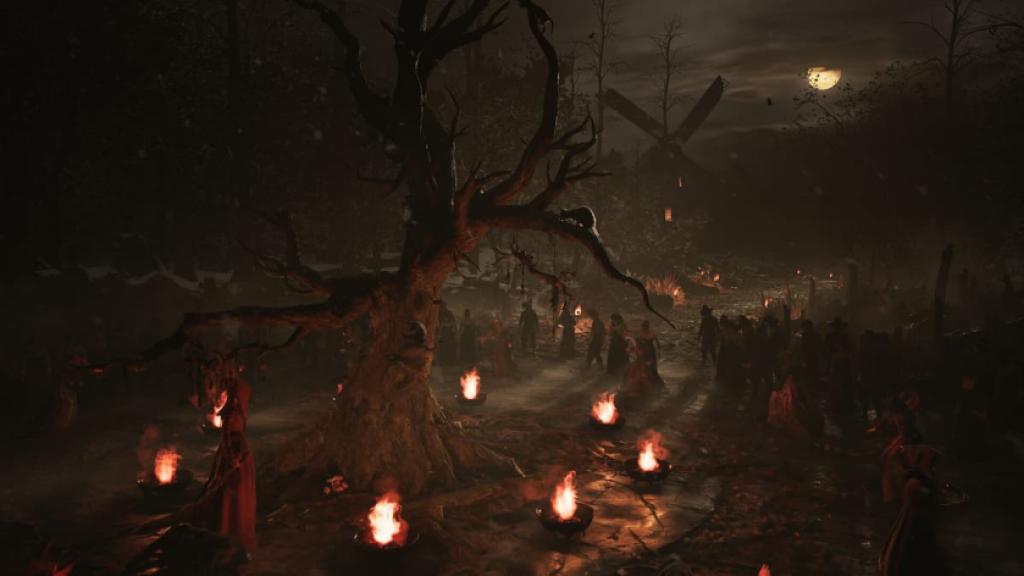
We went on to talk about stealth and how his past experience with Assassin’s Creed maps onto what he’s trying to achieve in 1666: Amsterdam. Stealth, obviously, was a major part of AC but not so much here.
“It’s not a stealth game, but you’ve got to be careful,” he said. “We’re still working on the detection inside houses and how people react. The suspicion level right now is mellow. It doesn’t take too much [to trigger], but you have to do something, rather than just transforming.”
Desilets added that 1666, even if combat can be a viable way out of every situation, is “not just a combat game.”
“The more you fight, the tougher it gets with the reputation system,” he explained. I then asked about the reputation system and whether it has any other consequences for your gameplay rather than just making the fights harder, and I got a resounding “no,” but Desilets nevertheless said that the team has a bunch of ideas about how to expand the system down the line.
“This is what we delivered right now, is that we have to front-load all the systems. Now we have them. Now it’s just a matter of playing with them and maybe adding one or two, or three [systems], or whatever the number,” he said.
“I didn’t want to create that game that it’s all about, oh, you go out and you be just the witch that can fight all the time and go through all the situations like that. I think for me it was important that sometimes you are the civilian, and it’s to play between the two. And if it was as soon as you got the witch, everything goes, then you wouldn’t be the witch as much, or the same thing the other way around.”
“If you can do everything as a witch, so why would you be a civilian? So it’s a fine balance between the two. But it’s not like you have to manage your reputation throughout the city. As of now, it’s not the case,” he said.
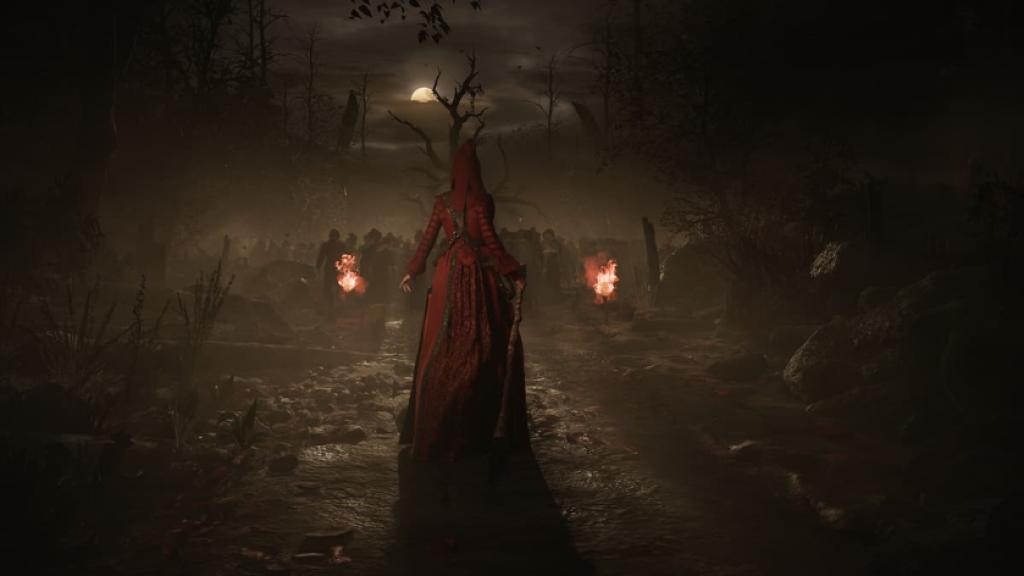
In early access at least, these systems aren’t there yet, and Desilets said the team plans for the title to remain as such for about 12 months. Is that definitive? Of course not, Desilets explained, because “it’s never definitive in game development.”
“The idea is to be at least, yes, a year in early access. We also have the roadmap of when, not precisely when, but there are four phases of upgrades throughout the year. And the idea is in around 12 months to be 1.0 and to ship.”
The 1.0 version should, Desilets said, ship on all platforms at the same time to mark the end of early access.
Early access, at the moment, contains only one district of Amsterdam out of a planned four as big as the one currently available and one bigger one. So far, you can experience Esbats (cycles) and fight three Originals. Furthermore, 12 hours are planned for the 1999 period of the game, though, as the director explains, that will be small and very mission-focused rather than letting players do a full open-world in two distinct time periods.
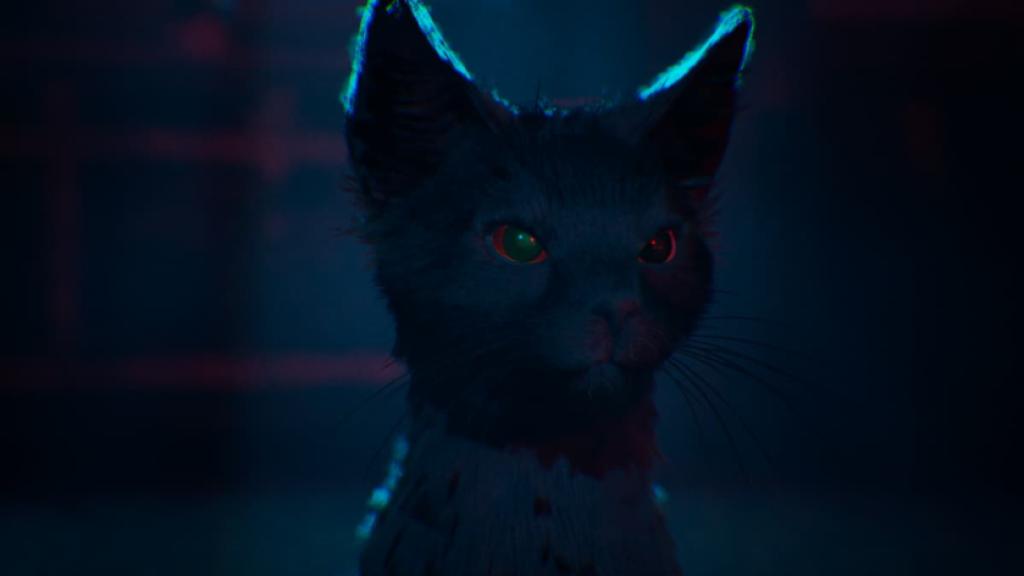
Since the game is set within a very specific historical framework, I wondered which major historical figures from Dutch or European history we would meet. After all, it was Desilets himself who introduced us to Niccolo Machiavelli and Leonardo Da Vinci and Rodrigo Borgia in AC2 and Brotherhood and even made them crucial parts of the overarching narrative.
He didn’t want to say too much but told me that Rembrandt, one of the most renowned Dutch painters, would be a major figure in the story. Even so, Desilets added that 1666 is markedly different from Assassin’s Creed. Whereas the latter was a “parallel history,” as he describes it, 1666: Amsterdam is a fantasy game that is coincidentally framed within a specific time period.
“It’s not a historical game. Assassin’s Creed was. That was the guideline. It’s real. It’s just a parallel history or narrative. Here it’s like a fantasy game set in a historical context. Or being inspired by a historical setting, which is a bit different,” Desilets explained.
As for the combat, Desilets said Noah’s “main weapon is the broom” but that spells and various abilities can be discovered and unlocked as a player progresses. He played a bit of the game in front of me, and there I saw enemies get levitated and smashed into the ground as well as petrified and opened to Noah’s relentless attacks. Props can be exploded to do massive AOE damage, and a lot of cool and interesting abilities can be cast at enemies.
Down the line, though, anything could happen, Desilets said. Being an early access game, there are so many ideas the developers have in mind, both for the combat and for other aspects of gameplay, but he did not want to overshare or overpromise on anything at this point in time.
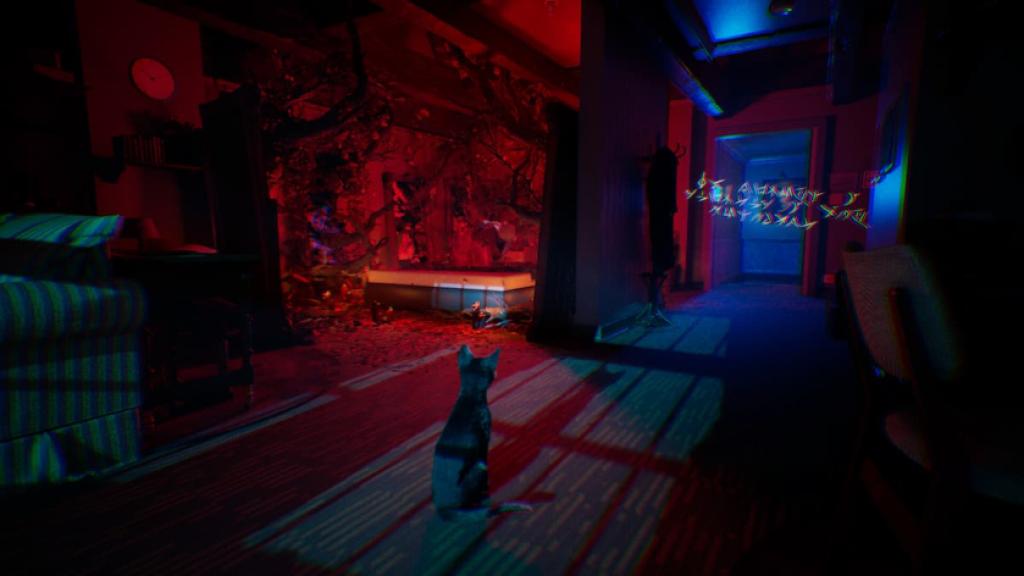
Lastly, I got to asking about the performance. 1666: Amsterdam has a ~65 percent positive score on Steam, meaning mixed reviews, and most of the negative ones are complaining about performance. I inquired about what the devs’ plans are to respond to such a lukewarm reception, especially spurred by performance woes.
“[Our] people in Montreal are already working on patches. The idea is that we want to update the game and make it more performant. Everything as quick as possible. Then you receive frequent updates. So it’s not only every three months you’ll receive a big one with new elements. Then maybe new problems are also attached with it.”
“It’s really, no, no. We’re receiving all the data. We’re receiving all of this. And it’s all about fixing it as soon as possible. And the beauty of it is that it’s a bit about how we work.”
“I feel it’s the beauty of early access. It’s tough because you totally have the right to complain. But us, our job is to fix and make your life better.”
Desilets finally indicated that the game is probably going to get more expensive as time goes by and closed the conversation off by saying that “right now it’s the cheapest you can have the game.”
“So buy now and don’t worry about it.”


