


At Gamescom last week, I got a chance to peer into what CDPR and Fool’s Theory are cooking in The Witcher 3: Songs of the Past. And I loved most of what I saw, but one thing stuck out for me—and not in a good way either—and that’s the expansion’s new writing style.
Overall, the whole of the DLC, at least the hour I got to see played by CDPR itself in a purpose-built cinema, felt like not a day had passed between 2016 and today. The developers really nailed it all: the music, the atmosphere, the way Geralt behaves, and all the jank that comes with that. It truly fits the recognizable Witcher 3 framework, both in tone and art direction and level design.
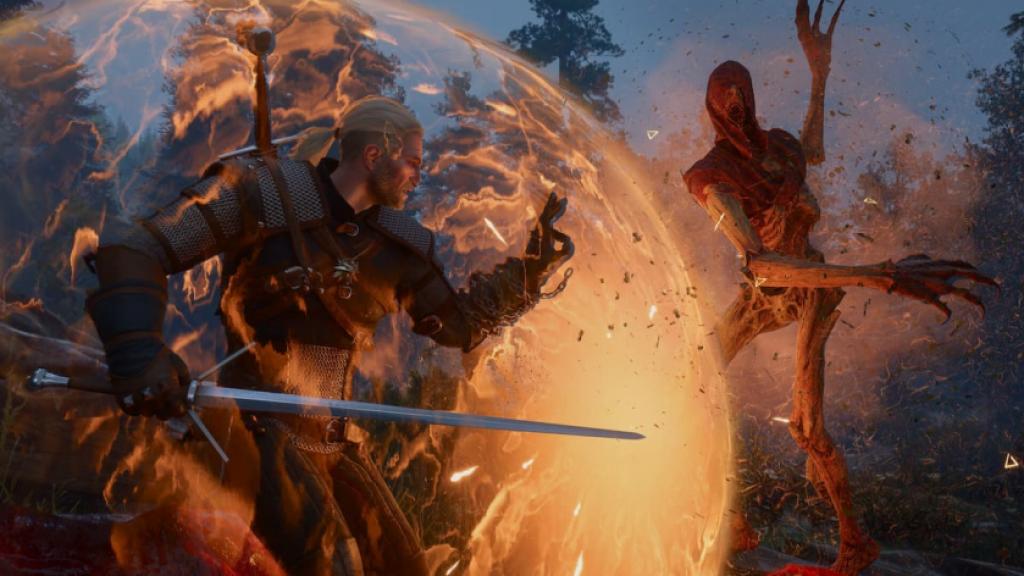
The way Geralt interacts with NPCs is also iconic. The same quips, the same arrogance, and the same witcher putting peasants in their place because they are just a tad too drunk on vodka. When passing by any number of characters, they still throw out those same one-liners, those that you will constantly hear when going through the same places, to the point where you’ll probably memorize them all (remember pam pam pa-ram).
In general, I just loved what I saw. It’s a direct continuation of what made The Witcher 3 good as a game, but I can’t say that I’m not concerned by the writing.
Geralt, like all the other witchers, has an American accent. The developers used this method to differentiate this faction from everyone else in the world, all of whom speak a number of British and Irish English varieties. And the writing in The Witcher 3 overall followed this thread. Whenever Doug Cockle, Geralt’s VA, spoke, it never felt off or out of sync with the text itself. Everything was as it should be.
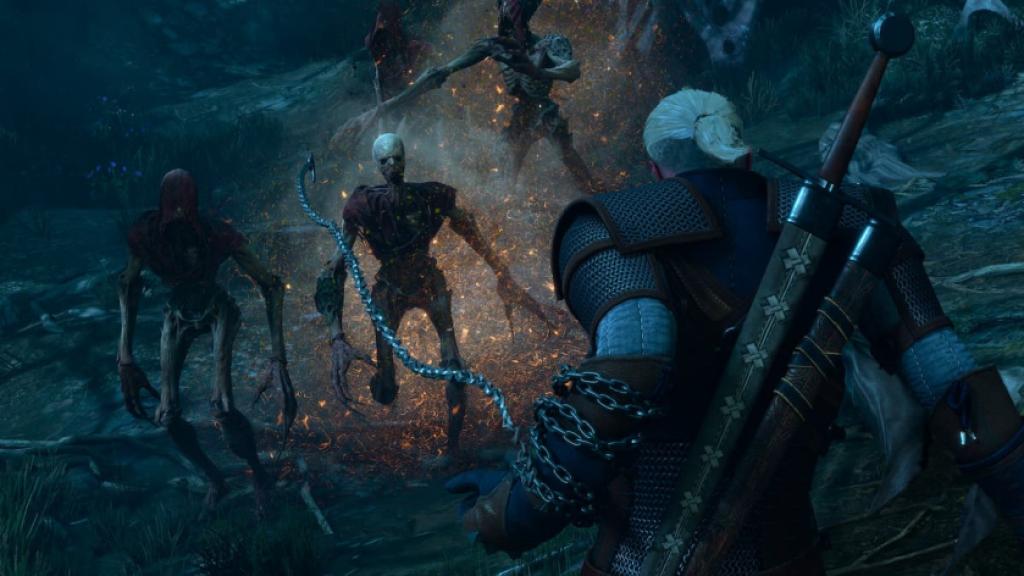
And it was the same for all the other witchers, too. The game took into consideration this accentual and dialectic difference between witchers and others, and the writing followed suit.
But in the DLC, it seems the new writers just did not understand that. Geralt, i.e., Doug Cockle, constantly says inversions and dialogues that would only ever work within a heavily theatrical British English environment, or even just as text rather than in speech.
I’m paraphrasing now, but in a couple of scenes, Geralt used the construction “A horrifying thing, that well” or “More important to him than himself, that lute,” and so on. This, paired with constant repetition and unintentional humor, heavily diluted the atmosphere and seriousness of the situation, which entailed a missing Dandelion and his family keeping his possible place of internment a secret.
It appeared to me that the developers just wrote the game to be read rather than acted out and had no consideration for in-universe differences between how characters are supposed to speak, i.e., how their background and environment influenced their speech. I’m getting a bit linguistic-y here, but it did not all apply just to how things were said.
The writing in general was a bit stiff and did not flow super well between each dialogue scene. Things darted this way and that, and I was never in much of awe of how well the game was written. Sure, the quests and the main story seem to have nailed all the broad strokes, but the minutiae of the writing are not inspiring much hope.
And I highlight this in particular because of just how good The Witcher 3 was written in general. People know a lot of quotes by heart. Just recall how you felt every time Gaunter O’Dimm was on the screen. I did not get to see much of that here, but again, it was an hour-long presentation of what could be a very, very long expansion.
So I will trust the process here, though I’m not super confident.


