In mid-June 2015, I happened to start my first playthrough of The Witcher 3 using nothing more than an AMD HD 6670, 6 gigs of DDR3 RAM, and a Pentium G2030 dual-core CPU, all the while running the game itself on a hard drive.
That never stopped me, and neither did the 12 fps cutscenes where the dialogue sped ahead of the animations and forced me to skip a lot of them once conversations concluded. What followed were hundreds of hours of mindless fun and enjoyment, which only got better once I had a stronger PC. But having discovered that love for The Witcher‘s third entry, I had to go back, and thankfully, GOG was selling copies of The Witcher 1 for pennies.
I remember vaguely playing through that first area where you fight the spectral green dogs, the Barghest, as well as reaching either the late stage of that level or somewhere up in the swamps. I had no idea what I was doing or where I was going, and using any proper mods to make my experience better never seemed to cross my mind.
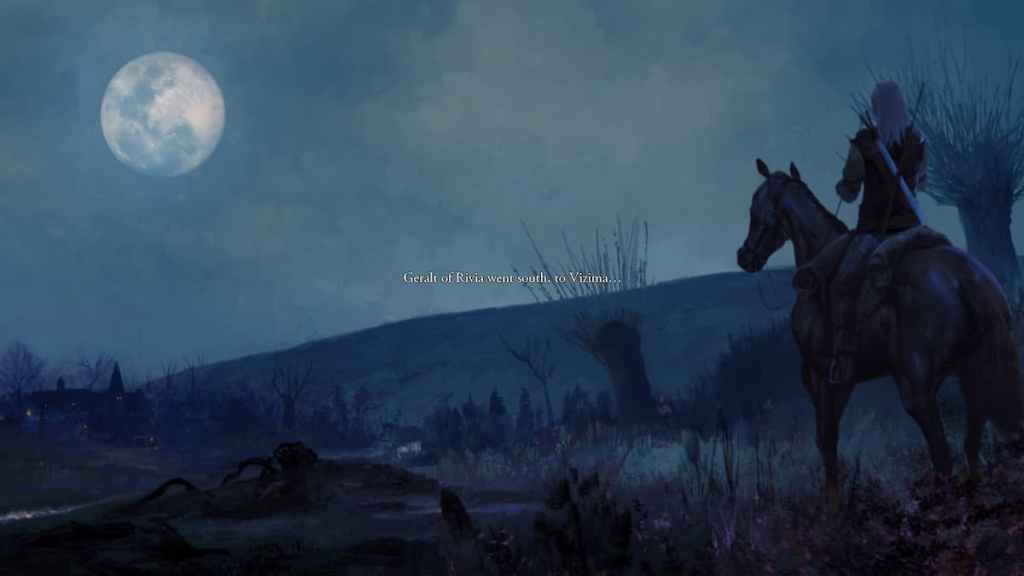
The combat felt odd, the performance wasn’t all that great, and little in the game appealed to me in the same way as it did in The Witcher 3. I felt like a headless chicken wandering around the game, trying to find the goals of my quests. And I never did find them, but wound up stuck in the corner of some swampy place with no brain power there to help me get to where I was supposed to go.
This created somewhat of a dislike toward the game. I warned people off it; told them it was too old and archaic and that they should wait for some fabled remake if it ever came to be. But oh, how wrong I was.
Ten years down the line, I decided it was finally time to play through the entire trilogy back to back. No excuses, no complaints. In the meantime, over this long decade, I had gotten a penchant for archaic and old-school RPGs, from Baldur’s Gate to Planescape Torment, so the baseline was much better than way back when.
It would turn out that The Witcher 1 is actually a pretty smashing game. The combat, while simple, is incredibly addictive, especially when you fight large groups of enemies. The systems in place made you truly feel like a witcher, as alchemy and leveling up required many a different prerequisite that were simply not present in The Witcher 3.
Gathering herbs and specific monster-sourced materials was a necessity, one that often saw Geralt risking his neck deep in the swamps. The story itself wasn’t all too great, and much of the game felt nonsensical and disconnected, both from the books and the trilogy as a whole. In fact, some parts were disconnected from themselves, and transitions from one scene to the other were, to put it mildly, really bad.
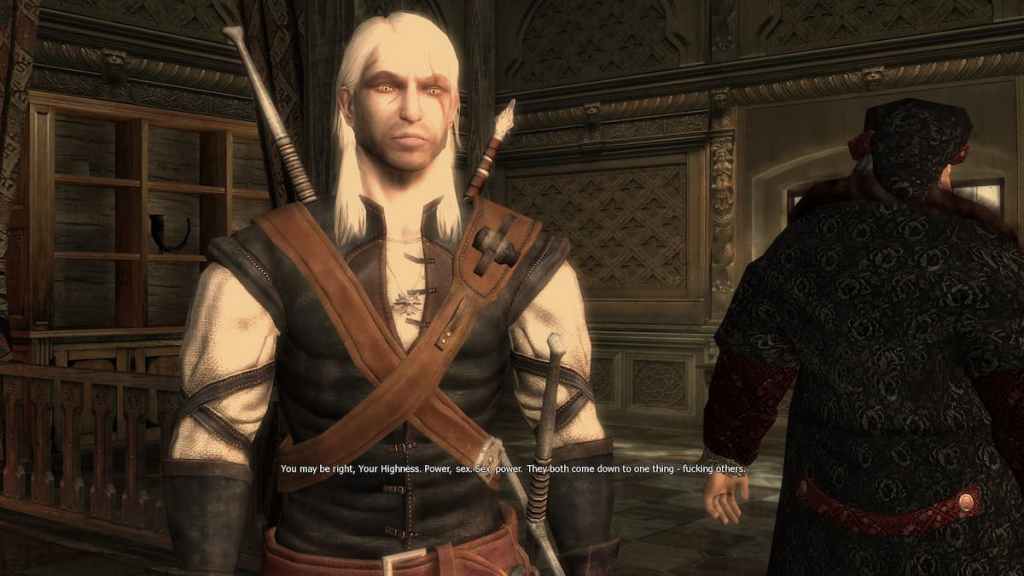
However, everything you did in the game echoed somewhere down the line. All choices had severe consequences, either on Geralt, the characters involved, or even third parties in the area where the choices were made. And the game practiced this design philosophy of “every choice is wrong,” giving the world a much darker tone than would appear in later installments.
This is to be expected given that Witcher 1 was built on BioWare’s engine, the same one used in another choice-and-consequence RPG, Neverwinter Nights. A lot of old-school RPG inspirations exist in this game, and everything you do carries deep meaning. The backtracking and having to go on foot across huge areas are quite a drawback, but since you’re doing it for good reasons, the tediousness often disappears.
I would even go on to say that The Witcher 1 is, in many ways, the best game in the series. It has the worst plot and the worst “canonical” feel of the three games, but its RPG side is by far the most polished and meaningful. I felt sad when I realized that many of the choices you make in the first game don’t even matter in the second (the Shani romance, for example) and that a lot of the first game is essentially annulled by the sequels.
Now that I’ve mentioned it, Shani’s romance is truly the best romance path in the trilogy. It gets a lot of cool cutscenes and Geralt ruminating about his position in the world as a witcher, juxtaposed between the Path and settling down with the person he loves. Shani loves Geralt, and he loves her back, the lost memories notwithstanding, and there’s a real philosophical conundrum the character goes through during just this one sequence.
So, yeah, I was very, truly, really wrong about The Witcher 1. Playing it as an adult with a lot more experience on my shoulders really gave me a different outlook on the game, both from a design and a gameplay standpoint. And many of the aspects found here need to make a comeback, especially when it comes to every choice hitting you in the face either immediately or hours down the line.
The Witcher 4 stands to learn a lot from this game, and I can’t wait to see if CDPR went back to its beginnings to figure out what went so well.