


The first Planet Zoo game is at its strongest right now. The management was always top-notch, and we have more species than ever through the DLCs. So, do you really need to play the sequel?
Yes. Planet Zoo 2 should be high on your wish list if you are a fan of the series or if you love animals and park management. Not only has Frontier added wonderful features not present in the first game, but they have done so in style.
Planet Zoo 2 goes beyond zoos with a bigger world
At its very core, Planet Zoo 2 plays like the first game. Your objectives remain the same, and you are once again in charge of both animal welfare and park finances. However, there are interesting changes under the hood that make the entire experience far deeper and more immersive.
The biggest positive of the sequel is the addition of aviary and aquatic species, brand-new to the franchise. We have unique creatures that are native to these ecosystems, and their enclosures, habitats, terrain design tools, and features feel natural.
Aquatics certainly appears to be the better addition, but that’s not a criticism of Aviary. Both ecosystems have unique enclosures that feel fun to build. The design options for the enclosures are almost limitless, and it should increase further with mods.
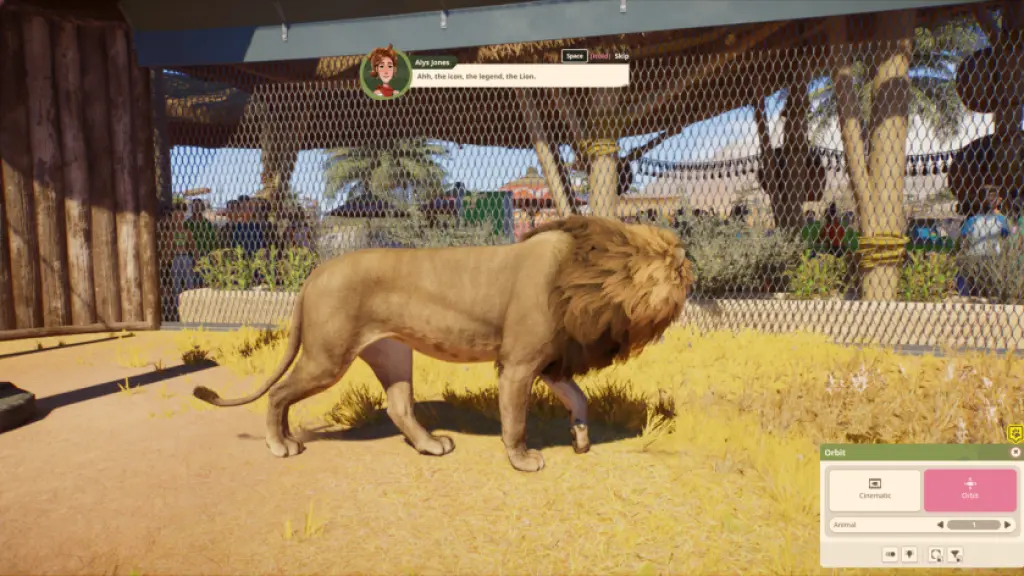
I was really impressed by the way fish and marine life behaved. It comes across as quite lifelike, and I enjoyed watching them do their thing, moving in schools just like in the real world.
Aviary will need some work once the game goes live. While it’s a brilliant addition, I would love to see more diversity in species. Some of them also have the occasional odd animations that break my immersion.
However, Frontier got the birds spot-on, looks-wise, in amazing color. Some of them are simply gorgeous, flying around in your glass domes. In both aquatics and aviary, the themes you can create feel authentic.
When these features were revealed, I thought we would get some land habitats and enclosures simply modified for the new ecosystems. However, that’s clearly not the case. The enclosures and habitats look distinct and designed-for-purpose. Similarly, they function well with the feeders and interactive toys that you can place for your creatures.
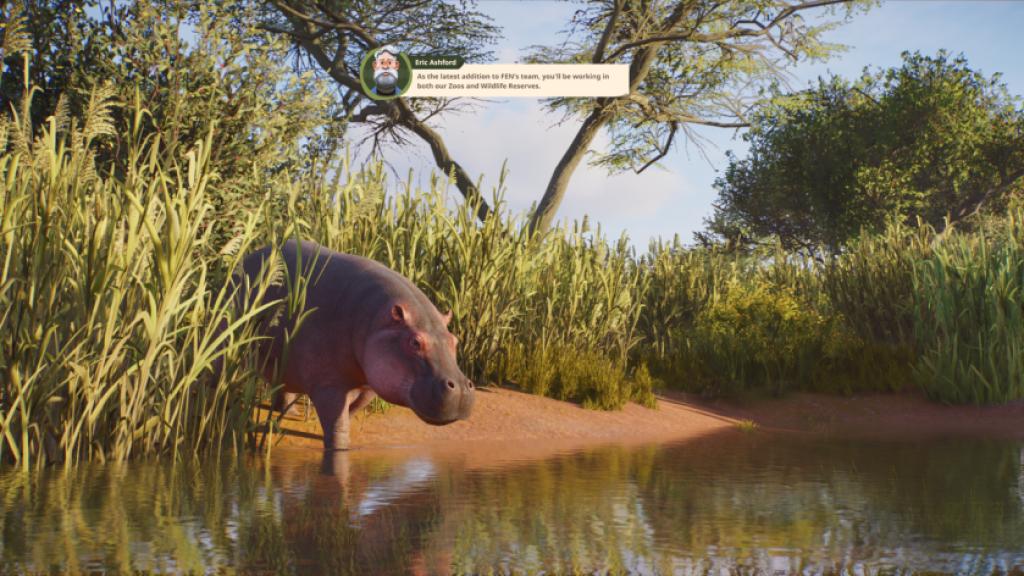
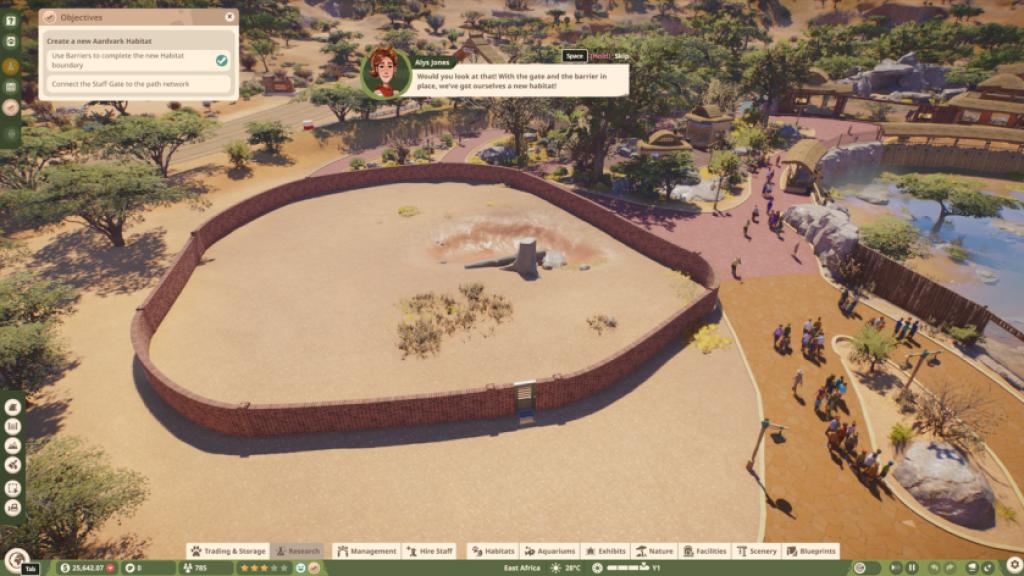
Land animals also got some love, since we now have wildlife reserves. No longer will our imagination be limited to zoo enclosures. Instead, we can dive into the savannahs of Africa and observe majestic creatures in their own habitats.
Wildlife reserves also fit well with the game’s career. When I started playing this mode, I was underwhelmed by what it had to offer. The initial missions were largely boring, but they serve an important role as tutorials. Now that I’ve given it a shot, I can highly recommend the career mode, especially for those new to the franchise.
The more advanced missions are great. They pose bigger challenges and don’t handhold too much. You also get to witness some truly exotic creatures. Most importantly, they deal with advanced concepts that can be crucial for your main sandbox save.
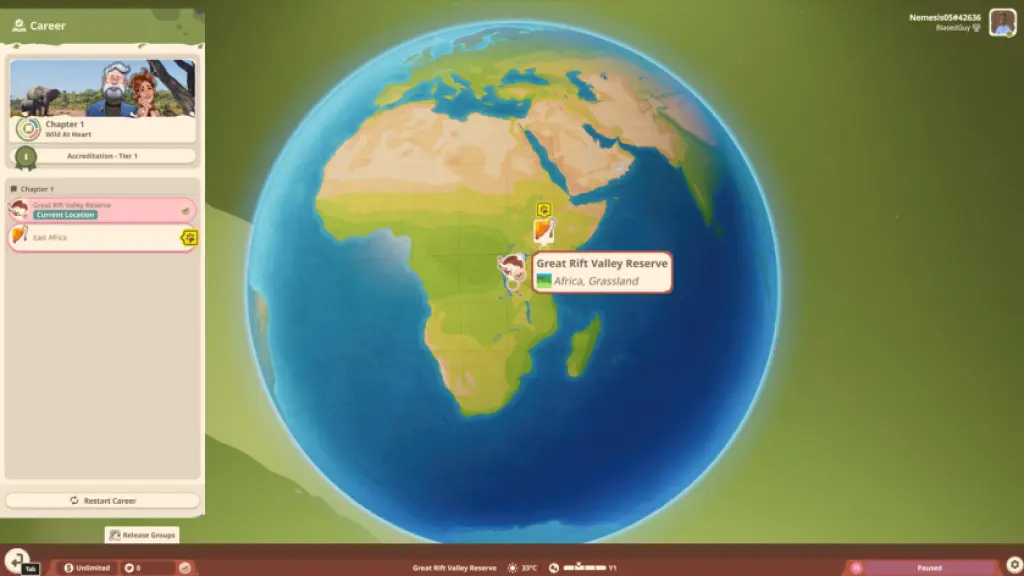
The franchise mode allows you to build a series of zoos and reserves and have them interlinked with each other. You can also complete several community activities that will be available post-launch.
Just like the new biomes, Frontier has shown a lot of love for wildlife reserves. These are not just shallow ecosystems with a few creatures. Instead, they feel like the living landscapes of Africa.
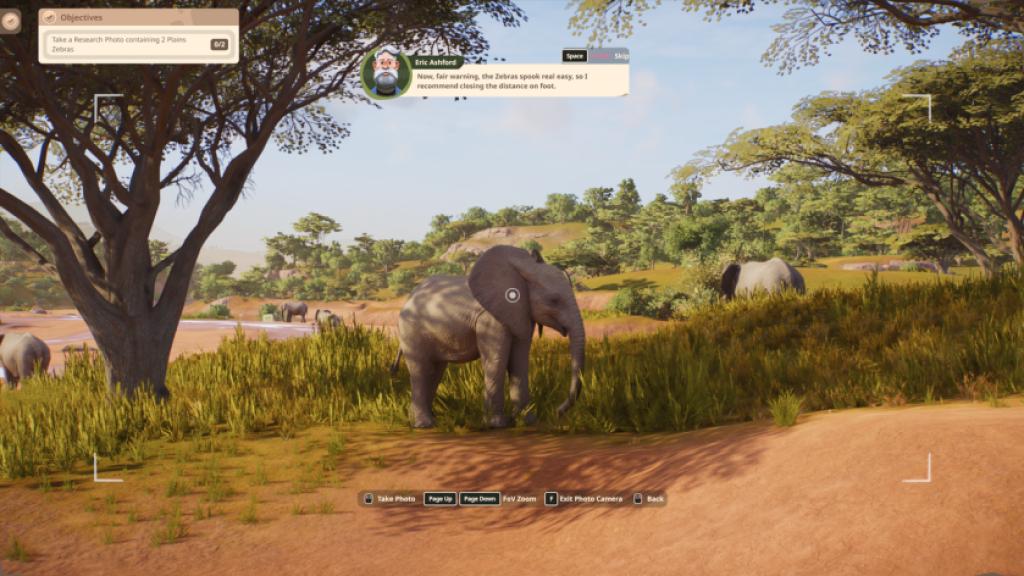
I’ll offer a simple example to emphasize this point. In the very first mission, I had to take a photograph of an African elephant. Naturally, I took my cart close to a suitable spot, and I found a calf drinking water. As I approached it, I went a bit too close. To my surprise, it ran off to its parents, just as it would in real life because elephants are extremely social herd creatures. It even knocked my cart over.
Hence, I was pleasantly surprised by the depth available in this mode. It almost makes the reserves come to life because you are not just interacting with pixels on the screen acting randomly. These virtual animals behave largely as I imagine they should.
Having said that, I do not believe that wildlife reserves will play a big role for the more traditional players who just want to build their zoo. But it’s not a bad addition since it increases the overall variety of the gameplay. If you ever feel that Planet Zoo was not replayable enough, I have good news on the sequel. You can easily play a long save for your main zoo, but switch to wildlife reserves for a bit of a break when you need it.
Planet Zoo 2 is not just about these new modes, biomes, and reserves. It’s also a massively improved experience in the fundamentals.
Let me begin with the terrain tool because it plays an important role in designing your enclosures. It has been given a lot of quality-of-life improvements. For example, you can manage the terrain in an enclosure even if it’s underwater.
This is such a lifesaver, since several enclosures or exhibits use a combination of land and water. Water in general has also received graphical improvements. This feels necessary since we have aquatics, and without this update, the exhibits could have looked dull.
We also have easy new tools, like the one that allows us to modify and change the scenery inside an exhibit. Various items have also been downsized to more easily fit in exhibits. If you’re not satisfied with the default size of an object, there’s a scale option as well, allowing you to personalize your exhibits even more.
Overall, the gameplay improvements in Planet Zoo 2, compared to the first game (which came out in 2019), are significant.
One area of discontent might be the number of creatures we have at launch, but I have faith that we will get DLCs to improve upon that over time. This was a consistent pattern with Planet Zoo, so we’re likely to see that return.
That said, I am overall satisfied with the types of species we have. Keep in mind that we are no longer restricted to just land animals now, but also creatures that inhabit your sea exhibits and birdhouses.
Planet Zoo was an amazing park sim that I thoroughly enjoyed. I also loved all three Jurassic World Evolution titles that Frontier has given us, but none of them has managed to come close to Planet Zoo.
Planet Zoo 2 is a worthy successor in every way. We have new modes that work well, fresh biomes that I had always wanted as separate DLCs, gameplay improvements, and new tools that offer so much more freedom when it comes to what we can do with our enclosures.
Most importantly, every creature feels well-designed and well-thought-out. They don’t behave the same, and I lost so many hours simply observing what my favorite inhabitants were up to.


