


Football Manager 27 promises to keep the basics intact while offering a deeper feature set, making up for a disastrous swap to the Unity Engine that led to the full cancellation of one game and the complete butchery of another.
This year, the developers have done good work, but the game is not yet a slam-dunk successor to FM 24.
A huge mistake to correct
My initial expectations for Football Manager 27 were grounded, but seeing Sports Interactive offer a complimentary preview window suggested genuine confidence that players would be thoroughly impressed by their latest creation.
But then confidence is meaningless if the execution falls short. We must remember how poorly Football Manager 26 performed across numerous fronts, delivering scant redeeming qualities alongside frustration. Even with continuous post-launch updates, it failed to satisfy the fan base or reclaim past glory.
The FM 26 UI was a significant step back. The panels were painful to look at and difficult to understand. I never got used to the purple/black theme, but at least that was salvaged by way of custom skins. Despite having new licenses, the game lost many simple features like cup draws that made playthroughs more immersive. While the match engine was greatly enhanced by the swap to Unity, nothing really worked well for me in Football Manager 26 at launch, and the improvements were few and far between over the course of one year.
To win back the community, Football Manager 27 had to get two basics right. It had to set a strong precedent based on the success of FM24, and it needed to ensure the new additions actually add to the gameplay experience.
The result is a mixed bag.
The spreadsheet simulator has much nicer spreadsheets now
Visually, Football Manager 27’s UI is one of the biggest improvements from its immediate predecessor. It’s clean and neat, and the color coding looks much better. The unnecessary panels from last year have been removed, and it’s much easier to follow and consult important information. The home screen gives you all the data you need, from your results to the league standings to the key finances: you do not need to open specialized sections to find it all.
In the previous iteration, the tab system felt like a major misstep, causing constant confusion and sluggish navigation. These issues are entirely absent this time around. Although I still find myself longing for the classic vertical sidebar from earlier entries, spending nearly 200 hours with FM 27 has genuinely made me appreciate its revamped layout, even if the UI could still use some improvements to the text size by making it a scale larger.
I actually like this year’s version more than Football Manager 24, at least as far as its launch version goes.
Sports Interactive has done a tremendous job with presenting information. The Data Hub does not provide anything new compared to last year, but the presentation has had a massive overhaul. It’s much easier on the eyes, and this allows you to make full use of the analysis at hand.
As for the match screen, the panels have received a major upgrade. We couldn’t control the number of data panels before, and we would have to rely on custom skins for this. In FM 26, the display missed crucial data panels that would be relevant to a live match.
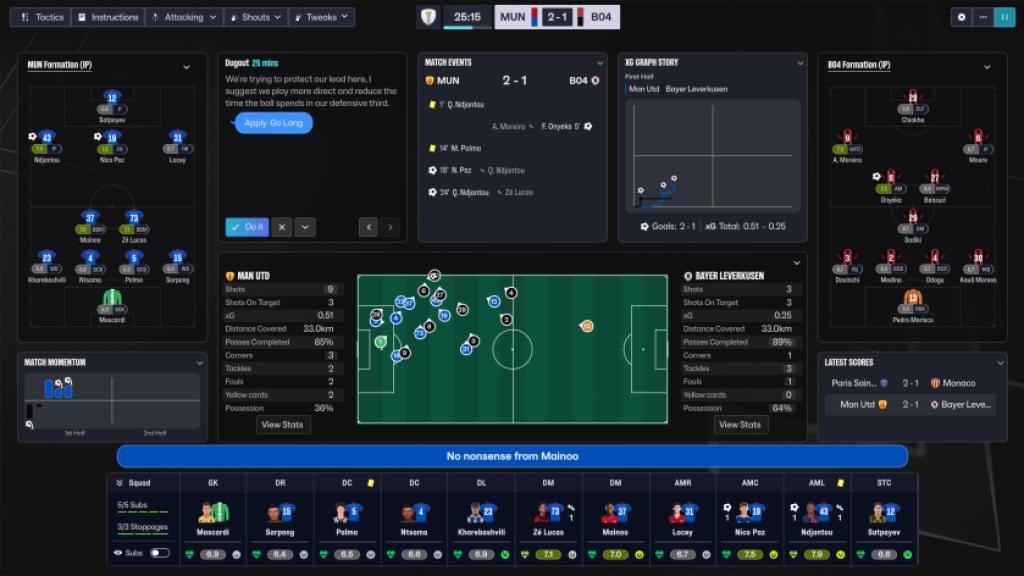
Not only can you fully customize which panels you want to see in FM 27, but you can also change the numbers shown. Depending on the size of your screen, you can add more or fewer panels for a much cleaner view.
Some of my favorite features, like cup draws and transfer deadlines, are back. Do these features significantly alter the course of your save? No, but they definitely improve the immersiveness and tension, and more so when you’re trying to seal a crucial deal in the final minutes of the window.
A much deeper tactical experience
Based on community reactions, FM 27 is proving much more difficult than the previous ones. People have struggled with big clubs, unlike in the last few years, to the extent that some feel there are bugs. If you are an experienced player, this can be a positive.
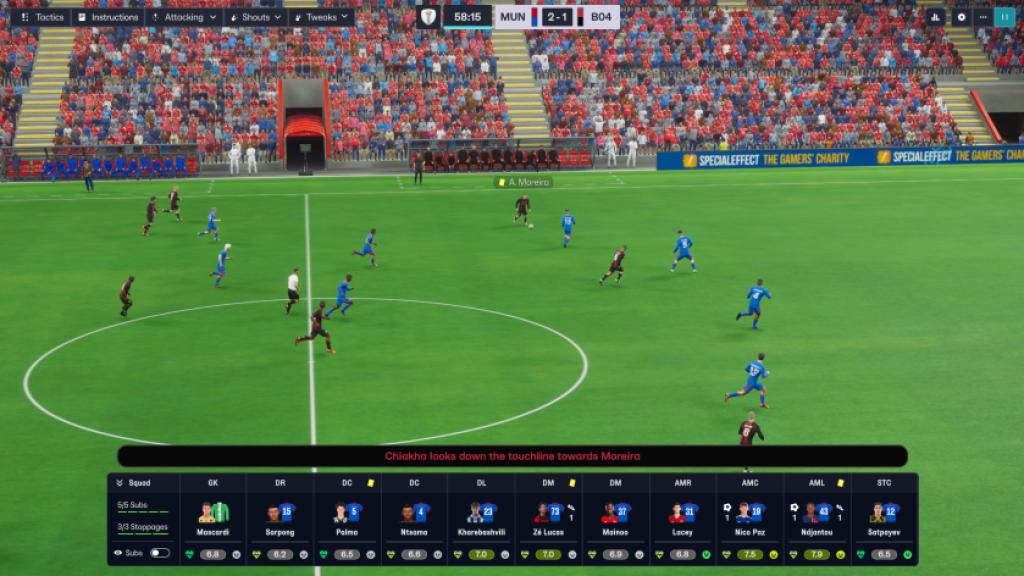
The match engine will remind you more of FM 24 than FM 26. High press is back big time after last year’s meta, where it was far more rewarding to make your defenders sit deep. Passes in the midfield look more realistic, and the individual instructions are genuinely impactful. If you opt for 2D or Tactical camera, you’ll be able to witness whether your tactics are working or not.
Similar to FM 24, cutbacks are extremely overpowered. It’s going to be your biggest attacking asset moving forward, and greatest threat when you’re on defense. However, your wingers can also shoot well if they have good stats in that department. The game actually represents the attributes of your players, which was not always the case last year.
Much of this year’s heightened challenge stems directly from Tactical Effectiveness. Although Sports Interactive is framing this as a fresh addition, it operates much like tactical familiarity in previous titles, but it requires a far more proactive, hands-on management approach.
Last year, it would take just a few training sessions and matches for your team to gel. Now this will take at least a few in-game months of dedicated training, if not more. You can always task your staff members to do the job, but doing so comes with some consequences.
While delegating these duties to your backroom staff remains an option, their execution leaves much to be desired. Elevating your squad’s tactical proficiency demands direct oversight of team training alongside boosting squad cohesion. Maxing out that green familiarity bar takes genuine effort, yet doing so pays massive dividends on matchdays. Tactical effectiveness, unlike the older system, isn’t only about training: players’ buy-in matters. Make a team leader unhappy, and your squad will stop playing as efficiently as they used to.
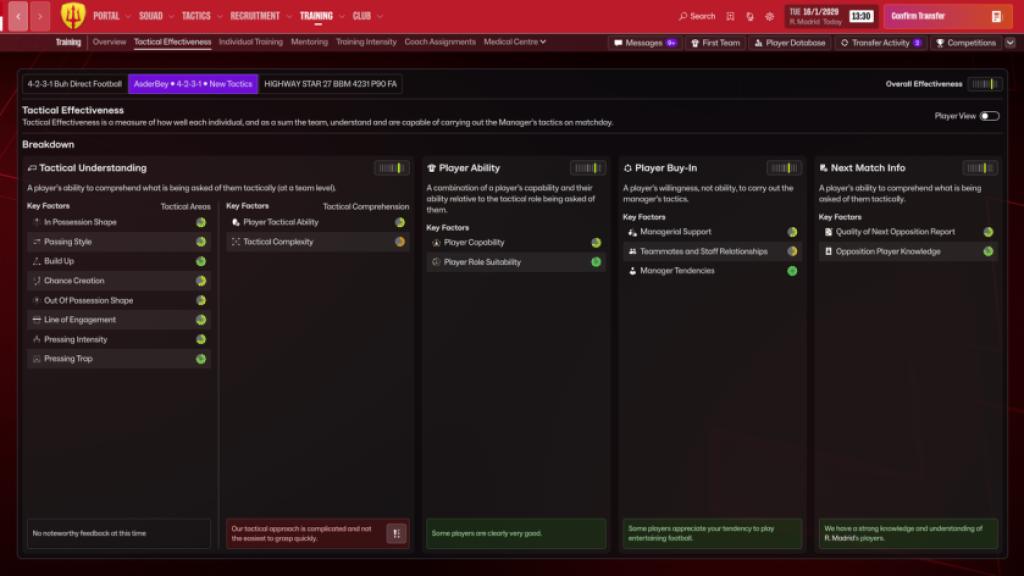
We might be in the early days, but the era of plug-and-play tactics might finally be over. While I still believe we’ll have meta tactics just like every year, you will not be able to make your squad perform well with them immediately. Instead, you will have to properly train your players to ensure they are familiar with your tactics. Similarly, coaching badges play a big role because if you are not qualified, your team will not buy into your tactical plans.
Tactical instructions and the separate tactical setups for in- and out-of-possession situations work much better than they did in FM 26, and players appear to be more familiar with simultaneous roles. For example, there were several instances last year when an AM couldn’t operate at all as a CM, or an IW was unable to work as a defensive winger, which isn’t the case this year.
There’s greater flexibility in general. The inclusion of Tweaks is also a welcome addition. You no longer need to make elaborate changes during a match. Instead, you can make smaller changes on the fly using various presets as the situation calls for.
My only negative feeling about the new tactical setup stems from how the match engine works currently. For large parts, it works in the intended fashion. But every so often, you’ll get these odd instances where a player almost ‘ignores’ their instructions.
On the other hand, the AI feels a lot more dynamic, quickly adapting to our tactical changes mid-match. This adds a flavor of realism that was missing last year.
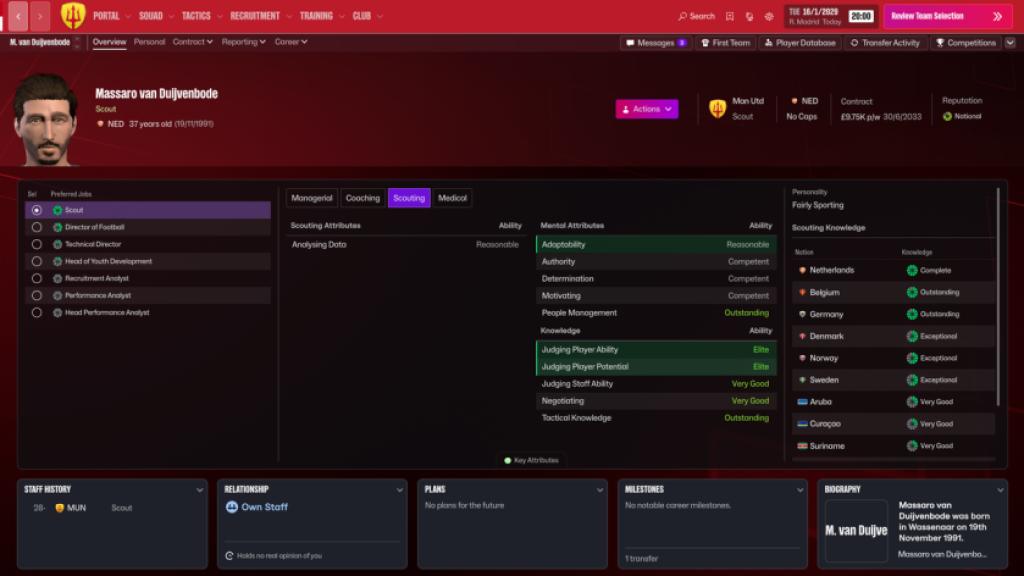
Another major area of improvement is player and staff AI mannerisms. For starters, the AI seems to make better offers relative to player values this time around. Similarly, younger players want more game time to enhance their development. Staff capabilities have been improved, especially the Director of Football. They can help you negotiate better deals, make more money, and improve your finances. Overall, it’s a welcome change as I love to play Moneyball as frequently as possible.
Better immersion, more features
Despite some flaws with the match engine, there’s definitely a noticeable increase in the overall immersion this year. Some tactical instabilities also mean that when your team hits a 90’ winner, it hits deep (just like in real life).
The game isn’t all about managing your dream club, as Shuffle Draft feels like a good addition. It spices the typical Draft experience by only keeping a fixed number of players available every round. Hence, you might not be able to draft the player you want if he isn’t part of the pool. This also enhances the general difficulty of the draft since being flexible is part of the experience.
I also like how SI hasn’t removed the World Cup mode from FM 27. The mode allows you to take charge of a nation and help it win the ultimate silverware. While you have to wait until 2030 for the FIFA World Cup to appear, it’s yet another extra mode that will chip away at your time.
Overall, Football Manager 27 does what it was developed to do. It provides an authentic and serious management experience that rewards you for getting involved. Results are no longer automatic like previous years, and you’ll face plenty of challenges. This also adds to the sense of achievement when you finally manage to outdo the AI and land a trophy.
It’s also a visual uplift from last year’s version, and for once, I haven’t found the need to get a custom skin in my first 200 hours with it. The design might not be a ‘classic FM 24’ skin by any means, but it grows on you. All the game needs now is a bit more refinement in how the match engine works, but there’s not much to complain about elsewhere.


