


Crusader Kings 3 has been a county-duchy-kingdom game since its inception, with no option to found or take control of republican nations. You play as a dynasty and not the country, and ensuring inheritance is the only way not to get slapped with the Game Over screen. Now, though, that has changed, and ruling is only optional.
In Silk and Silver, republics are finally available to play, allowing you to partake of the fruits of Venice, Genoa, and many other elective nations who care little for undisputed despots. I, however, didn’t play as a republic at all during my time with the DLC, but rather chose to be a patrician within a republic, influencing it only to the extent necessary to forward my own goals and bring extensive riches to my family.
I played as a member of the Faliero dynasty, available at the 1066 start date in Venice. I began as a small-time merchant, spreading my roots across the Adriatic and starting my trading empire. At the same time, I participated a little in the politicking of Venice, becoming a steward for the incumbent Doge several times, funding public works, and trying my hardest to earn the trust of as many people as possible so I would eventually be elected as the head of state.
Read what’s behind the latest news in gaming (with a bit of snark) by subscribing to the Destructoid Checkpoint newsletter!
The Silk and Silver DLC greatly expands trade, especially if you play as a merchant. You can establish trade routes, finding which resources are needed where, and then send your envoy to purchase said resources in the cheapest places and sell them where they are most valued. Of course, there are several other factors to take into account, because travelling across the Mediterranean is not free, leading you to carefully select which markets you want to participate in for maximum profit.
Things started off really small, and I could only earn a few ducats a month through my trades, but my profits more than doubled once I got elected Doge. I got the funding to establish an extra trade route, gained access to more profitable goods, and began selling them to every corner of the Mediterranean and Black seas. Before I knew it, I was earning 50 ducats a month within just the first few years of the game’s start.
Eventually, though, I kind of grew tired of having to manage an entire domain. With my successors, I pulled back from domestic policies, rejected participation in the elections, and began focusing all I had on international affairs. I wanted as much money and foreign influence as possible, so I began collecting extra dough for the game’s Fourth Crusade event, where my mercenaries earned enough recognition to force the Pope into crowning my brother the Latin Emperor.
By spreading my dynasty far and wide, we could quickly earn a lot of renown, especially with all the renown-boosting buildings you can now construct.
Your estate is basically the same as the Byzantine system, so if you’ve ever played within Eastern Rome, you’ll more-or-less know what I’m talking about. Managing your estate can lead to an incredible amount of growth and renown, and what previously took your dynasty centuries could now be done in decades.
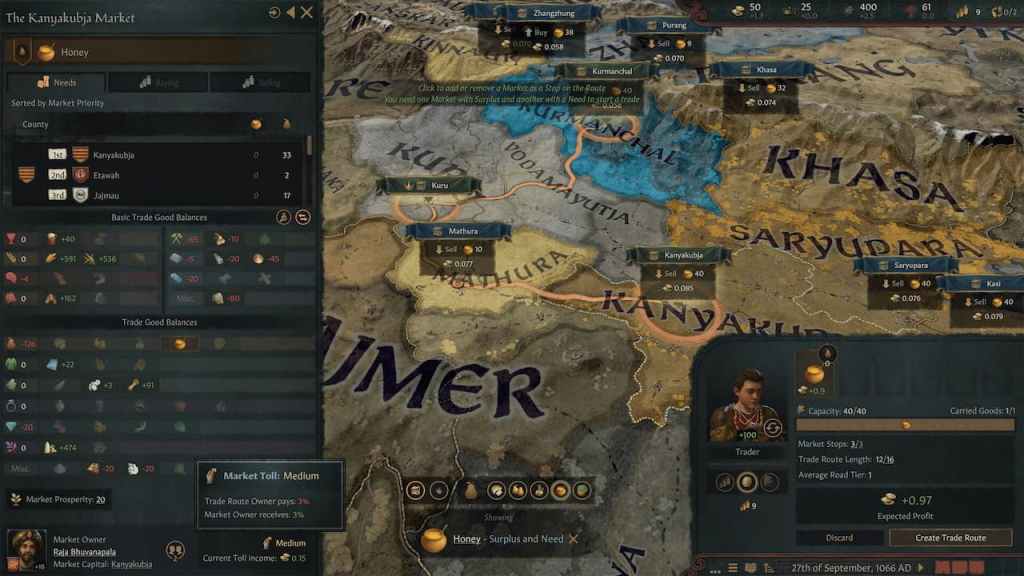
As such, I quickly knocked down many trade-focused dynasty bonuses that saw me slowly becoming the king of Mediterranean trade. I was earning over a hundred ducats per month, with dynasty members controlling vast amounts of territory, all while I still did not have a claim to the title of Doge and merely operated out of my humble, ever-expanding mansion. I dominated the seas and the land through the power of trade, supported the Papacy whenever I could, and simply reaped the benefits of unelected rule as much as possible.
And this is just one part of Silk and Silver. Controlling full Republics has its own vast array of mechanics and systems, while the new building system is way more comprehensive and thoughtful than it was before.
It still lacks in many ways, as does trade, since extra depth would’ve made certain regions way more important and lead empires to fight huge wars to control them.
At the moment, the supply-and-demand and production parts of the new trade system are a little weak, but I hope Paradox can continue to develop them and make them intro something truly remarkable.


