


Back in 2022, Call of Duty entered the extraction shooter space with its beta variant of DMZ. It was relatively barebones, and I never much cared for it.
This was before ever really diving into the gametype with other titles like ARC Raiders and Marathon, which I’ve since played and enjoyed. CoD’s devs definitely did, too, because DMZ’s full launch inside of Modern Warfare 4 this week will feel familiar to anyone who’s played these other titles, while attempting to fully realize the DMZ dream from its Modern Warfare II roots.
DMZ’s devs at Infinity Ward call this iteration the “action extraction” game, and I think it has big potential to flourish with casual players who may feel scared off by the hardcore nature of other games like it.
Last week, I was invited to Infinity Ward to review MW4, and DMZ is where I spent the most of my time, playing both solo and in squads with other journalists. I think the most of us came away feeling positive about the mode, but unsure of how it will feel in the hands of the public given that we couldn’t really feel the effects of a full lobby and how it might play out as far as PvP goes.
Progression in rapid succession
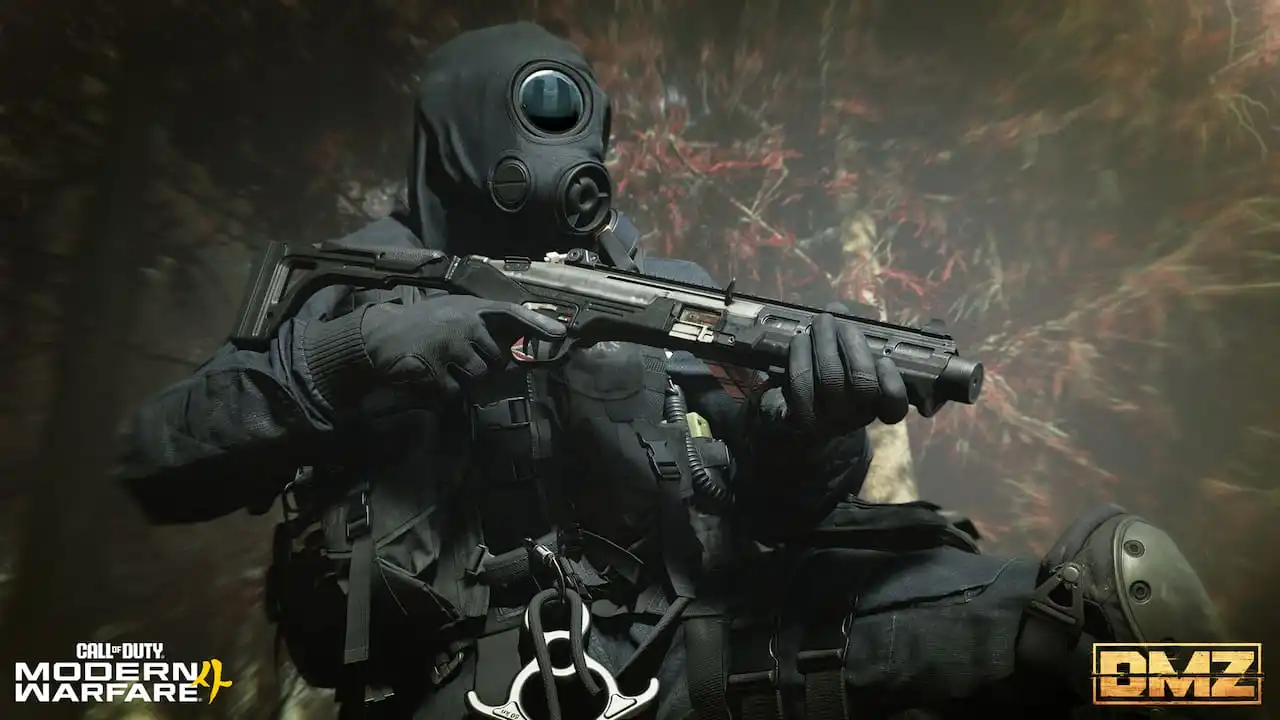
To put it succinctly, and for those who didn’t play the beta a few years ago, DMZ feels a lot like if Warzone added ARC Raiders‘ progression, loot, and gameplay loop. And at its core, it’s fun.
Every foray into DMZ begins and ends at your Forward Operating Base (FOB) that is explorable in third-person with teammates, reminiscent of something like the Tower in Destiny 2. From here, you can access a multitude of options, including your stash of collected items, a 3D printer to craft new gear, a Gunsmith to create weapon loadouts, a vendor with rotating stock of weapons and gear, a bounty board to show you the most dangerous players in PvP, and a firing range that seamlessly transitions to first-person so you can try out your guns before playing.
The FOB levels as you do, adding new things to do, and giving you the ability to craft and equip better gear like backpacks that hold more items, plate carriers that add more damage mitigation, and more.
Players choose an Operator (one of a pre-determined list that you can unlock and add to via progress or skins in the store), and then begin to level them up by playing. Everything you do in DMZ gives XP, like killing AI or player enemies, opening containers, extracting valuable loot, killing bosses, and anything in between, so there’s always progress being made regardless of what your current objective may be.
In the name of that progress, leveling up your Operator unlocks Traits, which are like ARC Raiders’ skills, offering powerful buffs for your character, with perks like increases in cash and items you get from loot containers, better health regeneration, longer-lasting UAV scans, and more. These Traits are as crucial as the loot you find, which makes losing an Operator important.
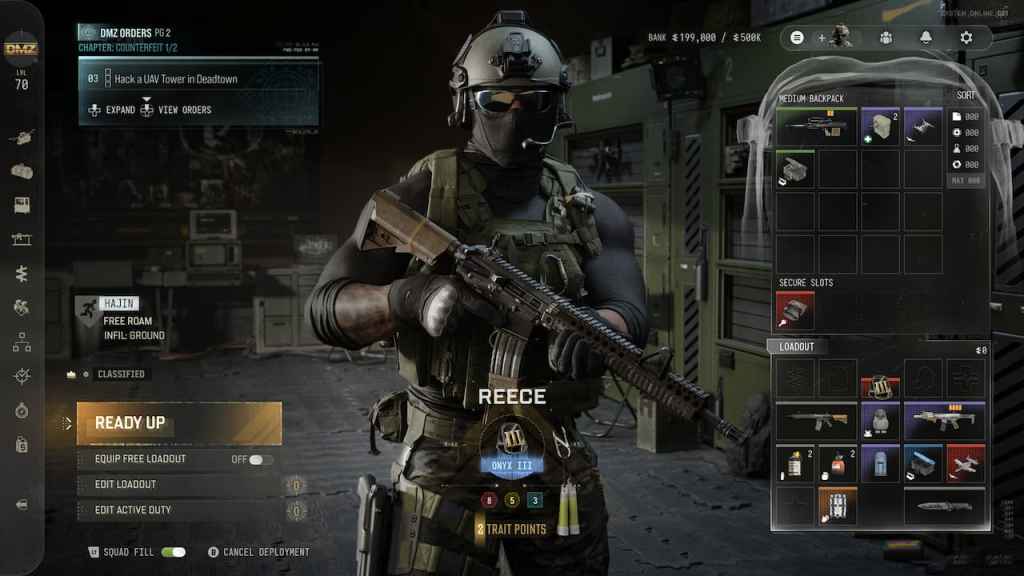
But if your Operator does die, you always have the chance to bring them back as part of the game’s “MIA” feature. You can buy back that Operator to restore them and their Traits, and they never expire, only leaving your list of Operators if you dismiss them from an active duty slot. This likely means using a low-level Operator to grind out some cash to get what you need to purchase their rescue (devs said the DMZ bank has a max limit of $2 billion), as higher level Operators cost more to get back. This makes deployments feel important but not overly punishing, especially since you are able to use a Tourniquet item to self-revive the first time you get downed in a match, at the cost of your max health. But dying means losing all of your gear at the same time (and you can’t get it back even with the MIA buyback), so there’s always a risk, but the gear fear feels less crippling than you may expect, at least at the outset.
Leveling and progression in DMZ is also driven by Orders, which I’d compare to quests in other extraction shooters, as they are filled with various tasks that onboard as well as drive the narrative with different characters in the story and beyond it. Finishing these various tasks unlocks more to do in the FOB, so they should be a primary task for gamers as they log on.
New world order
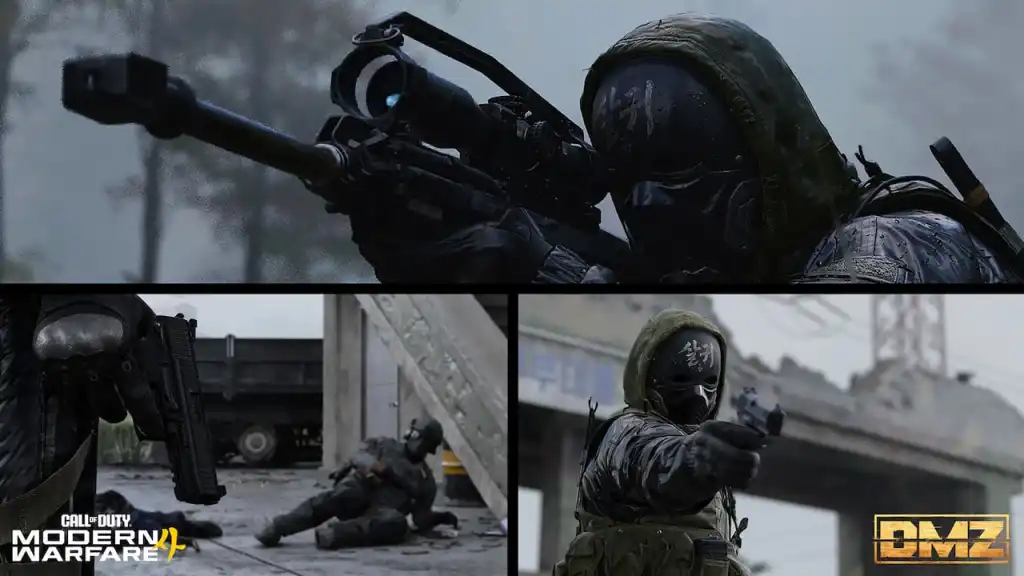
DMZ’s map, Hajin, is teeming with activity and things to do to grab money, loot, and XP to level up. There are roaming enemy squads, high-level named Lieutenants (known operators from previous CoD games), and boss-like Commanders in any given match to contend with. The world is very detailed and feels like a notable improvement on past PvE experiences.
Before deploying into a game of DMZ, you choose from a Story Mission, Dynamic Ops, or Free Roam, but all of them allow you to explore at your own will, and each of them feel distinct, helped further by an awesome dynamic weather system that makes Hajin feel alive.
Story Missions (six at launch) feature more of a challenge and campaign-style cinematic set-pieces that move the narrative of MW4 forward past the end of the campaign, and all I played were really cool and genuinely difficult at times. Meanwhile, Dynamic Ops are random mission-chains that send you around the map to complete different objectives, and Free Roam throws you into the map to do as you see fit. You can grab a Dynamic Op or side mission at any time, run around and grab loot, seek out PvP or boss battles, or anything at all, really.
PvE enemies range from pushovers (base level) to bullet spongey and powerful (specially marked areas on the map are only for the most geared Operators), but generally feel fun to engage with on the map. And in the end, DMZ’s experience depends on how you want to play and what you want to do.
In the couple of days we had with DMZ, I felt it natural to begin crafting different operators for different things: one for PvP, one for looting, and another for general gameplay, as an example. With Traits, you can create a build and swap freely between Operators to suit different missions or play styles, and you unlock more ways to play as you level up with your DMZ rank.
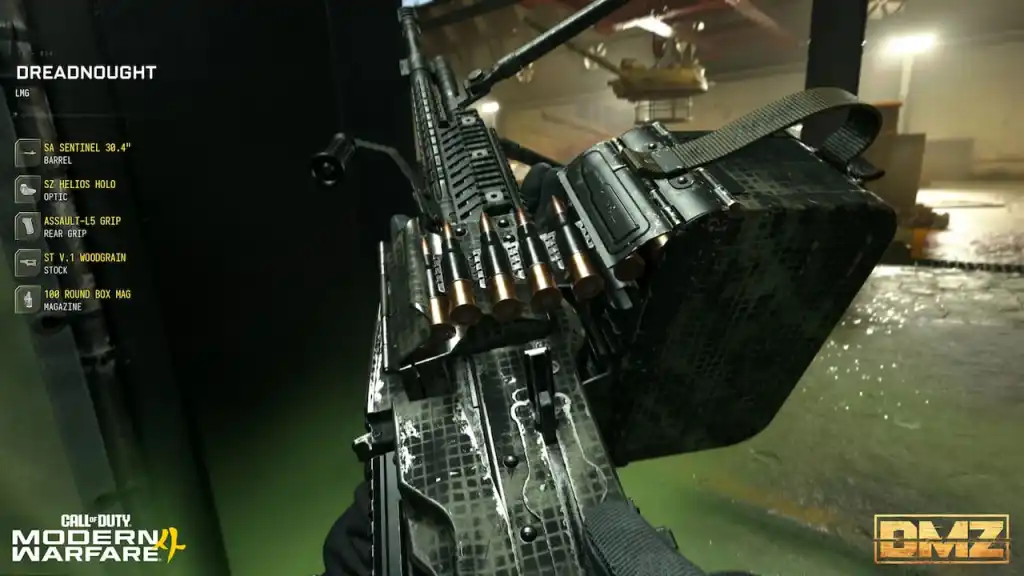
Looting is as crucial as fighting in DMZ, with items such as Weapon Manuals to be found at random. These are like blueprints that allow you to buy and then equip in the Gunsmith at your FOB to bring with you on missions, with the cost going up to over six digits if you fully equip it with five attachments. You then need to level up the gun in classic CoD form to be able to purchase said attachments, but that leveling works across DMZ and multiplayer at the same time.
But of course, you can also find a Legendary gun off of another player, or special weapons from bosses that go past the five attachment limit for some real wildness. And then there’s a level of mystery to be found within Hajin as well, as the intro cutscene teases underground bunkers beneath the city. Season one of MW4 will also add a special new location, and season two unlocks the Russia part of the map found to the north, currently obscured and unreachable. DMZ should only get bigger and better from launch.
Tough to tell
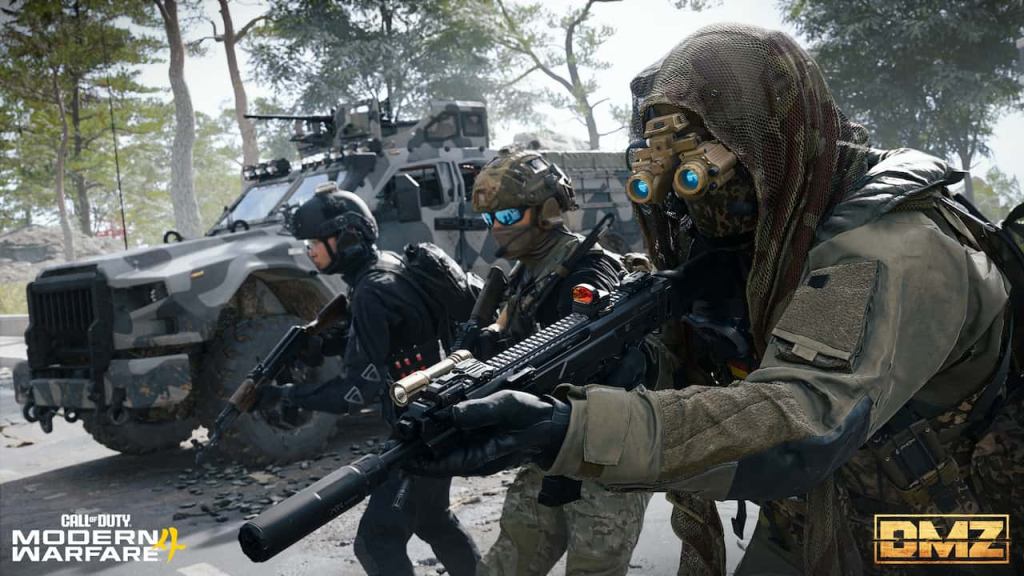
A lot of the fun in DMZ is the randomness that occurs on any given deployment. Outside of Story Missions which spawn you at or near a specific narrative objective and then task you with completing it within the time limit, Hajin is meant to be a place where no two runs are the same, and that’s how my 10-ish hours of game time felt at Infinity Ward.
There are times when you’ll have a specific objective but easily get sidetracked as an enemy convoy will pull up, and you must choose to engage them or move on, lest run the risk of grabbing attention of nearby players who might want your loot. But you could always attempt to create a temporary Truce with enemy players to work together for the time being, which will display a white flag above your new-found friendlies until that truce is broken by leaving their immediate area or downing somebody.
In our myriad of matches at Infinity Ward, I distinctly remember trying to complete a Story Mission with two GameSpot writers, and our plans were epically derailed by the fact that the high level area we were trying to enter was being patrolled by two boss-like Commander enemies: an armored helicopter, and an enemy in a Juggernaut suit walking around with a minigun. Using our leveled up Operators, we tried our damnedest, but ended up getting slain by the waves of armored foes that joined them. When it comes to PvE, DMZ definitely feels like it has the goods.
As I mentioned earlier, though, I don’t feel as though we were able to get an accurate PvP experience that retail players will feel at launch, where 20 trios will be able to play in any given match. There’s no telling when a death-squad of three sweats will pull up on you and take all your loot as you try to finish a Dynamic Op, so I can’t say for sure how the game feels with that factored in. For now, it leaves the mode as something of a question mark until the servers get full of all sorts of players.
There’s enough in the game that gives players the options to go solo or even play as stealthily as possible, so if they want to stick to PvE and avoid confrontation, they can try. Traits to avoid UAVs, an on-screen indicator when enemies are spotting you, and more mean that anyone can attempt a pacifist, Metal Gear Solid-style playthrough in a match.

But, in summation, I do think that DMZ has the tools to help players of all skill sets, and the foundation is here for something special after Infinity Ward has iterated on it over the past few years. With its aim at casuals, I think a 2020 Warzone-like success could be possible for DMZ, but as part of the premium MW4 package and not a free-to-play mode (for now), that level of phenomenon is unlikely.
You can try it yourself today in MW4’s early access or on Oct. 23 when the full game launches on console and PC.
Activision provided Destructoid with travel and lodging for the review event at Infinity Ward in Los Angeles.


