

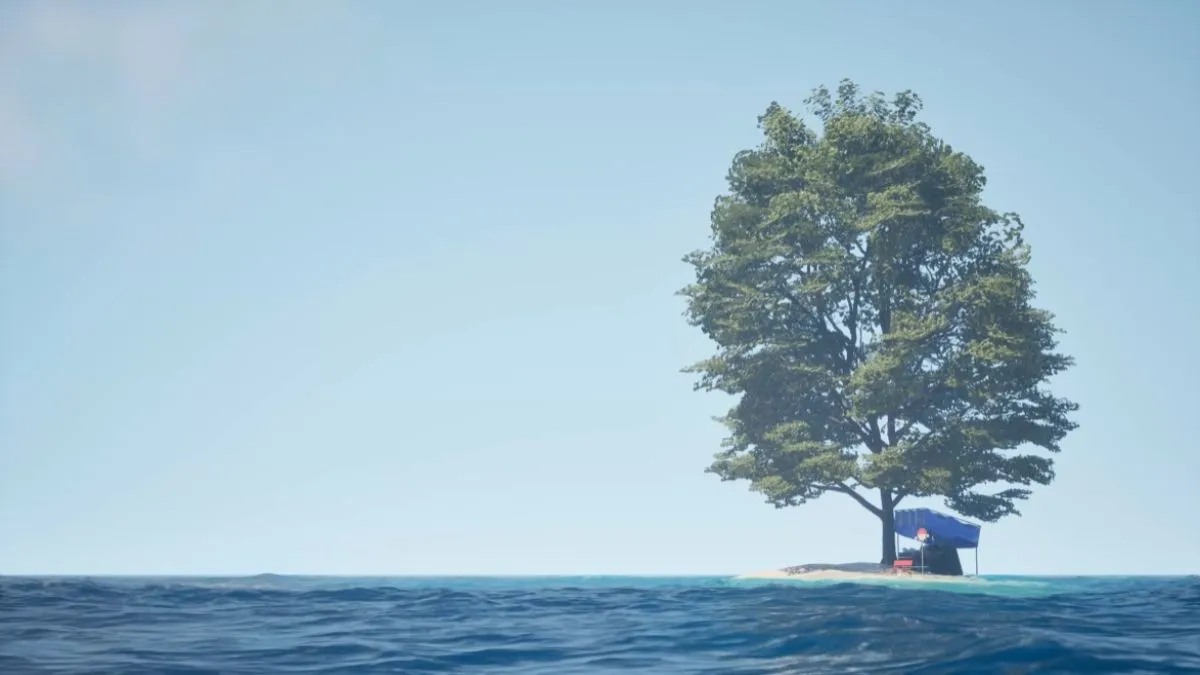
Just when you thought fishing simulators could be nothing but cozy, think again. The world of UMIGARI is vast and full of suffering, where the curse hopes to make sense of it and provide some much-needed change. But is it for the better?
Here is our interpretation of the strangest Chilla’s Art title, UMIGARI.
Table of contents
UMIGARI plot, summarized
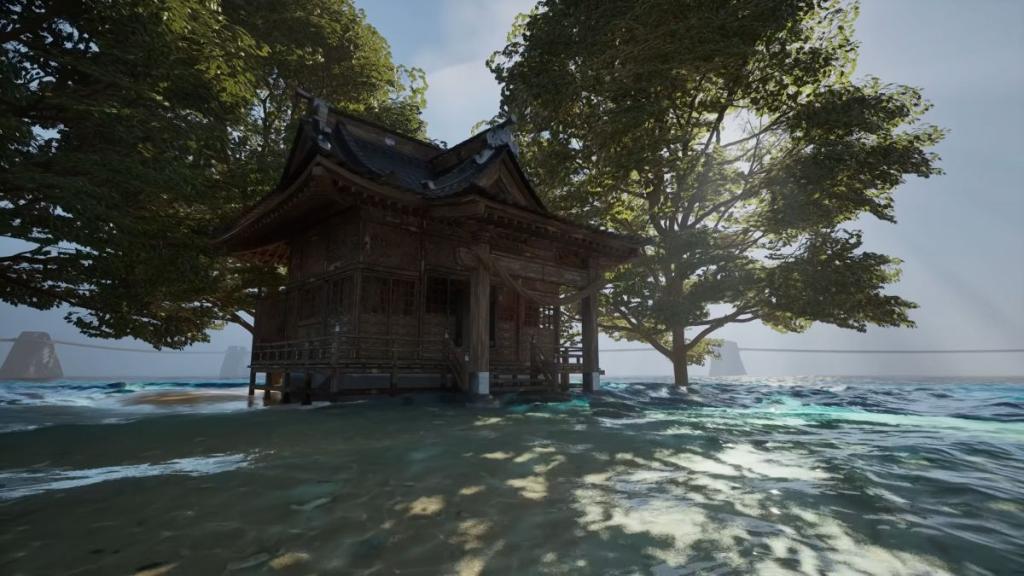
The goal in UMIGARI is to find the three tablets to unlock the shrine that’ll point you across the horizon, to the island where the omnipotent whale waits, so that you may bring this curse to an end. The flooded landscape is full of bizarre sea creatures that only get stranger the further you go. Fins made of human limbs, fish wearing schoolgirl uniforms, lips and giant eyes on hammerhead sharks, fish talking to you after being reeled in, and human faces plastered onto stingrays; there’s a lot to fear in this creepy installment.
There’s not much luck with humans either, as their behavior has turned truly bizarre, with violent outbursts and, in some cases, cannibalism. Taking NPC requests to a whole new level, UMIGARI makes DREDGE and Subnautica look truly cozy. There’s no denying this fishing simulator is cursed beyond belief.
UMIGARI story, explained
What is the curse?
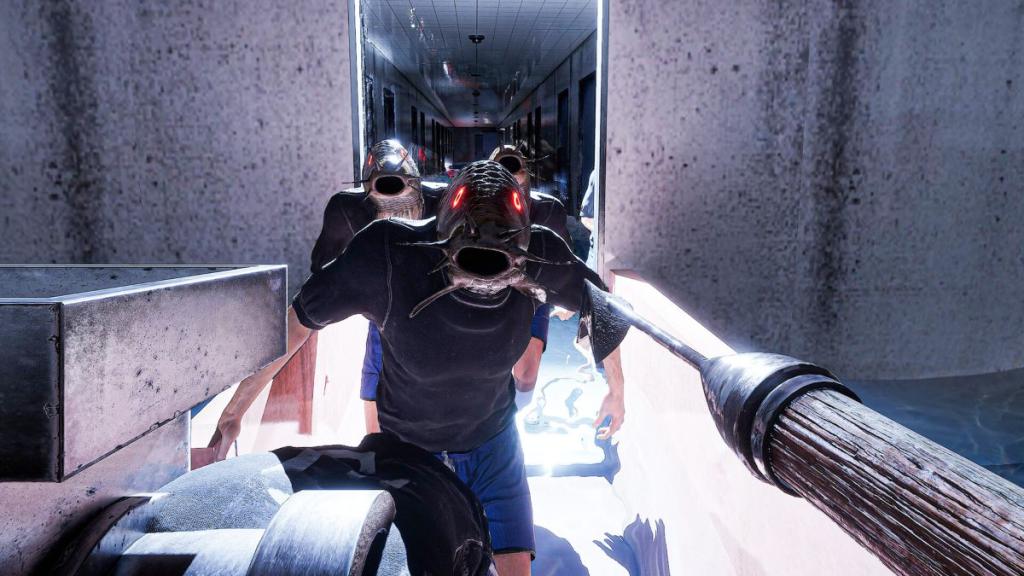
The curse in UMIGARI is that fish were transformed into humans, and humans into fish. Fish don’t understand how to be human. They wake with extreme hunger and resentment towards mankind for years of being hunted. Perhaps a social commentary on fishing in Japan, or of the global suffering of animals, UMIGARI‘s surreal gameplay and narrative demonstrate the continual (and unnecessary) abuse of fish.
The main reason to fish in this game is to upgrade your boat, where the only real and important upgrade is your speed level. This is so that you can evade the sea spirit that hunts you between locations. Yet, the addictive gameplay loop and the fact that the fish get pricier the further you travel means the game quickly shifts gear into greed and farming to extinction. But the natural response to have when playing UMIGARI is to feel sickened that you’re actually hunting and selling humans.
The curse befell mankind, curtesy of an omnipotent whale that grew tired of being hunted. Fish developed a hatred and resentment to the sailor, resorting to violence and cannibalism when it was their turn to try their hand at being “human.” UMIGARI‘s message is about the destruction and suffering of animals for monetary reward and how we would have a very different take on fishing if we could communicate, hear, or understand the animals’ suffering.
The fish-turned-humans appear unreasonable, mad, and incoherent, but their behavior isn’t far from mankind. Through listening to the cries of his people, the whale decided to curse the land so that fish and man swapped places. But the fish-turned-human adopted the worst of humanity’s traits, which begs the question—are humans truly evil? That is what UMIGARI is asking us.
What is the UMIGARI monster?
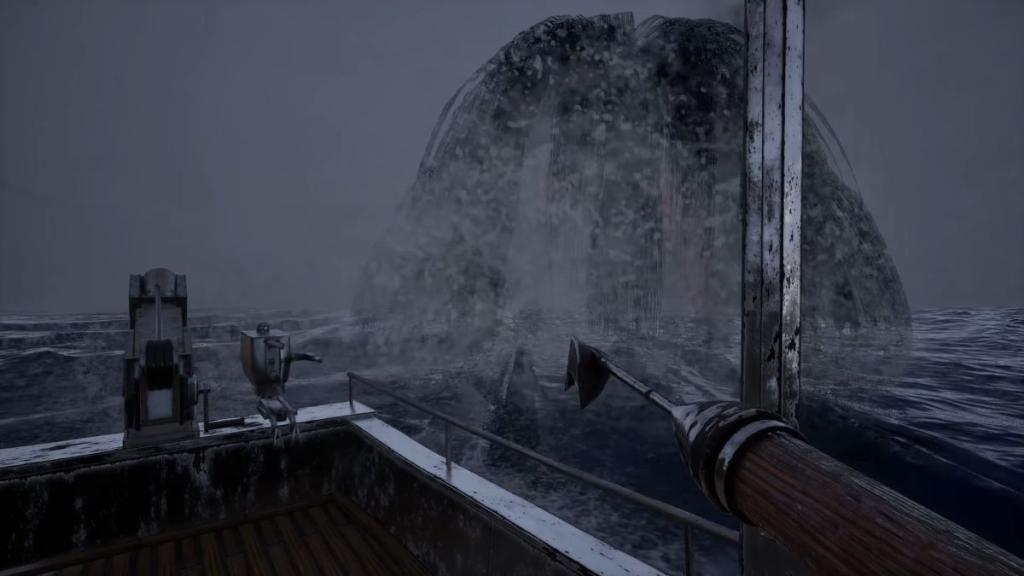
The main monster of UMIGARI is the Umiga. This is a giant female ocean spirit that waits in the open waters. She hates the sound of bells, which you must find and place on buoys to keep her at bay so you can travel to a new location. Though this curse isn’t so much explained in-game, the Umiga could be similar to the Umi nyōbō, which hunt humans. Alternatively, the Umiga could be a large-scale version of the Nure-onna. Her appearance is a giant female head that transforms into a mouth when closing in on a boat she’s pursuing. Inside the mouth are arms that reach out to drag the boat under.
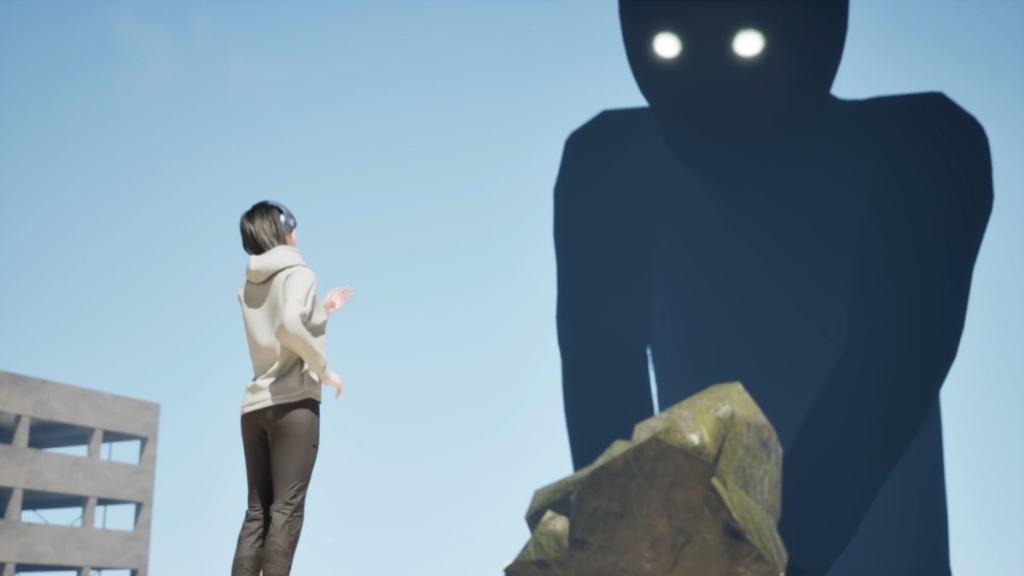
There is also the Umibōzu, a sea giant. This is a yōkai of a gigantic shadowy figure that capsizes boats. It appears in the latter half of the game and attempts to consume you when you board the Spirited Away-like train inside the Suspicious Dome.
Other monsters that appear in UMIGARI seem to reference Japanese folklore, such as the Nure-onna and Ningyo. The Nure-onna is a yōkai with the head of a woman and the body of a snake. You must hunt once of these for Local Granny, opposite the Umino Maternity Hospital. The Ningyo are mermaid-like creatures that are a sign of a bad omen, yet are rumored to grant immortality. Yuria from Ominous City wants you to hunt them for her eyesight.
UMIGARI endings, explained
There are two endings in UMIGARI. You’re asked questions by the omnipotent whale about your experience as a “human hunting fish.” This is the Girl in School Uniform’s father, who is a prominent figure in the game, as she’s the whole reason you want to go to the island. The whale wants to know: “Were the humans you met evil itself?” Whether you see what you’ve been doing this whole time as an act of evil or that the actions of the fish-turned-humans were no different to mankind, the ending will change depending on your answer.
Much like mankind, the fish-turned-humans have grown complex in their values and desires. The Merchant doesn’t want to go back because he believes there’s still more for him to do. Meanwhile, the Girl wants everything to go back to how it was because we (the protagonist) still committed acts that caused suffering. They no longer hold hatred for mankind, for nothing positive came from it.
Ending A
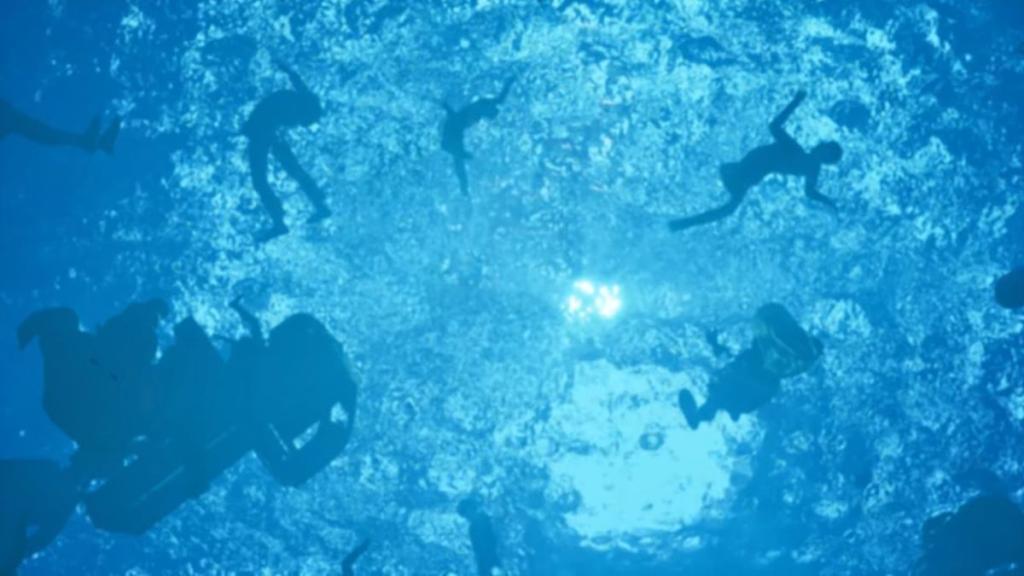
The curse will be lifted if you tell the omnipotent whale that “humans,” including yourself, were evil. The final cutscene shows the ocean flooded with drowned corpses—humanity eradicated in the blink of an eye. This ending implies that even if another species replaced humanity, they too would succumb to their greed, worst desires, and violent urges. If humanity is truly evil, then change isn’t possible, so it’s safer to rid the Earth of it before there’s any more suffering. It is a cynical conclusion to UMIGARI and one that may make you question what all of this was for. But that’s the point.
Ending B
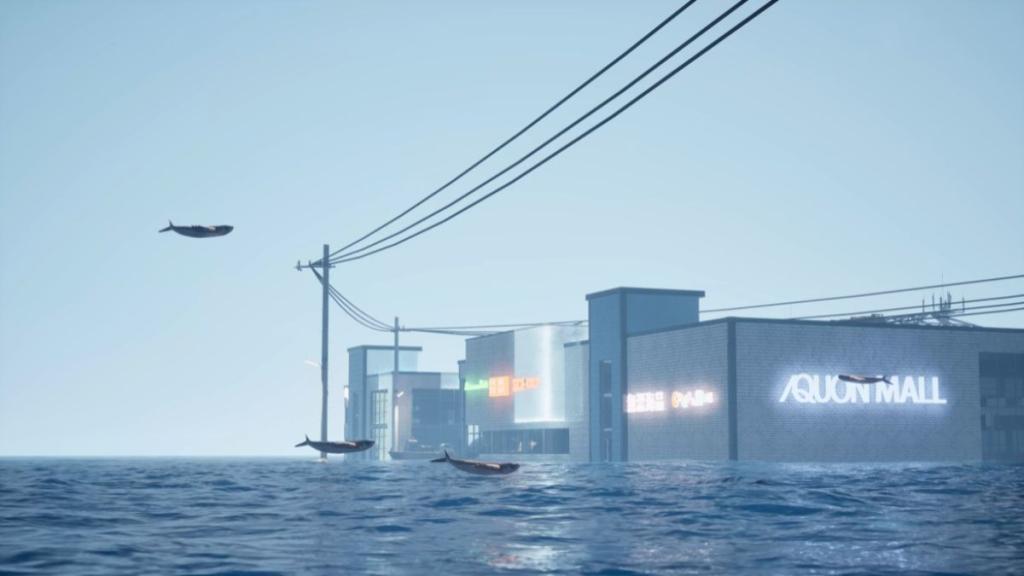
The other ending is by answering no to all the omnipotent whale’s questions. We then suggest that fish and humans can co-exist by giving all aquatic creatures the “power to think.” The curse remains, where fish are still humans, and humans still fish. Yet, the world is vastly different. The cutscene shows an end to suffering, where fish-humans have jobs, communities, and go to school. They have bartering systems and children, and mankind continues to live in water, experiencing the ultimate freedom. Humanity has the chance to “be good” and face a new meaning of existence. There is peace and harmony in this totally wild and outlandish conclusion that is fitting for Chilla’s Art’s most surreal title yet.


