


Technological dreams and realities morph into one as something sinister hides beyond the door you’re too scared to open. Yet, A.I.L.A wants nothing more than to remind you of what’s behind it. What mistake have you made, and just how far are you willing to go to escape your past?
Thrown into the world of advanced technology, A.I.L.A sees you play as Samuel, a video game tester. With talks about a killer taking the eyes and hands of their victims, escaping into the virtual realm of horror felt fitting for the broken Samuel. One of the indie horror games I was most looking forward to playing this year was the November 25 horror release, A.I.L.A.
A technological horror that blurs the line between the virtual world and reality, A.I.L.A throws you into different worlds in hopes of reminding you of a past Samuel tries so desperately to forget.
A.I.L.A has a lot of ideas and doesn’t suffer from them

A.I.L.A cleverly and effortlessly combines ideas and horror subgenres together without ever feeling confused. The inclusion of collectible hunting, both in the form of figurines and Red Wagon pages, strengthens the inviting level design throughout this title. The compact level design was tidy and polished, so much so that A.I.L.A doesn’t provide a map. Surprisingly, didn’t need it. I found myself easily getting through the game with little hesitation or struggle, as each level had good pacing and flowed well together.
The problem is that while the setting and idea shift with each world you explore, the gameplay remains identical throughout. The survival and action horrors blur together, and outside of A.I.L.A‘s promising opening, the one-note, unscary enemies appear in three forms: the small and common enemy, the larger and stronger foe, and the level boss. The format makes A.I.L.A repetitive and removes any challenge altogether. The puzzles are also simpler than most horror games, and the boss fights feature the same tiny arena, where running in a circle and turning to shoot is sufficient every single time.
An intriguing karma system
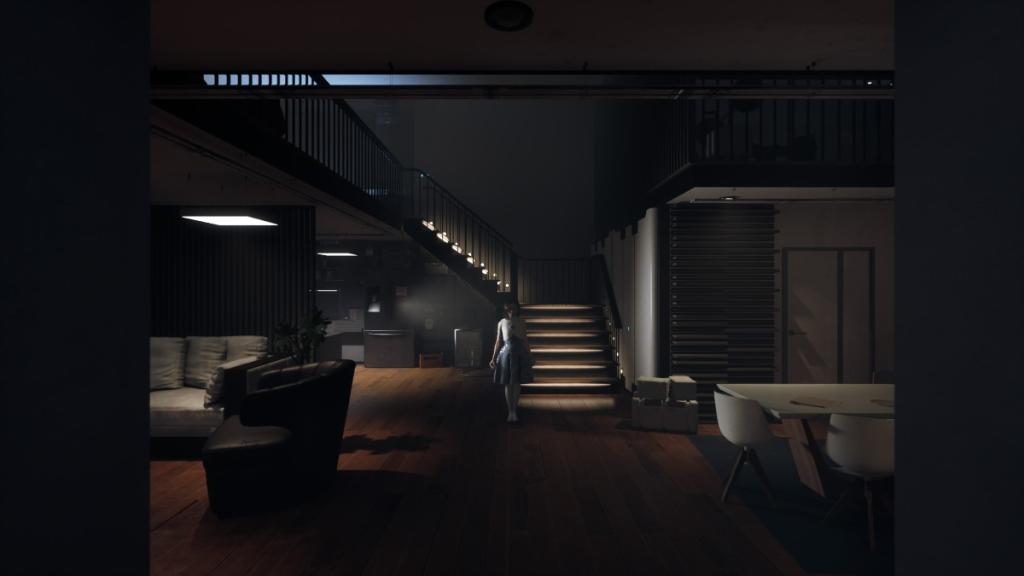
While the game does offer narrative choices, each devolves into two obvious, binary moral options. The outcome of the game also looks at a final decision, where choosing the right option is as clear as Mass Effect‘s Renegade and Paragon paths. Karma is not expanded upon further than the occasional choice and provides little depth to the story, for you’re not shaping Samuel like a Quantum Dream game or Baldur’s Gate.
Your decisions are really about whether you accept or deny a truth you haven’t yet learnt (but can easily guess). Truthfully, the karma system doesn’t change much outside of which ending you get, but it’s a fun inclusion. You’re told very early on that A.I.L.A keeps track of your karma and listens to your feedback. This only seems to matter in the first hour, however. What seemed like a big selling point of A.I.L.A in its karma system (which had great potential) offered disappointment as it was underutilized.
Unreal Engine 5 in full force (except the janky character models)
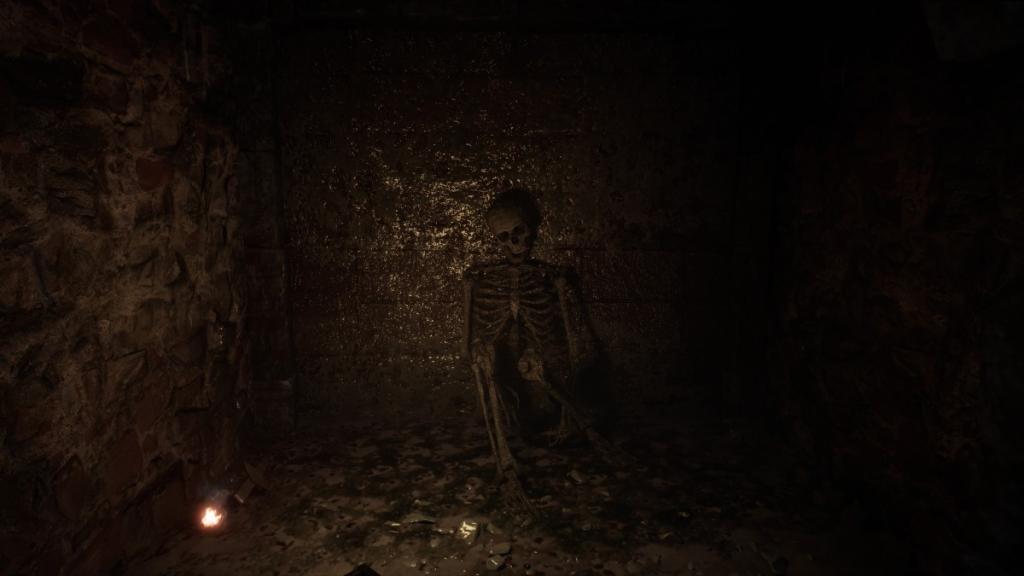
The atmosphere you’d expect from a horror title was severely lacking. Outside of the first half hour of gameplay that clearly took a leaf out of P.T.‘s book, the rest of A.I.L.A offered little tension as I breezed through each level, solving mostly easy puzzles and brute-forcing the rest, engaging in simple yet repetitive combat along the way.
While I enjoyed the lore each level had to offer, I couldn’t immerse myself in the story, for I knew they were created by the A.I.L.A. software. This is hopefully something only I noticed, but it’s hard for me to invest in characters that are inconsequential to the overarching plot when their existence is purely video game filler. Like Inception‘s dream-within-a-dream, no one cares for the extras that fill Cillian Murphy’s subconscious, but rather the real people that are invading his mind.
Similar to Cronos: The New Dawn, there is nothing new or inspiring in A.I.L.A

While I don’t expect something original, borrowing so obviously from Resident Evil and Silent Hill, acknowledging the inspiration with references like Leon Kennedy’s ID and combining the health item with a flower for increased effectiveness, makes A.I.L.A feel like a copycat.
The P.T.-style opening sets up the usual psychological horror take, but it has unique elements in its use of glitches, televisions, and a remote control to shift reality. This, paired with the overall creepy sound design, gave A.I.L.A a strong start. It wasn’t until I saw the ubiquitous mannequin that features in many indie horror games that my enjoyment dipped. Overtired, oversaturated, and sadly predictable—those were my thoughts an hour into A.I.L.A and remained until the end, eight hours later.
I hoped the story would save the game, but it was clear from the start where it was headed. The reveal was expected, evident by the various hints thrown in your face from the onset. Most will quickly catch on if you’re used to horror games.
If you wanted a terrifying experience, you won’t find it here. However, if you’re not desensitized by horror as I am, then A.I.L.A should offer entertainment, tension, and intrigue with its narrative. Those who are fans of P.T. and Resident Evil should enjoy this title, so long as you’re not looking for the next influential psychological or survival horror.


