

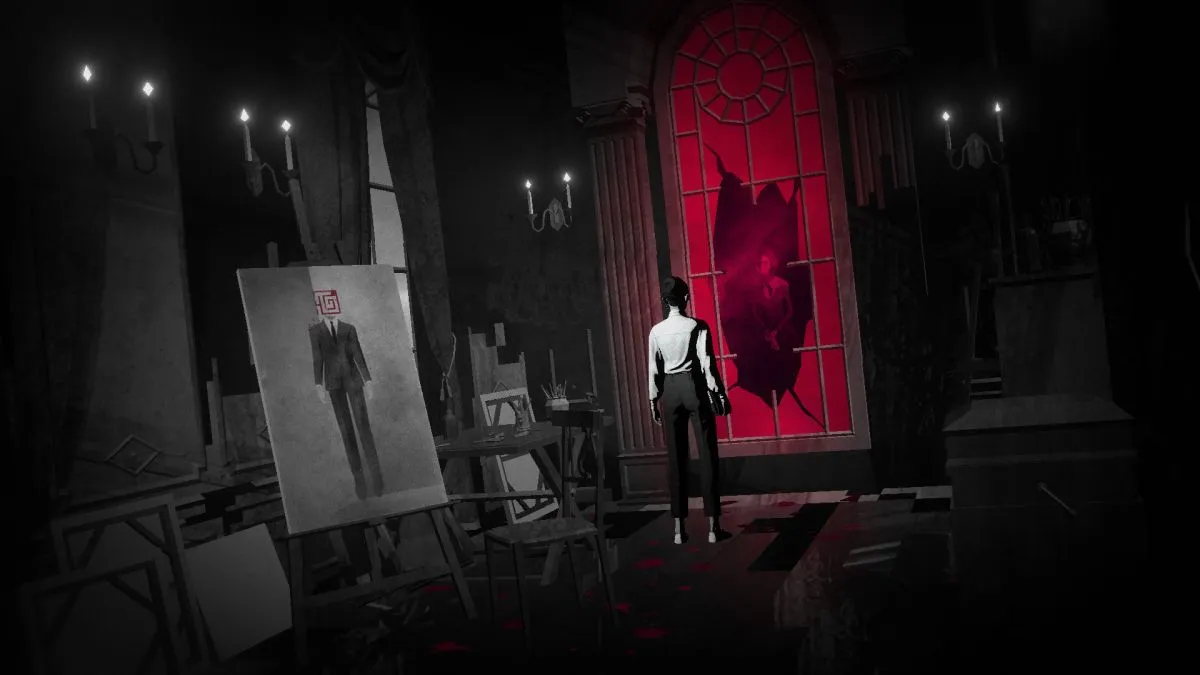
When the Lorelei and the Laser Eyes team reached out with an offer to try Simogo’s latest game, they also sent over a little notebook. It was a neat inclusion that soon became a crucial part of my playthrough; it’s hard to separate my time within Lorelei from my time outside it, noodling over puzzles even when the app isn’t open. It’s that kind of game.
The set-up of Lorelei and the Laser Eyes is intentionally vague. You arrive on the outskirts of a hotel, invited by a letter you don’t really have context for yet, to participate in… something. A game? An exhibit? A reunion? Who’s to say. Certainly not me, as I’m still discovering pieces of that in my playthrough now.
Solve a few puzzles, and you’ll get inside and start getting pointed in various directions. The crux of Lorelei and the Laser Eyes is exploring this manor, trying to learn and recover memories, and solving puzzles so you can keep moving forward.
Myst-heads will likely eat this up, or for a more current reference, it’s reminiscent of games like The Witness or Braid or Fez. Lorelei is puzzle-driven, story-driven, and filled with mystery; the fixed camera angles and manor setting definitely bring to mind the first Resident Evil, too. It’s an interesting, though not unnatural, leap for Simogo. Their previous game, Sayonara Wild Hearts, was a break-out hit. But this was a team that also produced other compelling, moody puzzlers like Device 6 and Year Walk. Gameplay-wise, Lorelei falls in line with the latter.
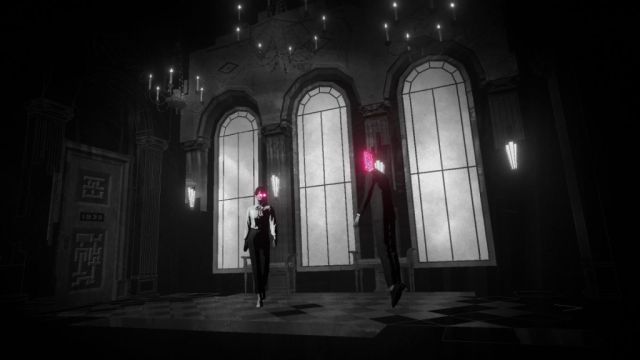
Some puzzles, early on at least, were fairly straightforward. A clue is laid out plainly, sometimes even underlined for the player’s benefit, and a little deduction gets you to where you need to go. Knowing that a street address actually doubles as a code for a lockbox, for example. (That’s a made-up scenario I just invented, as I really don’t want to spoil any puzzle solutions in this writeup.)
They do, eventually, start to turn up the difficulty, and in a very interesting way. Dates, names, places, or anything can become a puzzle piece. Puzzles can require different kinds of solving, too. It’s not just memorization or repeating the right number back. There are times where altering viewpoints and symbols meant just as much. I mean, I had to do actual math. That’s a lot to ask after a hard day’s work.
Part of what I really like about Lorelei and the Laser Eyes is how open everything feels. Once I was inside the manor, I was pretty free to walk around and follow my curiosity wherever it led me. I’d get sidetracked trying to simply map out the rooms, or discover all of a certain puzzle type. There are some helpful environmental hints to generally guide the player along a “story” path, which I do recommend; it was a bit embarrassing to realize that a clue I needed to solve one puzzle had been gated behind a story event. I was a little distracted staring at posters and letters.
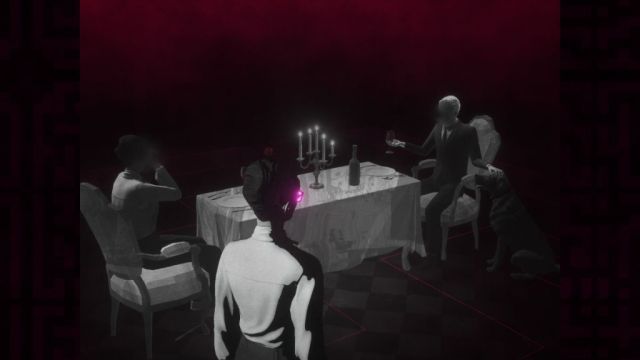
Lorelei does give you every tool in the box to solve these problems, though. Your player character has a photographic memory, so any document or note you read is permanently saved to the menu for recollection later. I still recommend the pad and paper, though, as several puzzle solutions required math or geometry. I am, as my teachers would’ve put it, a “visual” and “hands-on” learner, so mapping things out on paper definitely helped.
I will say, for its various approachability options, I did have a few gripes with Lorelei and the Laser Eyes so far. It has a limited amount of buttons, so really you mostly just need to navigate around and hit “interact.” Trouble is, opening your menu falls on the same button. So getting stuck on a puzzle and then trying to open up my menu to recollect some clues often just put me back in the puzzle. Similarly, there’s not an easy “back out” option. If I’ve entered a screen where I need to punch in letters or numbers, I need to hit the “solve” button to get back out. And if I’m rotating a wheel with numbers on it, it can only rotate in one direction. Was the 1 actually a 0? Time to go all the way around.
Combine that with some hard puzzles and a general push towards discovery over rigid guidance, and I do think some people might bounce off Lorelei and the Laser Eyes early. To which I’ll say, please don’t.
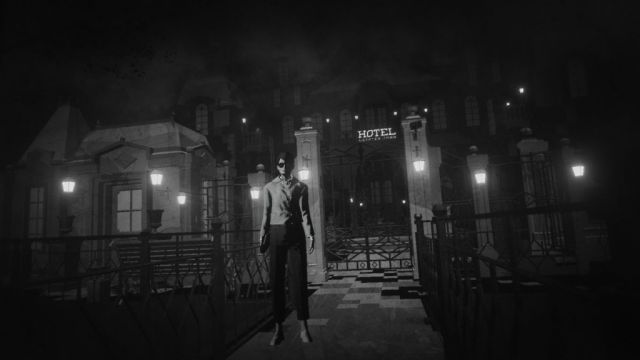
Take it from me: my first session in Lorelei felt confusing and awkward. I stumbled around the mansion, just trying to get my bearings. I’d run into puzzle after puzzle that I felt like I had zero context for. Some of the environmental guidance felt like it led me in circles. I put it down. And when I came back for round two, I hit a story flag, and it felt like I could see the puzzle box so much more clearly for what it is.
Soon, I was feverishly taking notes and scribbling in my pad. I was beginning to form thoughts and ideas, theories, about what was going on. I found some items that really, truly blew my mind when I figured out how they interacted with others, and what sorts of discoveries and new experiences they opened up.
Lorelei and the Laser Eyes feels like a layered, hand-crafted puzzle experience. When I got on a roll, it reminded me of the invitation scene from Glass Onion, where one revelation sent me running back to another part. For some people, that might get frustrating when they hit a mental wall they can’t push through. For others, breaking out the pad and pencil, noodling away, thinking about a puzzle on your off-hours is part of the draw. And I think Lorelei and the Laser Eyes will have a lot in store for that crowd.
Lorelei and the Laser Eyes is out on May 16 for Nintendo Switch and PC.


