

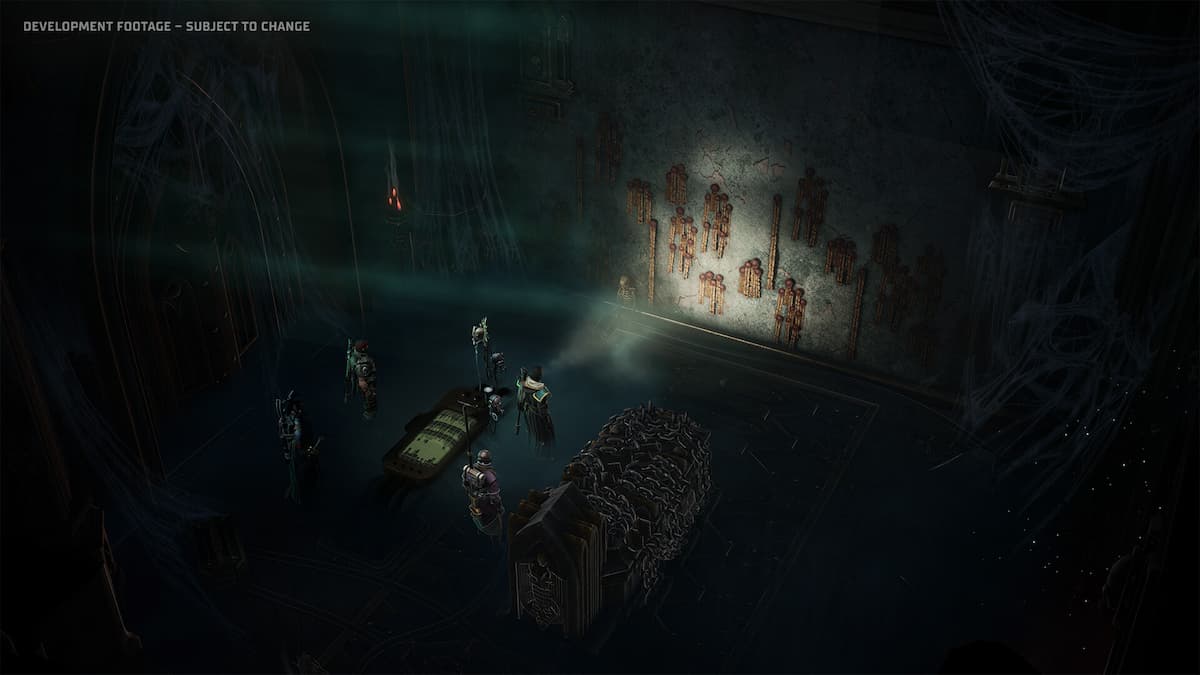
Warhammer 40,000 fans are eating good. With Total War and Dawn of War on the way, I don’t think there’s ever been a better year for the franchise. However, those more inclined toward RPGs instead of strategy are getting something, too, which is Owlcat’s new Dark Heresy title.
Much like its 2023 game, Rogue Trader, Dark Heresy takes place in the grim darkness of the far future where there’s no peace among the stars. It puts you in the role of an Inquisition Acolyte, searching through a God-Emperor-forgotten hive city gutter where many don’t even know what the Inquisition represents.
You’re tasked with piecing together a comprehensive case like a true detective, uncovering the dark mysteries that shroud the putrid corners of Marisportum. Thanks to Owlcat, I played the game early and participated in its pre-release Alpha, and I’m completely enthralled by its innovative approach to cRPGs.
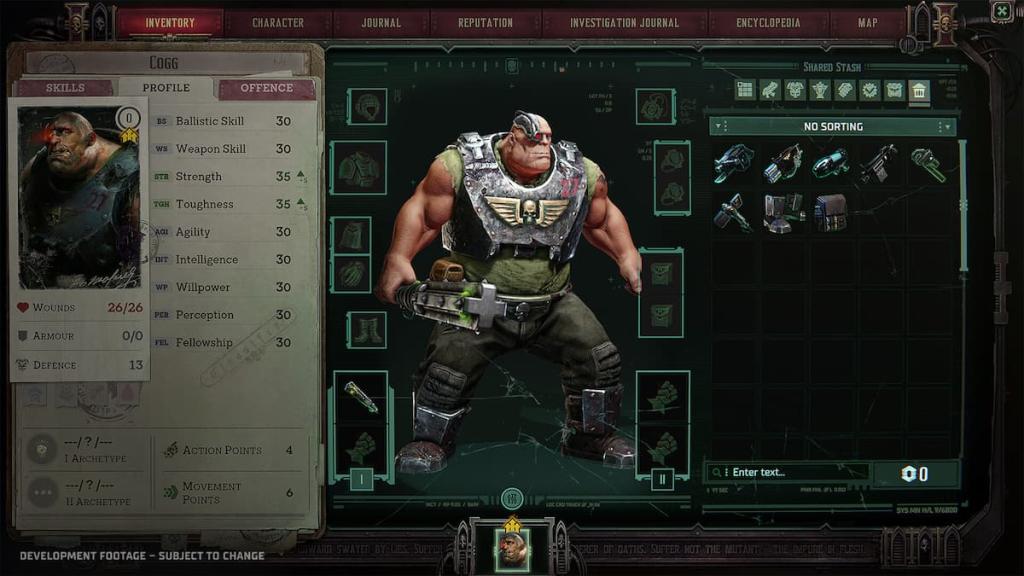
The overarching mechanic of playing as a detective is one of the most fun things I have ever encountered in a video game. You’re literally a detective—an Inquisition detective at that—where each and every bit of information feeds into your broader task: finding out what happened to people in Marisportum.
You get this huge Inquisitor’s journal where the whole narrative blends together, as if you were putting things up on a pin board, not much unlike a detective in a police procedural. You uncover information, connecting it to what you already know, use what you’ve uncovered to uncover more, and eventually form opinions and literal hypotheses that may or may not be true.
It’s a comprehensive system, one that has completely transformed the core of what a quest is, making everything a thread to be followed. Every part of the game is important and crucial to the story, as you never know how a random side-quest may shine light on a vital piece of missing information that you just needed to form a solid hypothesis.
And while those bits are awesome, to say the least, the combat, too, is as innovative as they come. The last time I played a cRPG and was surprised by its turn-based combat was Divinity: Original Sin 2, a game that proved to me how turn-based combat can actually be fun and intuitive and not slow at all.
Now, Dark Heresy takes the crown as my favorite game of this kind, even if it isn’t as deep as, say, Baldur’s Gate 3. Each of your heroes, and there can be many in your party, has a unique set of abilities and weapons which determine how they’ll perform mechanically. It isn’t just about melee and ranged, every gun works differently on the battlefield and can be as much an advantage as a hindrance.
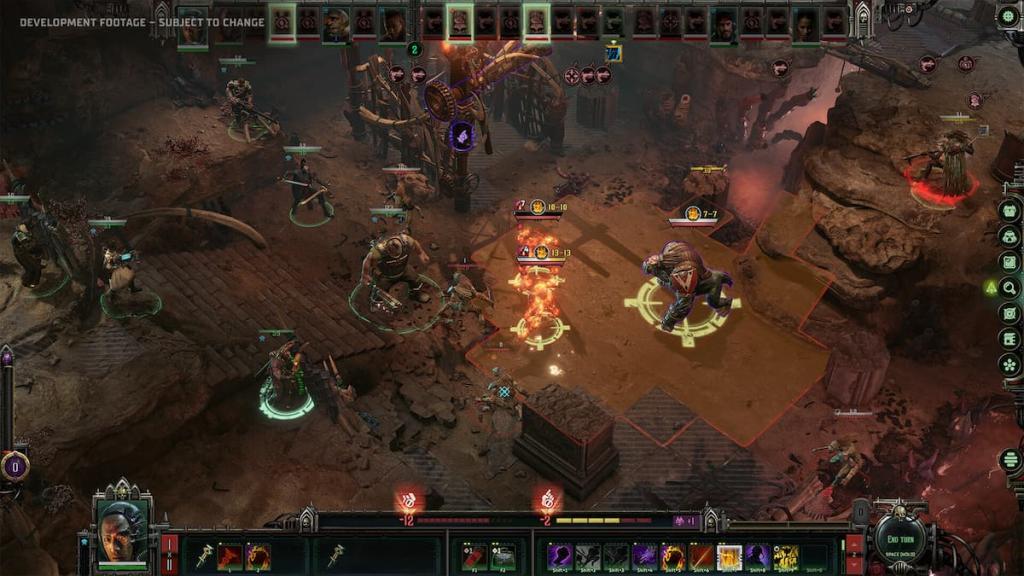
A lot of 4X is there that puts Dark Heresy somewhere in-between Baldur’s Gate and Mechanicus, as you also have to position your heroes before the fight, much like you’d do in the latter.
One of the heroes in the alpha, the Acolyte, has a sniper rifle that enables him to enter something like V.A.T.S. from Fallout, where each body part has a percentage to be hit. This sort of variation between each of the weapons and characters makes the combat super fun, replayable, and even complex, allowing your tactical and strategic self to truly shine in each situation.
Of course, this is set in the Warhammer 40,000 universe, which I’ve been bawling over for the past few weeks in light of all the different announcements. The setting, the grim darkness, the factions, everything is represented, well-developed, and stylish, as you’d come to expect from a 40K IP.
Overall, what Owlcat has done here is superb, and given that it’s an alpha and not the full game, I cannot wait to see what else they’re cooking behind the scenes.
The full release is likely sometime in late 2026 or even early 2027, so there’s plenty of time to add a lot more than what’s been shown so far.


