


I need to be upfront here. I never played a Fire Emblem game, nor have I ever really wanted to.
But when a preview opportunity for the newest game in the franchise came across my desk, it became a priority for me out of necessity. And after the game’s prologue missions and opening hours, so far I’m really glad it did.
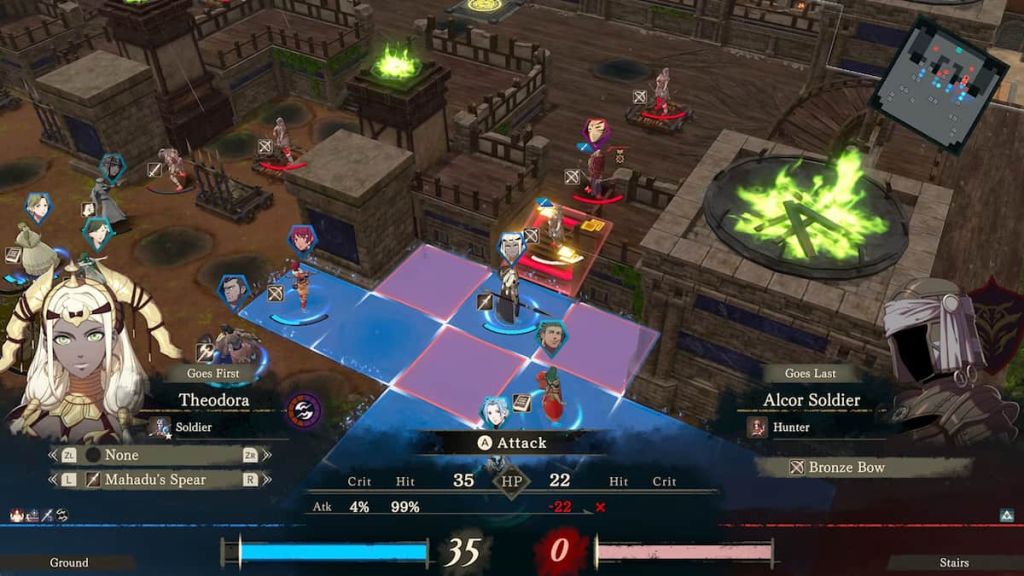
Fire Emblem: Fortune’s Weave is a Nintendo Switch 2 exclusive, and I’ve been playing it for several days now. I begrudgingly began the game’s opening hours thinking that the anime-style strategic RPG would be a bore, as I’ve always steered clear of the genre at my own peril, but I’m eating some crow today to say I’ve been wrong.
The tiled battlefield style of combat gameplay in games like Fire Emblem has always put me off. The closest thing to it I’ve played in the past was recent XCOM titles, which I’ve enjoyed a good amount, but for some reason the presentation of games like Fire Emblem put me off as potentially overwhelming.
It is indeed overwhelming, at first. There are a lot of systems and mechanics to figure out in the opening stages, and I felt an ick creeping up on me fast. But after several hours of playing through the game’s multiple story arcs, I’m beginning to feel a new itch get scratched each time I play it, in a year where I really haven’t felt like gaming outside of titles required for my job. It’s fun, and more fun than I ever thought it’d be. I wish I wasn’t so close-minded for so long, but I’m here now.
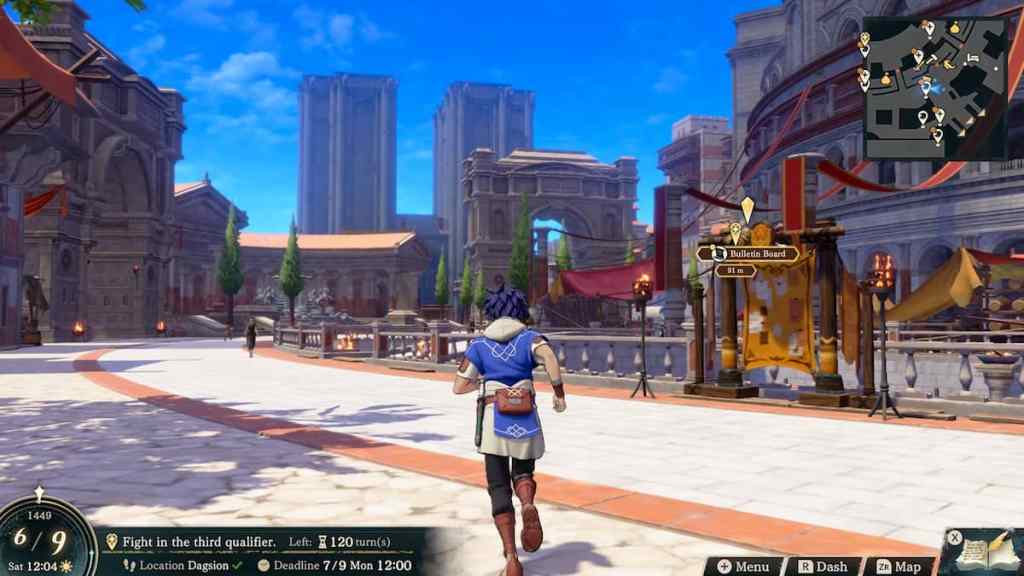
The first few hours of the game are pretty linear, keeping you on a straight path through story exposition and tutorial battles. But once it opens up and you get to explore the main city of Dagsion and all it has to offer, Fire Emblem starts to show its strengths. Fortune’s Weave features a number of main protagonists, all with their own backstories and journeys that eventually converge on a gladiatorial tournament called the Heroic Games.
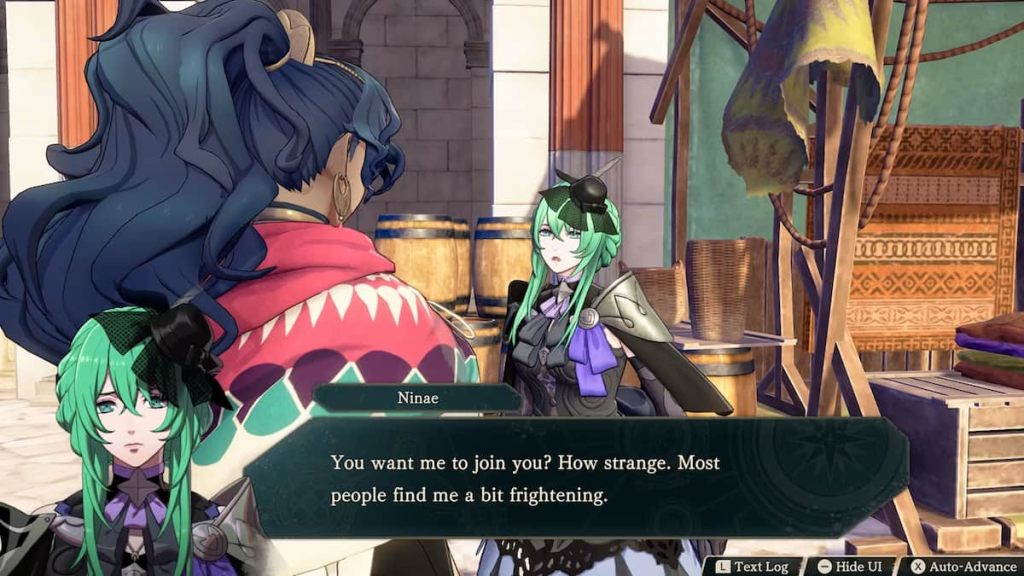
The five playable characters (your “custom” Protagonist, warrior queen Theodora, swordfighter Dietrich, musician Leda, and a young boy named Cai) have individual campaigns that you can swap between at certain points throughout each story. I’ve enjoyed sticking to one path until its completion, personally, but the ability to swap at any time and try to play them concurrently is also an option.
These characters and their companions are the heart of Fortune’s Weave, and my favorite thus far is probably Theodora. She’s fiery, strong, and rageful in her own deeply personal quest. Each hero brings a unique skillset and personality to the game’s events, and I’ve been enjoying learning more about them with each session.
Fire Emblem operates on a calendar-like schedule (this was news to me) where, in the lead-up to the Heroic Games, you’re tasked with playing through story events but also leveling up through battles and finding better gear via exploring Dagsion and the world map, recruiting soldiers to your cause, and completing weekly activities and quests. Each “turn” you take passes time, so you’re up against the clock, which feels restrictive at times, but I was always able to get done what I wanted before heading to the next task.
Some of these open world map activities include Dungeons, which is definitely more my speed. These are explorable areas with traditional turn-based battles similar to the Final Fantasy games I grew up on, without having to manage the tiled battlefield. It’s further helped ease me into this new flavor of RPG.
Overall, though, I’m surprised by how much I’ve enjoyed the traditional tactical combat, which is deeper and more interesting than I ever would’ve thought. Each move needs to be planned out thoughtfully, depending on the enemy combatant’s placement and weapon type, or your own placement on the field, like in tall grass to increase your dodge ability, or on magical tiles that heal you, making each encounter feel intuitive. Other than some slow-paced turns where you’re just moving closer to enemies on the battlefield, I really, genuinely like it so far.
I will say that the Heroic Games is only a minor part of the journey and a massive jumping-off point. What happens at that event and then after is a whole other arc that really raises the stakes into something way bigger than the characters’ humble medieval beginnings. I could say more, but I’m choosing not to because I think gamers should try it out and experience it for themselves.
I also need to note that I really appreciate Nintendo sending a review code more than a month in advance of the game’s release date, which is an absolute rarity in this day and age. It feels like a necessity for this particular game because it’s likely huge (I’m still early in the journeys), so I’ll be glad to take my sweet time playing it over the next few weeks ahead of its launch on Sept. 17 rather than rushing to get through it.


