

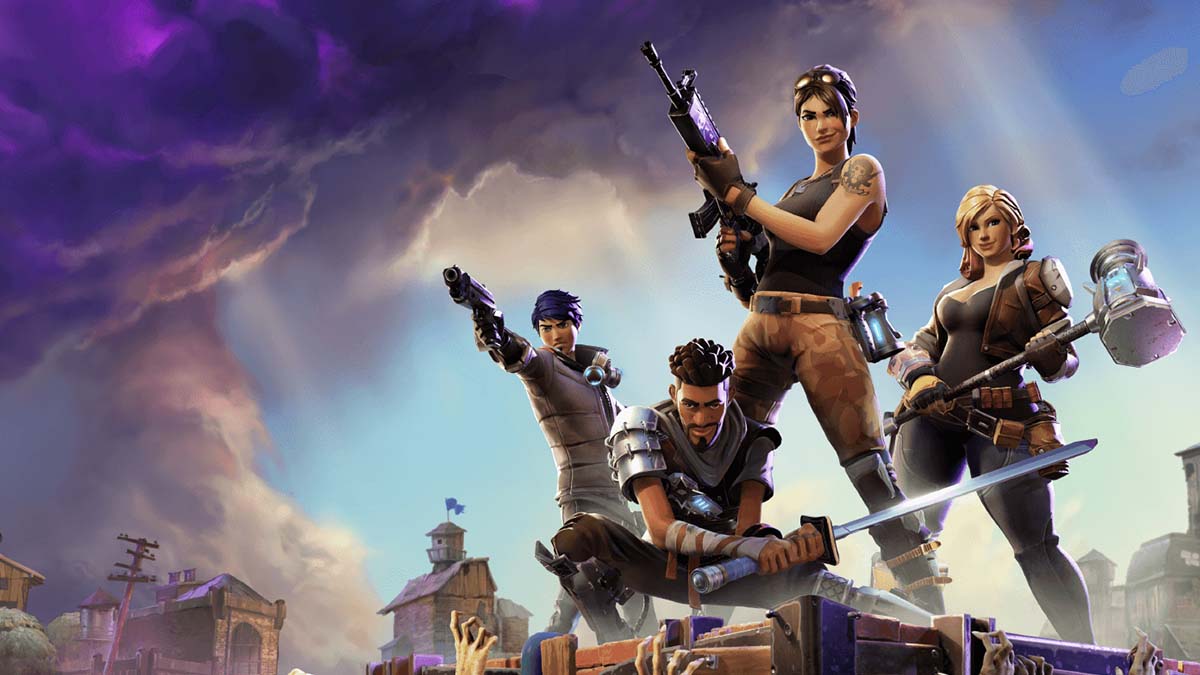
Highguard’s premature death made me think of Fortnite and how different things were back in the day. Fortnite is ubiquitous nowadays, and, having been released a decade ago, many of the people playing it aren’t aware of its early history because they weren’t even born when it came out. Still, it wasn’t the immediate smash hit that most seemingly know it as.
Humble beginnings
Fortnite Battle Royale was an immediate blockbuster, yes, but that was not its first iteration. It actually began life as Fortnite: Save The World, an evolved take on the tower defense genre. Despite Fortnite Battle Royale’s massive success, many could never shake the thought that the building mechanics in Fortnite didn’t belong, and that’s why so many love the zero build mode. Well, they’re actually a leftover from back when players built forts to keep hordes of zombies out.

Though Fortnite Battle Royale serves as a great example of a success story in games, it’s no less a scary display of how something completely void of meaning can thrive. Save the World did well, with over 500 thousand units sold upon release, but it faced one problem: PUBG, which got the battle royale frenzy to never-before-seen heights.
Epic had the means to just shut Fortnite down and come up with a new title to compete with PUBG, but it had the restraint to rethink its strategy and greatly overhaul Fortnite to overcome its own shortcomings and innovate. Interestingly, Epic never really killed Save the World, but it’s kept as a paid mode, as opposed to the more commercially successful free mode, so its playerbase is unlikely to go anywhere but down.
From Rainbow Six Siege to Quake Champions: not everything has to be Highguard
An even better example was Rainbow Six Siege, which enjoyed a pretty underwhelming release, in part because of multiple gameplay issues and also because it wasn’t chasing the BR golden goose. Rainbow Six 6 is still a thing nowadays, a rather big deal, even, with lots of cool expensive crossovers, like the newly-revealed Solid Snake joining its operatives roster.
Sadly, the comeback of R6 is documented mostly by forum comments and independent blog posts, perhaps because even we are too focused on failure. Still, as someone who was baffled to experience its rise from the ashes, I can confirm it was a beautiful thing. Interestingly enough, Ubisoft didn’t even completely retool the game into something else. It rather trusted the product, the team, and worked hard on what they had into a fantastic competitive shooter experience.
And sure, Ubisoft and Epic Games are much bigger backers than most original shooters will get, but even Epic Games axed the return of Unreal Tournament, once one of the biggest shooters on the planet, which actually had a pretty neat-looking remake going back in 2014.
We talk a lot of crap about Bethesda, but it’s really cool that, even though Quake Champions never got the muscle to hit it big since it became playable in 2017, the company still has a small team updating the game and keeping it alive for a fanbase that reaches roughly 250 concurrent players on average. Because, like, the game owns.
Do you think any publisher nowadays would have this kind of restraint, or are we destined to see a bunch of big releases immediately crashing and burning, and causing so many possibly great games and jobs to go to waste? Here’s hoping no one at Microsoft reads this glowing reminder on the existence of Quake Champions and decides it’s time for some more axjustments.


