


In June, I was invited to play Castlevania: Belmont’s Curse a few months ahead of release, and I loved every bit of it. The venue we were at was a former Catholic church of Saint Joan of Arc, now deconsecrated but with no less charm than it had when it was first constructed following the neo-Gothic style, painted glass and all.
But in between the gameplay sessions, I also got the chance to sit down with Konami’s Tsutomu Taniguchi, Castlevania: Belmont’s Curse‘s lead producer, who opened up about how the company finally got around to making a Castlevania title as well as how it made sure more people could play it and not be daunted by the series’ notorious difficulty.
The first thing I wanted to know was why Konami decided to return to a 2D side-scroller perspective once more, considering the last two Castlevania games were both 3D with an over-the-shoulder camera. I’ve got nothing against 2D side-scrollers, but in the time between the last mainline Castlevania entry and today, the genre did experience a bit of a drop in popularity, even if it’s seeing a sort of renaissance at the moment.
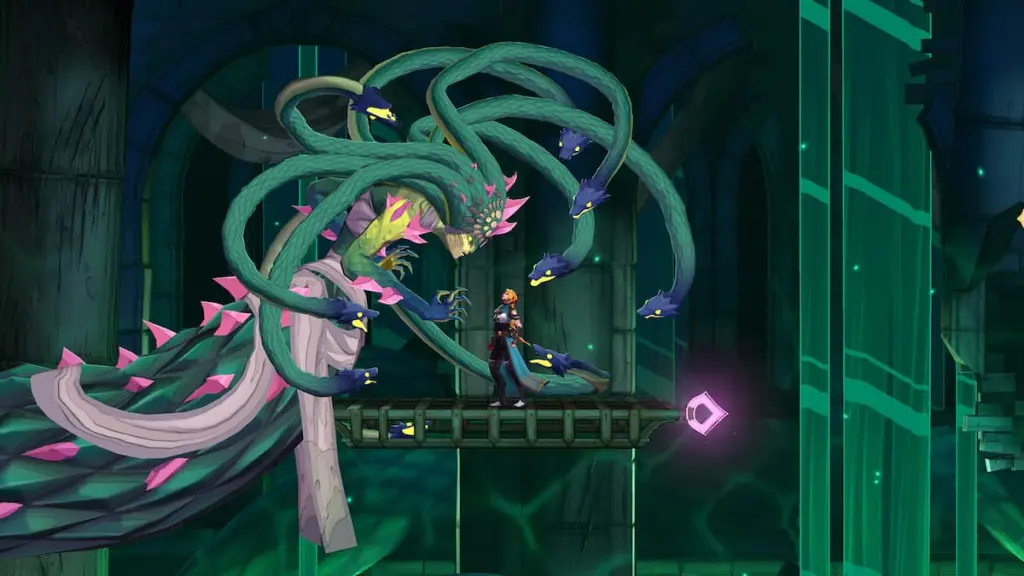
“Ever since I got into Konami, I listened to a lot of fans’ voices,” Taniguchi said. “And I realized that people wanted to have a 2D, the original Castlevania-feeling kind of game. I really wanted to go back to the basics of what makes Castlevania Castlevania, which is 2D, but also add some more new elements, which is the action feeling with more modernized elements.”
Taniguchi went on to explain why there was such a wide gap between the last Castlevania title (2014) and today, saying that even though he wasn’t at Konami all that time, he really did want to make a new mainline game in the franchise. “I haven’t been able to release a Castlevania game for a long time,” Taniguchi admits, but says he doesn’t know the exact reason why Konami waited for so long.
He added that he was inspired by fans whose voices grew ever louder, with many of them saying they had never played Castlevania and had only seen it in the anime, meaning the timing was perfect to make a new, modern Castlevania title.
This significant gap between games was another reason Konami decided to stick to 2D, because it had been almost two decades since the series had an entry of this kind.
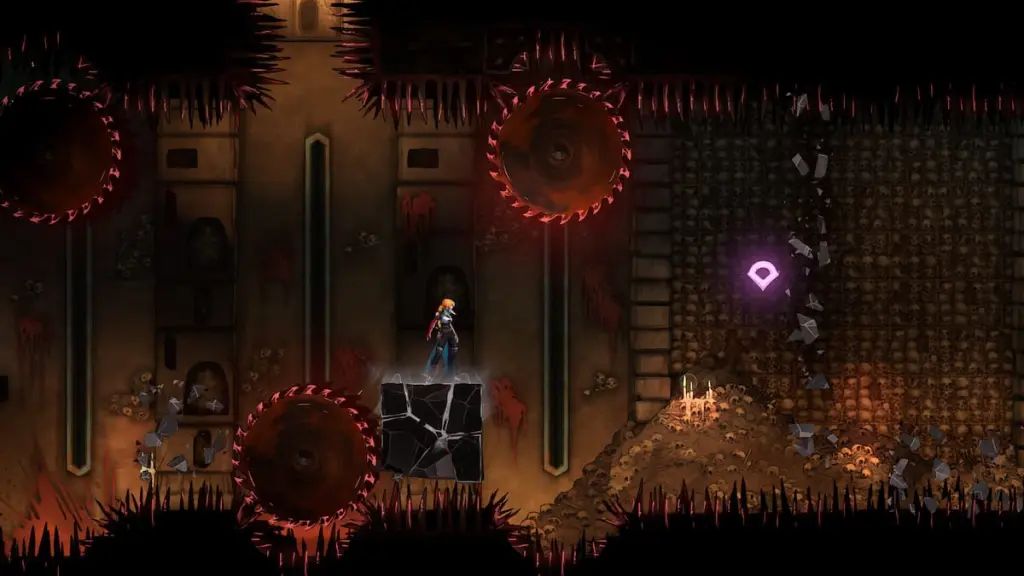
As I said in my impressions piece, Belmont’s Curse is significantly more accessible than the last 2D Castlevania games, and indeed than most of the two-dimensional games in the series overall. It’s more focused on high-octane, fast-paced action, though the levels themselves can prove as much of a challenge as the enemies. Therefore, I asked Taniguchi if Konami made a conscious choice to bring the game closer to more people, and the answer was an absolute “Yes.”
“It’s easy but also not at the same time,” Taniguchi explains. “There are so many strategic ways that you can play the game. It’s not just about making it approachable, but it’s also about how you evolve your own gameplay.”
“So yes, it might look easy, but also we’ve tried to make it so that it’s accessible to everyone. So by using the way you play the game, you’ll be able to manage your difficulty, let’s just say, to your own style,” he concluded.
Castlevania: Belmont’s Curse launches on October 15 and is probably going to be the best way to experience this iconic franchise, perhaps ever. If I do come around to writing a review on it, you’ll know exactly how highly I think of it, but even now I can tell you that this game is definitely one to keep an eye on.


