


Last week at Gamescom, Paradox Interactive gave me the amazing opportunity to play Afterworld, its first original IP since Stellaris, and produced by a mixture of amazing developers from that game as well as veterans from Crusader Kings 3 and other Paradox GSGs.
And I’m more than happy to say that Afterworld is by far one of my favorite games Paradox has ever made, and I only played it for less than an hour. The preview opened up with a presentation of sorts, giving us the long and short of what Afterworld is, leaving me with about 45 minutes of game time.
And those 45 minutes were enough to give me withdrawal symptoms as soon as I put the game down.
The game zooms in on all the action, taking liberal inspiration from Stellaris in how it unfolds its post-apocalyptic North America.
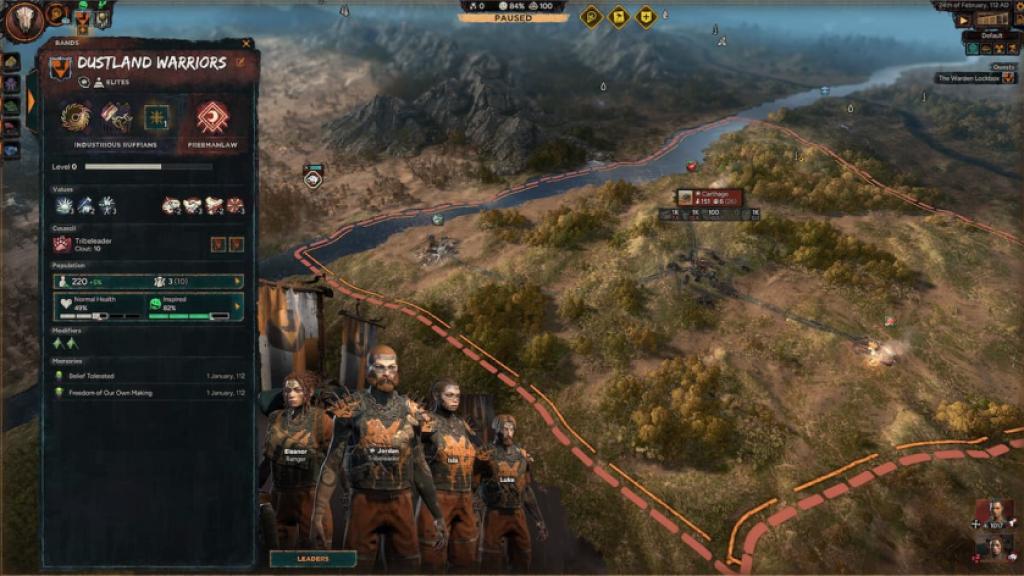
Each nation picks an origin, akin to origins and histories you could craft for your nation in Stellaris, and the one I played with gave me control over a group of Shelter Dwellers (yes, really) who had finally emerged out of their underground hideouts and ventured out to repopulate the ruins of the United States.
Your first steps in Afterworld revolve around exploring the world, and exploration is, again, very akin to how it’s done in Stellaris, only that it’s all super zoomed in and provides visual context for everything in contrast to Stellaris‘ opposite approach. You explore areas; each area has a set amount of available resources and is plagued by specific ailments like radiation, and then you can either settle areas permanently or simply stay for a while before packing up and migrating elsewhere.
In my case, I set up shop near a nuclear reactor – not a very good idea – and then tried to make the area my permanent home of operations. The issue is that I quickly ran out of water, and I was out of it for quite a while. My explorers could not, for whatever reason, discover a water-rich area, and it took 70 percent of my population dying of thirst before I finally settled a new place that had, believe it or not, a refreshing reservoir.
Your survival thus depends heavily on the environment and AI-controlled factions, which can come in the form of bands and gangs that roam the afterworld or permanently settled nations, which themselves can range from traditional Paradox’s settled countries to powerful empires akin to Fallen Empires from Stellaris, only that these are much more active and involved and do not need to wait for end-game crises to start doing anything.
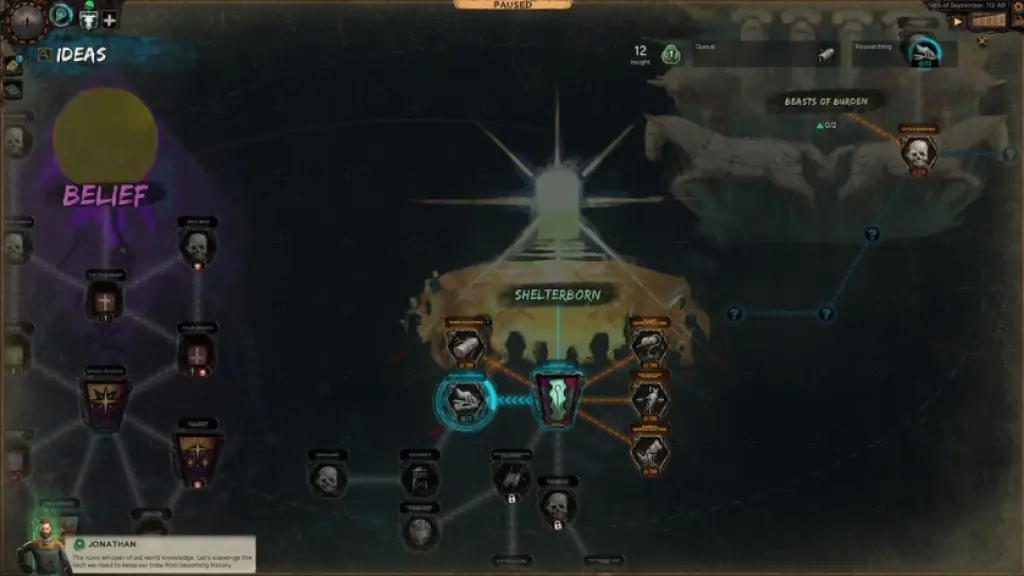
You can invite other bands and gangs whom you meet to become part of your tribe, while explorers can venture out into the world to rediscover lost technologies like guns or even tanks and eventually advanced sci-fi weaponry and tech. To do any of these things, though, or advance your nation in a meaningful way, you need to progress down your tech tree.
Some techs are inherently available to advance, but they take more time if you’re too far ahead of the curve, similar to how things were in Europa Universalis IV. However, some technologies require specific missions or discoveries to be made, putting an extra emphasis on research and exploration.
Survival being such a core component of early gameplay also means you can very easily gain access to slavery, cannibalism, and every other brutal and gruesome “idea” and “technology” and “institution,” and Paradox really did not put any filters on the post-apocalypse when it comes to Afterworld. In fact, I’d say this is Paradox at its most unbridled, and that only helps sell this catastrophic setting.
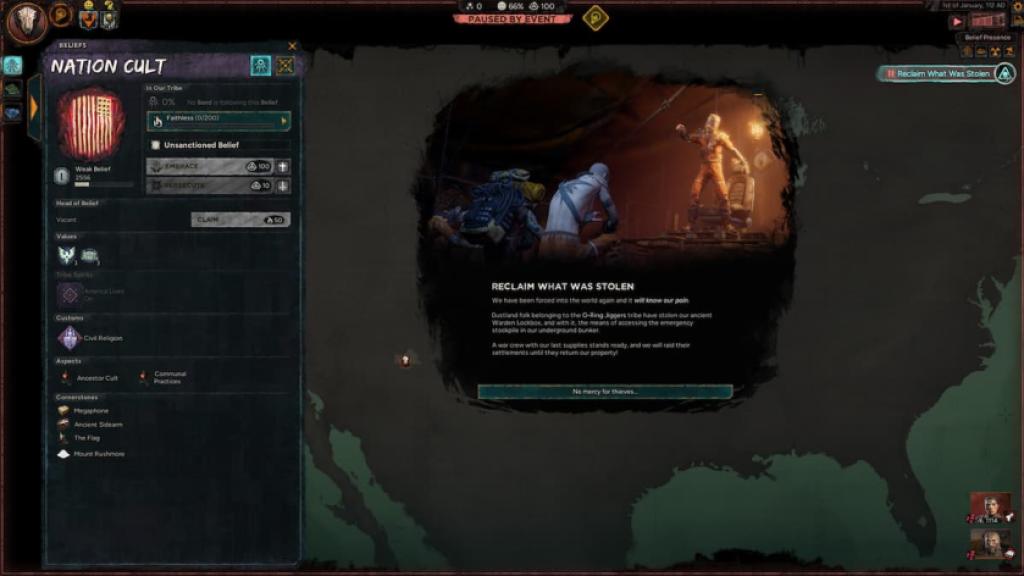
Missions crop up all the time, and by following them, you can really start to gain access to powerful tech, but be mindful of your bands and gangs: they have their own needs and necessities, which you have to meet or even exceed in meeting to make your pops a lot more satisfied.
What I got a taste of in the preview, too, was warfare. Again, it is very similar to Stellaris, but the zoomed-in focus on minute details meant I could watch a bunch of my gang members chasing down a lone explorer over ruined American plains, and that was really a sight to behold.
The loop of exploring, settling, migrating, and even fighting in Afterworld, as well as the incredible amount of narrative detail that the game has, simply had me yearning for more and more and more. It’s been a week since I played it, and I still think about it all the time, and I genuinely cannot tell you how good of an experience Afterworld actually was.
It’s still early in development, that much is certain, but with how fitting this zoomed-in approach is to the details offered by Stellaris and now Afterworld, something tells me this could turn out to be Paradox Interactive’s best grand-strategy game by a long shot.


